West African food & drink
This formerly unsung cuisine is finally getting the recognition it deserves across the world, and the people who make it are getting a fairer deal.
Grind peanuts until you have a peanut butter – and then let it sit. Leave it for a day or two, until the peanut oil has risen to the top. Scoop this away, until you’re left with peanut solids. These you can roll into long batons. If you like, you can join the ends of the batons to form rings.
Fry them in oil until they’re crispy, and you have made klouikloui – a beautiful Beninese biscuit.
Or, take peanut butter and turn it into a big bowl of Ghanian peanut soup, a ball of fufu (pounded cassava) sunken into the centre of it.
You can take that fufu and serve it with egusi soup, a dish made from ground melon seeds. Congratulations, you’re enjoying a Nigerian household favourite, and a protein-rich superfood.
West African food is complex, exciting, and often a labour of love. Techniques have been passed down in kitchens and cooking spaces, traditionally from grandmothers and mothers to daughters and granddaughters. Many dishes are created from involved, often labour-intensive processes which until relatively recently weren’t written down.
With West African food getting more recognition, and a rise of investment in cities like Lagos and Accra leading to high-end restaurant openings, chefs are now desperate to steal grandmother’s recipes.
Grind peanuts until you have a peanut butter – and then let it sit. Leave it for a day or two, until the peanut oil has risen to the top. Scoop this away, until you’re left with peanut solids. These you can roll into long batons. If you like, you can join the ends of the batons to form rings.
Fry them in oil until they’re crispy, and you have made klouikloui – a beautiful Beninese biscuit.
Or, take peanut butter and turn it into a big bowl of Ghanian peanut soup, a ball of fufu (pounded cassava) sunken into the centre of it.
You can take that fufu and serve it with egusi soup, a dish made from ground melon seeds. Congratulations, you’re enjoying a Nigerian household favourite, and a protein-rich superfood.
West African food is complex, exciting, and often a labour of love. Techniques have been passed down in kitchens and cooking spaces, traditionally from grandmothers and mothers to daughters and granddaughters. Many dishes are created from involved, often labour-intensive processes which until relatively recently weren’t written down.
With West African food getting more recognition, and a rise of investment in cities like Lagos and Accra leading to high-end restaurant openings, chefs are now desperate to steal grandmother’s recipes.

How West African cuisine is made
The processes of making these dishes are best shown, rather than told. Like the skilful scaling of a palm tree to tap its cut flowers for wine; or the intensive process of pounding cassava to make fufu; the beauty with which jollof rice turns from a stew into a pan of glossy, orange, stew-filled grains; or the transformation of bitter beans into chocolate. To fully appreciate the cuisine, you need to see it being made.

A folded leaf, inserted into a cut in the palm, acts like a funnel for the liquid – which trickles into the waiting gourd.![]()

Peanut butter, chocolate and seafood
At Kuapa Kokoo, an organisation of cocoa famers in Kumasi, Ghana, Cocoa fruit – papaya-shaped, sunshine-coloured, struck from the trees with a machete swipe, lies in piles on the plantation floor, ready for processing. Visitors can see it as part of our cultural holiday of Ghana, Togo and Benin. The farmers co-operative have the largest share of Divine Chocolate Ltd, a leading fair-trade chocolate company. Its farmers – 32 percent of them women – have benefitted from decades of development, including new daycare centres, schools, wells and boreholes.
“Perhaps the thing that will stick most vividly in my memory was the time spent at the fishing village of Kayar,” writes traveller Michael Segal, in his review of our holiday to Guinea-Bissau and Senegal. On the crowded shore of this coastal settlement, just up the coast from Dakar, the hand-painted pirogues of Senegalese fishermen create a logjam on the beach, around which throngs of fish sellers, caleches, shoppers and seagulls jostle. The frenzy of shore life is brought to higher intensity by the threats of overfishing and diminishing returns.
“Perhaps the thing that will stick most vividly in my memory was the time spent at the fishing village of Kayar,” writes traveller Michael Segal, in his review of our holiday to Guinea-Bissau and Senegal. On the crowded shore of this coastal settlement, just up the coast from Dakar, the hand-painted pirogues of Senegalese fishermen create a logjam on the beach, around which throngs of fish sellers, caleches, shoppers and seagulls jostle. The frenzy of shore life is brought to higher intensity by the threats of overfishing and diminishing returns.
Special ingredients
Peanuts, alongside fish, are Senegal’s main food export. Cocoa is Ghana’s. But behind the world’s best beloved ingredients, there’s a whole lot of West African ingredients that have grown under the radar.
There are staples like cowpeas, cassava and taro – the latter two are tubers that form a robust backbone to many households’ diets. Nigerian gardens are full of useful plants with medicinal uses, and nutritious stems, roots and fruits– such as fluted pumpkin, or vitamin-rich plants like bitter leaf and waterleaf.
There are spices likely unfamiliar to people beyond Africa, and hard to get outside of speciality shops. Take café touba – from Senegal – which is coffee flavoured with grains of Selim, a black-pepper-like spice, and cloves. Grains of Selim crop up in coffee, but also in marinades for suya – Nigerian meat skewers, in the hot, fried plantain sold as a street food snack, and, if you’re lucky, in ice cream.
Then there’s baobab fruit. Tourists may know the distinctive trees, but they don’t often know that powdered baobab, with its tamarind-sharp flavour, can be whipped into drinks, cocktails and ice lollies.
There are staples like cowpeas, cassava and taro – the latter two are tubers that form a robust backbone to many households’ diets. Nigerian gardens are full of useful plants with medicinal uses, and nutritious stems, roots and fruits– such as fluted pumpkin, or vitamin-rich plants like bitter leaf and waterleaf.
There are spices likely unfamiliar to people beyond Africa, and hard to get outside of speciality shops. Take café touba – from Senegal – which is coffee flavoured with grains of Selim, a black-pepper-like spice, and cloves. Grains of Selim crop up in coffee, but also in marinades for suya – Nigerian meat skewers, in the hot, fried plantain sold as a street food snack, and, if you’re lucky, in ice cream.
Then there’s baobab fruit. Tourists may know the distinctive trees, but they don’t often know that powdered baobab, with its tamarind-sharp flavour, can be whipped into drinks, cocktails and ice lollies.
A changing cuisine
Bowls across borders
There’s a wonderful commonality – and a whole lot of conviviality – in enjoying West African dishes, which transcend the country borders. There are 600 languages spoken in West Africa. What is called riz au gras in French speaking countries like Guinea, becomes jollof rice in Nigeria and Ghana, and then ceebu jen once you get to Senegal and Gambia.The internet has helped share West African cuisine around the world, and between West African nations themselves. People comment on YouTube videos, delighting in making a connection, “Yes! we have that in my country, but we call it something else.”
That deep red colour that seems to characterise many west African dishes? That comes from unrefined palm oil. More modern restaurants avoid it, but it remains an important staple.![]()
From fufu mortars to Michelin stars
When Ikoyi in London became one of the fastest restaurants to gain a second Michelin star it asserted what was true, but not broadly known about West African cuisine – that it contains fantastic complexity and flavour diversity.
Recently, Lagos and Accra have seen a rise in fantastic fine dining establishments that pour a West African menu into chic tableware, on white tablecloths, and give detailed ingredient origins and tasting menus. The rise in diaspora tourism has helped spread interest in the cuisine, and cooks around the world are celebrating their heritage – like Zoe Adjonyoh, restauranteur and author of Zoe’s Ghana Kitchen. TikTok influencers around the world are keen to champion West African dishes – especially the many that are plant-based and gluten-free.
Recently, Lagos and Accra have seen a rise in fantastic fine dining establishments that pour a West African menu into chic tableware, on white tablecloths, and give detailed ingredient origins and tasting menus. The rise in diaspora tourism has helped spread interest in the cuisine, and cooks around the world are celebrating their heritage – like Zoe Adjonyoh, restauranteur and author of Zoe’s Ghana Kitchen. TikTok influencers around the world are keen to champion West African dishes – especially the many that are plant-based and gluten-free.
Revisiting a complex heritage
This now-celebrated cuisine has a complex heritage. There are ingredients – like unrefined palm oil (its red sheen adding a glossiness to bean stews), that might raise ethical eaters’ eyebrows, though its actual environmental impact in the area is small. Like most coastal areas, West Africa suffers from overfishing.
Then there’s the ethics of origin. The peanut didn’t arrive in West Africa until the 16th century – when transatlantic trading took off. It was through the transatlantic slave route that ingredients such as corn, tomatoes and chilli were brought to Africa.
There is a small movement seeking to ‘decolonise’ West African food, and remove rice, millet, wheat, and use the ingredients that were replaced in the 16th century – native groundnuts rather than peanuts, for example.
Then there’s the ethics of origin. The peanut didn’t arrive in West Africa until the 16th century – when transatlantic trading took off. It was through the transatlantic slave route that ingredients such as corn, tomatoes and chilli were brought to Africa.
There is a small movement seeking to ‘decolonise’ West African food, and remove rice, millet, wheat, and use the ingredients that were replaced in the 16th century – native groundnuts rather than peanuts, for example.
Women’s work
Making fufu is a laborious process. The cassava has to be pounded into submission. When it’s done by two or more people at once, they line up, timing their strikes with their sticks with the accuracy of bellringers. On some of our holidays, you can have a go and see for yourself how hard it is.
Women are often the dominant forces in the kitchens of West Africa, but their time-consuming work – cracking cocoa nut kernels is another task – is largely underreported. Indeed, most women don’t consider what they do to be work at all. Machines that crack kernels at cocoa farms, or that pound fufu are being introduced and giving women more freedom. What’s more, work opportunities outside the home are making families turn to non-traditional ingredients – like noodles, which are easier to prepare.
Female chefs are taking the food heritage of their childhoods and building successful restaurants in the region’s cities– take the restaurant Midunu, owned by Selassie Atadika, which creates chocolates and private dining experiences out of Accra.
Women are often the dominant forces in the kitchens of West Africa, but their time-consuming work – cracking cocoa nut kernels is another task – is largely underreported. Indeed, most women don’t consider what they do to be work at all. Machines that crack kernels at cocoa farms, or that pound fufu are being introduced and giving women more freedom. What’s more, work opportunities outside the home are making families turn to non-traditional ingredients – like noodles, which are easier to prepare.
Female chefs are taking the food heritage of their childhoods and building successful restaurants in the region’s cities– take the restaurant Midunu, owned by Selassie Atadika, which creates chocolates and private dining experiences out of Accra.
Fast food, West Africa style
For more casual diners, there’s always West African fast food. And, in the absence of multinational corporations outside of major cities, you can celebrate thriving little roadside businesses.
Chop bar workers across Ghana (chop is patois for ‘eat’) spend their evenings making soups and fufu, ready to put out the next day for the lunch crowd. In Dakar’s informal restaurants, known as dibiteries, metre-long skewers strung with marinated meat are stacked on a grill over ashy coals, and turned with deft hands, to keep up with the demands of the city. In Lagos, it’s suya – barbecued, marinated meat – that draws the crowds.
West African cuisine isn’t on everyone’s radar just yet, but in these thronging, perennially popular establishments, it’s hard not to feel that you’re at the very centre of the culinary world.
Chop bar workers across Ghana (chop is patois for ‘eat’) spend their evenings making soups and fufu, ready to put out the next day for the lunch crowd. In Dakar’s informal restaurants, known as dibiteries, metre-long skewers strung with marinated meat are stacked on a grill over ashy coals, and turned with deft hands, to keep up with the demands of the city. In Lagos, it’s suya – barbecued, marinated meat – that draws the crowds.
West African cuisine isn’t on everyone’s radar just yet, but in these thronging, perennially popular establishments, it’s hard not to feel that you’re at the very centre of the culinary world.
West Africa explorer tour, Marrakech to Cotonou
An epic journey from Morocco to the voodoo coast of Benin
From
£17699 to £19699
8 weeks
ex flights
Ghana,Togo and Benin experience tour
Experience the culture, history and wildlife of West Africa
From
£5995 to £6850
14 days
ex flights

Ghana, Togo and Benin holiday, gold and magic
Traditional villages and voodoo in Ghana, Togo and Benin
From
£3699 to £4065
14 days
ex flights
West Africa tour, Bissau to Cotonou
Voodoo heartlands, traditional storytellers and lush islands
From
£9899 to £11199
4 weeks
ex flights
West Africa wildlife, culture and traditions tour
West African wonders of Ghana, Togo & Benin
From
£3695 to £3895
14 days
ex flights

West Africa Explorer, Guinea Bissau & Senegal
Historic towns, vibrant tribal culture & the Bijagos Islands
From
£4049 to £4249
14 days
ex flights


Contact Us
Call us for a chat about our holidays. We are happy to discuss your holiday and help in any way we can. No bots, queues or awful hold music.

01273 823 700
Call us after 10am
Calling from outside the UK


Classic West African dishes
Jollof rice
Many West African countries have a variant of jollof rice, and engage in gentle rivalry about whose is better. It’s made by cooking rice in a beautiful tomato stew, until the liquid has been absorbed into the rice, and the rice is glossy, orange, and full of flavour. It takes patience and time – like all good things.
Red red
When unrefined palm oil is used in dishes, it gives a characteristic red sheen to ingredients. Red red is plantain and black-eyed peas in a stew, served in Ghana.
Fufu with soup
Made from cassava or taro, fufu is served with soup – and it’s the perfect vessel for eating soup with your hand. Maddeningly quick to eat, considering how long it takes to make.
Thieboudienne
UNESCO-protected, Senegal’s national dish is a lunchtime meal of broken rice and fish that is also served across Mauritania, Mali, Guinea Bissau and Guinea. But it was founded in St Louis, Senegal’s second city, among the fishing communities.
Café Touba
Originally conceived, the story goes, to keep Sufi chanters awake during the early hours, this coffee flavoured with grains of Selim and cloves hails from Senegal.
Palm wine
West Africa’s ubiquitous palm trees have long had many uses. One is that they can be tapped, and their resin used to create alcoholic palm wines – or distilled to create something stronger.
More West Africa articles

West Africa experiences its dry season from October to March and this is the best time to go.
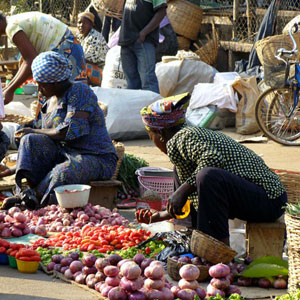
We take you from the Sahara to the Atlantic, looking out for saltwater hippos and nesting turtles, and browsing markets.
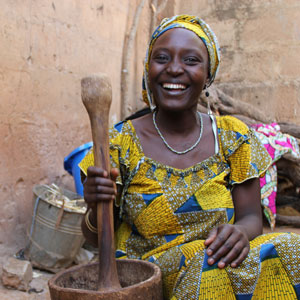
With 15 countries on the mainland, it can be difficult to decide where to go in West Africa.

Many holidays to Togo and Benin explore the vibrant Vodou culture of these nations.
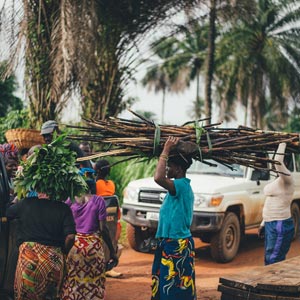
Get close to rural tribes and communities still largely untouched by tourism.




_01.jpg)


