Namibia self drive safari


Price includes 4-wheel drive car hire, transfers, meet & greet, accommodation, meals and services as per full itinerary.

Description of Namibia self drive safari
Embark on an unforgettable self-drive adventure through Namibia, a land of vast horizons and striking contrasts.
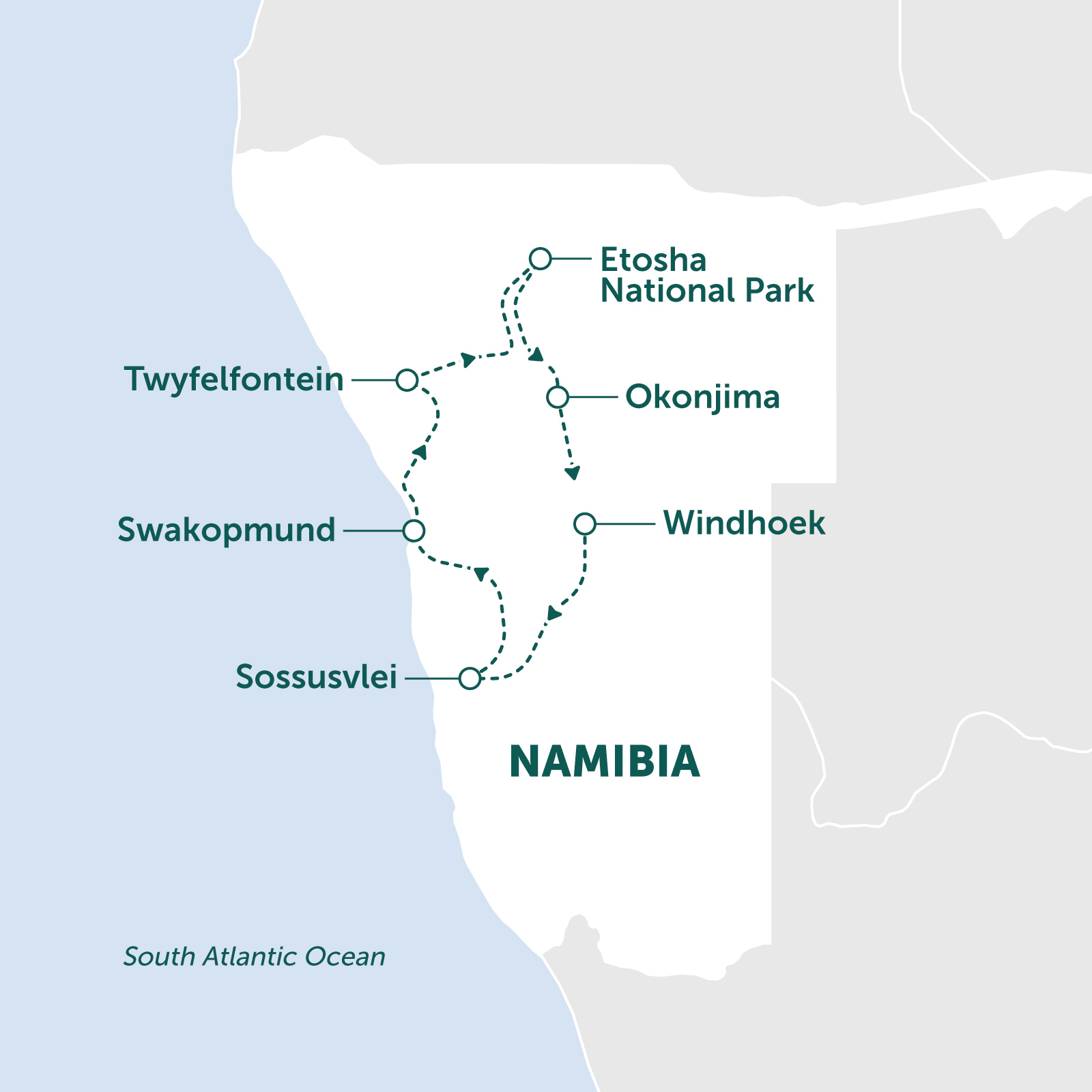
Begin in Windhoek, then travel south to Lüderitz, a charming coastal town with colonial history and desert-meets-ocean landscapes. Continue to the red dunes of the Kalahari and the iconic Namib Desert, exploring Sossusvlei and Sesriem Canyon. Head to Swakopmund’s coastal charm, then north into the rugged Damaraland to see ancient rock art at Twyfelfontein. Encounter wildlife in the Etosha National Park before concluding at the Okonjima Nature Reserve, where conservation and close-up wildlife experiences complete the journey.
Your route ends back in Windhoek where you’ll return your hire car before being transferred to the airport for your flight home.
This itinerary is tailor made and can be modified to add Fish River Canyon, Victoria Falls, Botswana or any of the remarkable highlights of the region. Ask your travel specialist for recommendations!
Itinerary
| Day 1: | Arrive Namibia. Surrounded by mountains, Windhoek is the perfect place to start your self-drive adventure. Enjoy its Germanic influence in its cuisine, architecture and crafts. You will be met and transferred to your overnight accommodation before departing on your adventure tomorrow. |
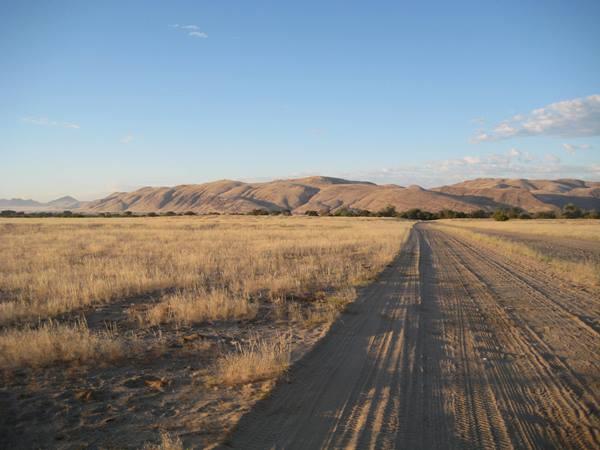
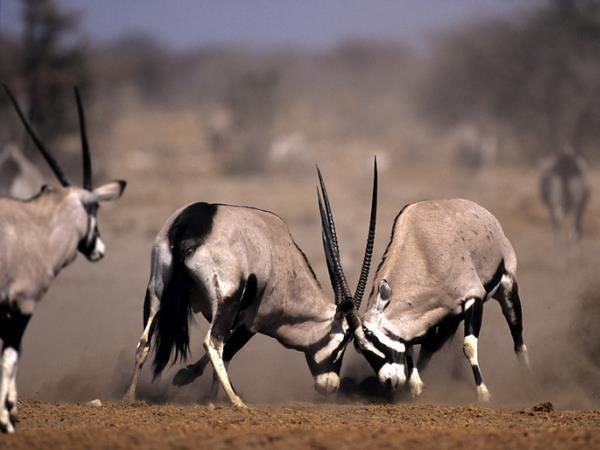
| Day 2: | This morning, a detailed travel brief, followed by the collection of your rental vehicle. Your destination for today is the Kalahari. The Kalahari Desert is a vast and mesmerising landscape spanning southern Africa, including parts of Namibia, Botswana and South Africa. Although classified as a semi-arid sandy savanna, its rolling dunes, wide horizons and raw beauty capture the true spirit of the desert. This region is defined by dramatic contrasts, where harsh, dry conditions support an impressive variety of wildlife and plant life. The Kalahari is home to resilient species such as meerkats, cheetahs, gemsbok and kudu. After seasonal rains, the landscape transforms with fresh grasses, wildflowers and active waterholes, creating a strikingly vibrant and life-filled environment. This afternoon, participate in a beautiful sundowner to experience your first Namibian sunset. (B, D) |
| Day 3-4: | Departing the Kalahari, your journey to Lüderitz showcases southern Namibia’s diverse landscapes. Pass small towns, vast plains and rocky outcrops as the red Kalahari sands give way to the windswept Atlantic coast. Along the route, enjoy scenic stops and spot desert-adapted wildlife. Arriving in Lüderitz, experience the refreshing coastal breeze and charming colonial architecture, offering a striking contrast to the arid desert terrain you’ve traversed. This drive captures the dramatic and varied beauty of Namibia. Enroute you could make a short detour to visit the Quiver Tree Forest and Giant’s Playground. Tomorrow you can visit the ghost town of Kolmanskop (B) |
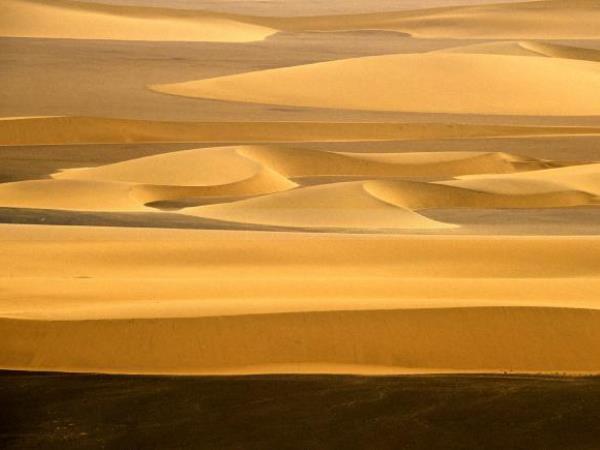
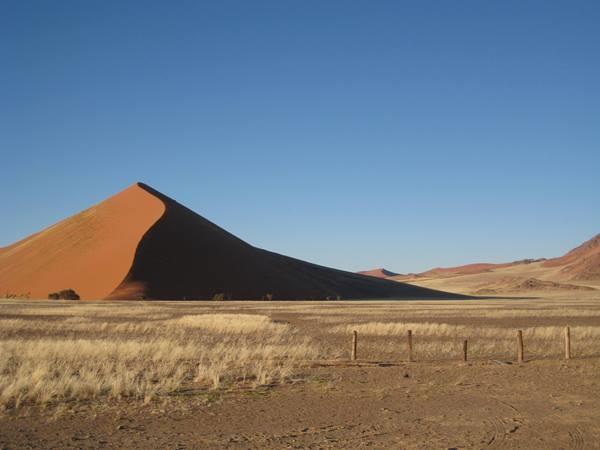
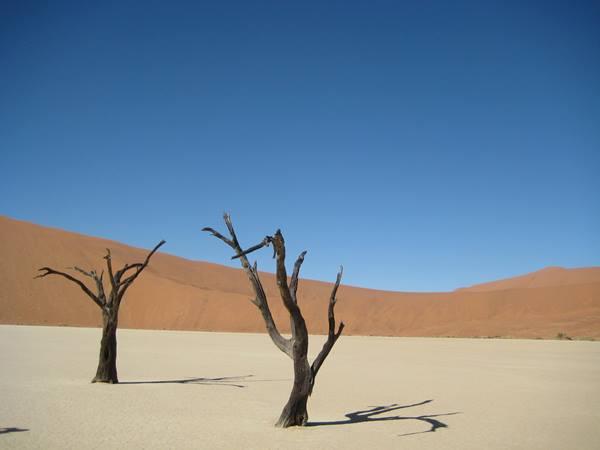
| Day 5-6: | Drive to Sossusvlei today. Enroute, take time to visit the wild Namib horses in Aus. The Namib Desert, stretching along Namibia’s Atlantic coast, is the world’s oldest desert and one of its most iconic. Its striking landscapes feature towering red dunes, some of the highest on Earth, along with gravel plains, salt pans and rugged mountains. Despite extreme aridity, it supports desert-adapted wildlife such as oryx, springbok, jackals and elephants in the north. The desert offers a surreal, otherworldly experience with shifting light and shadows. Highlights include Sossusvlei’s Dune 45 and Dead Vlei, and the Skeleton Coast, where the vast desert meets the Atlantic, creating hauntingly beautiful scenery. (B, D) |
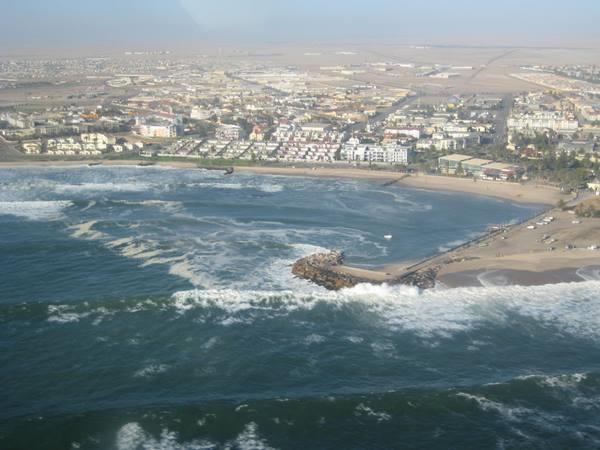
| Day 7-8: | Depart for Swakopmund, making sure to stop in Solitaire for our famous apple pie. Swakopmund, a charming coastal town between the Atlantic Ocean and the Namib Desert, offers a unique blend of history, culture and natural beauty. Renowned for its well-preserved German colonial architecture, the town features pastel buildings, cobbled streets and traditional bakeries, reflecting a distinct European charm. Its seaside setting and cool climate provide a refreshing escape from the inland heat. Adventure seekers can enjoy sandboarding, quad biking, scenic desert tours or skydiving. The vibrant waterfront, museums, galleries, markets and local crafts complete the experience, making Swakopmund an ideal destination for relaxation, culture and unforgettable coastal adventures. Take time to visit the pink flamingoes in Walvis Bay (B) |
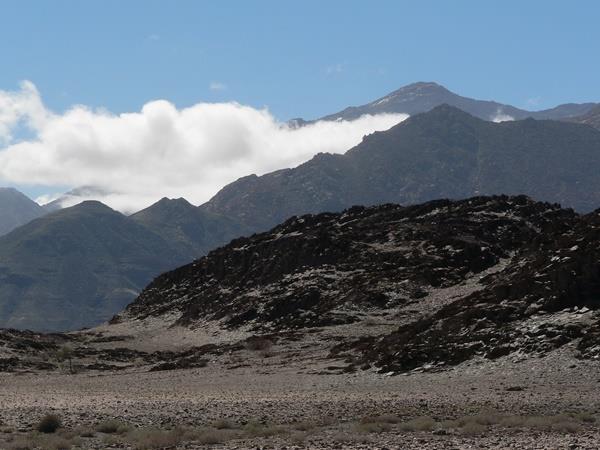
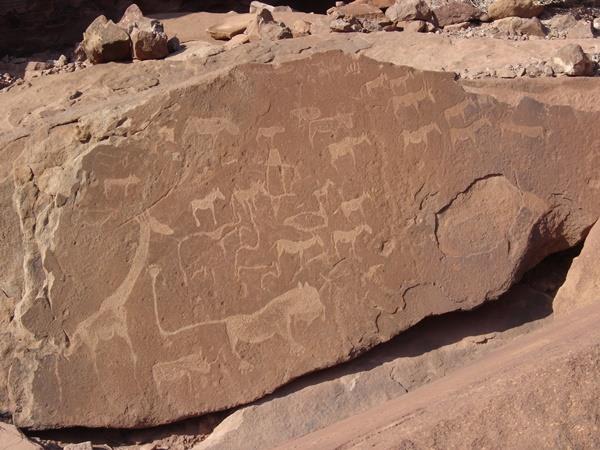
| Day 9-10: | Twyfelfontein. Drive to Damaraland where you will see ancient rock paintings, petrified forest and the indigenous Welwitschia plants which only grow in a remote place in the desert. It is also home to open plains filled with elephant, rhino, ostrich and spingbok. (B, D) |
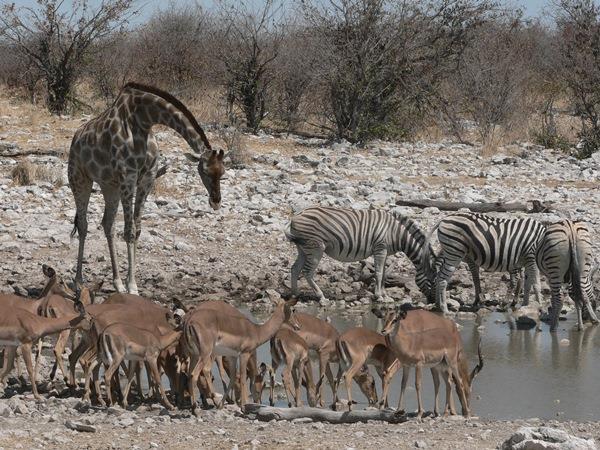
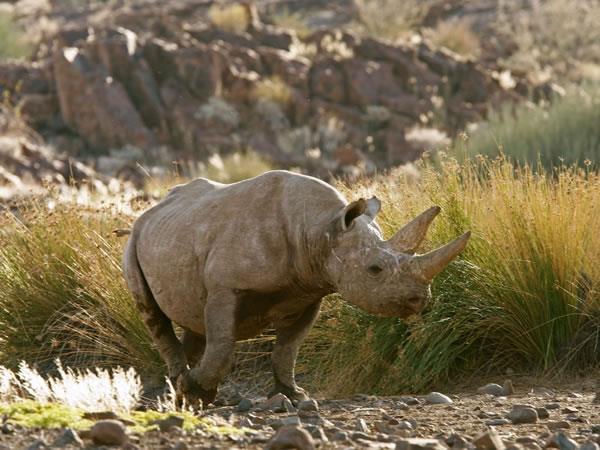
| Day 11: | Etosha National Park. One of the largest and best game viewing parks in Africa, Etosha has dozens of waterholes which attract a huge number of plains game including the endangered Black Rhino and huge herds of elephants. (B, D) |
| Day 12: | Okonjima Nature Reserve. Explore this national park, home to unrivalled cheetah and leopard safaris and nestled in the Omboroko Mountains. Okonjima is home to a wide variety of animals - brown hyena, pangolin, cheetah, leopard, and many others. Join them on a night game drive to see some of our more elusive animals. (B, D) |
| Day 13: | Return to Windhoek. Check into your hotel and return your hire car. (B) |
| Day 14: | Departure. Transfer to the airport for your return flight. (B) |
Map
Price information
Price includes 4-wheel drive car hire, transfers, meet & greet, accommodation, meals and services as per full itinerary.
Departure information
Travel guides
Holiday information
Reviews
20 Reviews of Namibia self drive safari
Reviewed on 30 Jun 2026 by Linda Kendell
Fantastic. Really well organised. Great hire 4x4..We felt very safe and people were generally very friendly and helpful...Stunning landscapes and bountiful wildlife. Excellent tourist infrastructure. Read full reviewReviewed on 21 Mar 2026 by Linda Edward
It was fabulous, even better than we had expected. All the arrangements went seamlessly and we were free to savour everything this wonderful country had to offer. Highly recommended. Read full reviewReviewed on 12 Oct 2025 by John Hinchliff
We had an amazing time in Namibia and many of the experiences we had there will stay in our memories for a long time. The scenery there is incredibly beautiful, and the environments are so pristine. We were able to see a very wide range of wildlife at incredibly close quarters. Read full reviewReviewed on 28 Sep 2024 by Susan Holden
Very enjoyable with a number of different experiences. If you're interested in wildlife, start the holiday in the south and finish at Etosha in the north. The animals are scarcer in the South but abundant in the north. Read full reviewReviewed on 08 Sep 2023 by Anon
We loved the mix of scenery, safari and activities (dune walking, sand-boarding and quad bikes). Read full reviewReviewed on 24 Jan 2023 by Shimuel Bernstein
The most memorable part was meeting wildlife, just in nature, not fenced in... Great experience. Read full reviewReviewed on 27 Nov 2022 by Kadie Hodges
Every stop was amazing. But in particular, the dune star lodge was incredible, sossusvlei, and etosha!.. We had a amazing two weeks seeing beautiful Namibia. Read full reviewReviewed on 29 Sep 2022 by Polly Scott
We really liked the flexibility of being able to stop for wildlife any time and in almost any place... Very well organised and run and allowed us to feel independence yet with a clear itinerary. It was excellent. Read full reviewReviewed on 19 Jul 2022 by Sarah Tame
Fantastic! Quite an adventure and many memories made. Read full reviewReviewed on 24 Nov 2019 by Alexandra Ritter
One of the best holidays we had. Definitely have to come back one day. Read full reviewReviewed on 13 Nov 2019 by Geraldine Schulz
The most exciting part of the holiday was coming face to face with rhino on foot! Read full reviewReviewed on 22 Aug 2019 by Sharon Crossfield
The whole trip was incredible. The wonderful animals at Etosha national park, spectacular scenery and the amazing people were all great experiences. Read full reviewReviewed on 20 Aug 2019 by Sarah Quilliam
The most memorable part of the trip was the magnificent scenery and emptiness of the south of Namibia and our desert trek with Tok Tokkie trails. Read full reviewReviewed on 23 Jul 2019 by Tarek Hbeichi
Everything went according to plan and we had an amazing, once in a lifetime experience. Read full reviewReviewed on 20 Mar 2019 by Victoria Cooper
The wonderful diverse scenery,flora and fauna appearing when you least expect. Read full reviewReviewed on 10 Dec 2018 by Helen Smeaton
SO many amazing memories such as... the surreal, moving experience of climbing Big Daddy dune at Sossusvlei to stand on top of the sand dune world, scree running down to Deadvlei below, jaw-dropping scenery from another world... Read full reviewReviewed on 25 Aug 2018 by Susanna Diacono
Traveling through Namibia for 3 weeks meant we managed to see some of the different landscapes, people and animals where each was very exciting. Read full reviewReviewed on 23 Jun 2018 by Nevil Rimes
Great trip that was enjoyed by all... Really enjoyed Fish River Canyon for its remoteness and lodge location, but then self-driving through Etosha and watching lions stalking prey at a water-hole was very special too. Read full reviewResponsible Travel
Planet
Although Namibia enjoys one of the lowest population densities in the world, the main drive behind conservation is overwhelmingly its people - given the fact that in so many cases land is shared between wildlife and people.Nowhere is this more apparent than in the community conservancies. Here large areas of small-scale pastoral farming have been brought under wildlife with successful ecotourism the most important revenue earner and employer for the communities.
Hunting and poaching in Namibia is forbidden meaning that wildlife is at its most natural, and with such vast spaces of wild land, humans are not as encroaching on the animals as some other African countries.
Namibia is bringing mainstream conservation into tourism with its community projects and animal conservation projects, such as AfriCat, Save the Rhino Trust, and the Torra Conservancy.
Save the Rhino Trust’s (SRT)
Due to poaching of desert wildlife in the early 1980’s the rhino numbers shrank to near extinction. This prompted people in the area to form a Trust, the aim of which was to stop the horrendous slaughter of rhino, elephant and other wildlife. Since the Trust's inception, it has successfully collaborated with government, traditional leaders and local communities with an aim to provide security for and monitor the rhino population in the region, as well as to benefit the community through conservation and tourism.
All staff at SRT come from the areas neighbouring the rhino range within the Kunene region. Many more community members are benefiting indirectly from the work done by SRT, through the Trust's employment of local people. The SRT has established one of the first Community Based Species Survival (CBSS) Projects for rhino in Africa, with direct community involvement in the conservation of rhino, and benefits received through conservation and tourism flow to the local population.
Several tourism ventures in the Kunene region have been supported by SRT for the benefit of the community, for example Desert Rhino Camp and Ongava Lodge.
Desert Rhino Camp
The camp offers a brilliant insight into the ecology and conservation of this incredible area and at the same time contributes directly to the Trust and ultimately the sustainability of this vulnerable area and its wildlife. This concession supports a healthy population of desert adapted black rhino and elephants.
The Desert Rhino Camp donates a portion of each guest's fee to the project, while the Wilderness Safaris Wildlife Trust has funded specific projects such as relocation of individual rhino to boost other population centres in Namibia.
Ongava Game Reserve
In 1991, the shareholders of Ongava converted four unproductive cattle ranches into a highly productive 30,000-hectare private game reserve that is now a haven to large concentrations of wildlife. The Ongava Game Reserve forms a buffer between Etosha National Park and the farms to the south, which enables large game such as elephant and lion to move between the Park and the private reserve.
The most successful reintroduction project on the Reserve, however, is the white and black rhino project. At present, Ongava holds one of the largest Namibian rhino custodianships for the Namibian government.
Today, Ongava is a safe haven for breeding rhino to more sustainable numbers and then reintroducing them into areas where they previously flourished making it possible to show its guests an endangered species and to participate in meaningful conservation programmes.
Okonjima – Africat Foundation
Based on Okonjima's 22,000 ha private nature reserve, in central Namibia, the AfriCat Foundation was founded in the early 90’s and formally registered as a non-profit organisation. AfriCat has since grown significantly and what started out primarily as a welfare organisation has over the years identified the need to include a focus on education and research as being essential to accomplishing long-term conservation of Namibia’s large carnivores.
The foundations objectives are to create awareness and promote the tolerance of large carnivores among the farming community by assisting farmers in effective farm management techniques including targeting problem predators as opposed to indiscriminate removal. They also educate youth about large carnivores and environmental awareness.
As well as this they provide humane housing, treatment and care for orphaned and injured animals. The AfriCat foundation has rescued more than 850 cheetahs and leopards and over 85% have been released back into the wild.
People
The ground agents we use have been fundamental in the conservation in Namibia, owning a lot of National parks and Lodges, and consequently supporting wildlife trusts, schools and local families and communities in those areas. They believe that in protecting these areas, and including the local communities in this process, they can make a difference to Africa and ultimately the world. Tourism is a crucial part to the conservation for this reason. All staff at the lodges and game reserves are local to the area.Our local ground agents have a unique approach to bringing tourism and conservation together with its goal to share these wild areas with guests from all over the world, while at the same time helping to ensure the future protection of Africa's spectacular wildlife heritage and sharing the benefits of tourism with local communities.
Windhoek Craft centre
Namibian Craft Centre in Windhoek offers unique handiwork from Namibian only manufacturers. By buying at the Craft Centre you are directly support the Namibians with no middlemen sitting in-between.
Okahandja Town
Okahandja is an important centre for woodcarvers from the north. They practice their ancient skills at the Woodcarvers Market next to the main road. The Wood Cavers are a major tourist attraction and offer curios at very low prices. Stone and other products are also available. Most of the items sold are truly African and are made locally. This is a good place to pick a souvenir as well as support the local community and their families.
Damaraland Camp
The Damaraland community comprises of a unique group of people who have recognised the value of the wildlife on their land and formed a Community Wildlife Conservancy to protect it.
Torra Conservancy is an unfenced multiple use area, zoned by the community members in order to derive benefit from wildlife populations while continuing sustainable, subsistence and commercial farming projects. In return for responsible management of wildlife populations, the Namibian government gives communities the rights to consumptive and non-consumptive use of this natural resource. The formation of the conservancy has resulted in substantially increased numbers of desert wildlife and in uplifting of the local community.
In the case of Damaraland Camp, finance, project management and expertise has been provided for the camp’s development while the community contributed labour, skills and the conservancy itself. Revenue flows back to the community both directly and indirectly through the payment of the land lease, conservation levies and salaries. All staff employed in the lodge come from the community and their employment is overseen by a joint committee comprised of the Torra Conservancy and Damaraland Camp ensuring that income is as evenly distributed across the 40 villages of the conservancy as possible.
The camp's emphasis on conservation-positive impact and sustainable ecotourism has been reflected in the considerable increase in general game numbers. The award winning Damaraland Camp has become an inspiration for communities and conservationists throughout Africa and beyond.
Popular similar holidays
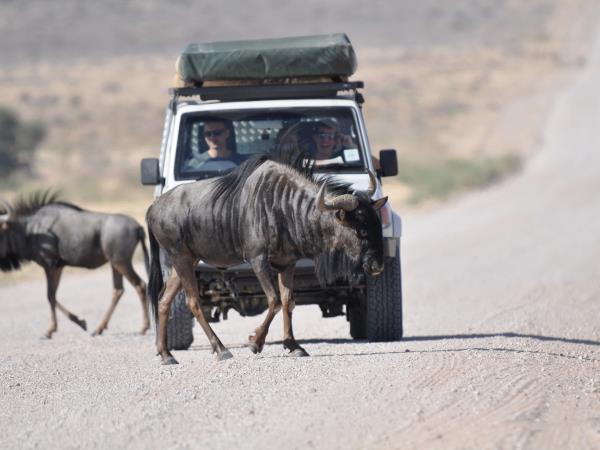
Namibia highlights self drive
From £3310 - £3425 12 days excluding flights
See Namibia's highlights on this tailor-made self-drive
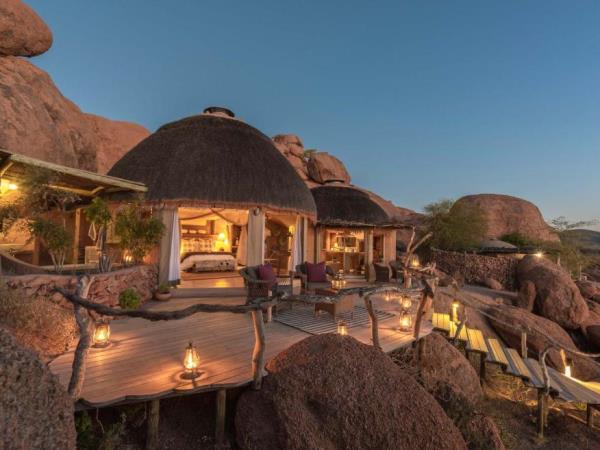
Namibia self drive and Botswana holiday
From £7900 - £9650 19 days excluding flights
Stunning self drive tour ending at Victoria Falls
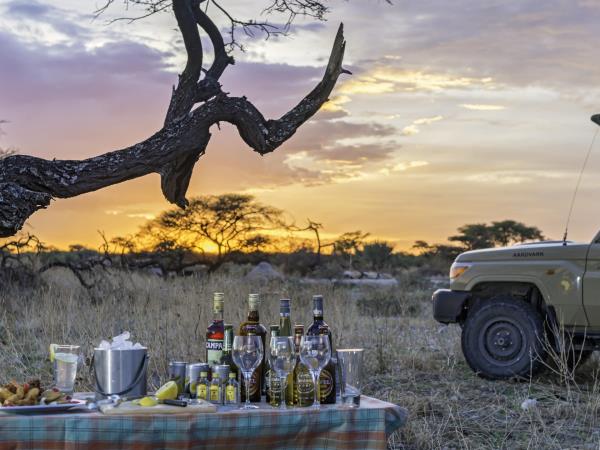
Namibia, Chobe and Victoria Falls holiday
From £3230 - £3895 13 days excluding flights
Self-drive adventure through Namibia + Chobe and Vic Falls