driving in Australia’s outback

I thought I knew what the outback would be like, but I found it completely compelling – all that land either side of the road, stretching out in the shimmering heat.![]()

The Australian outback is big. It’s a place with cattle stations the size of countries, open pit mines, gaping skies, massive wedge-tailed eagles out the sunroof. There are no traffic lights or roundabouts and very few turns in the road, but plenty of ’roos on the verge.
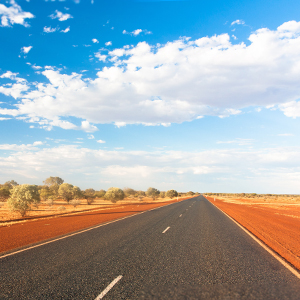
It’s here that you’ll find some of the world’s longest straight roads. Some are so quiet, like the famous Eyre Highway (the only sealed road between South Australia and Western Australia) that they can be used by the Royal Flying Doctor Service as an emergency landing strip. Running alongside the road are some of the world’s longest fences and some of the world’s most idiosyncratic road signs, telling you that there’s no fuel for 500km, to watch out for kangaroos and camels, or asking you facts about the state; trivia questions and answers are written on consecutive signs to keep drivers awake on long journeys.
Speaking of long, these roads are populated by the world’s longest lorries, too: road trains, which are trucks with multiple trailers and that stop for no one. Our own Jo Cooke from Responsible Travel took a mammoth road trip through the outback from Perth. “In your wing mirror you spot the sparkle of sunlight reflecting off chrome as the truck approaches, then the cab, then coach after coach of vehicle roars past, leaving orange dust and a distant rumble.”
The distances are long, the landscape is vast – settle in for the ride.
It’s here that you’ll find some of the world’s longest straight roads. Some are so quiet, like the famous Eyre Highway (the only sealed road between South Australia and Western Australia) that they can be used by the Royal Flying Doctor Service as an emergency landing strip. Running alongside the road are some of the world’s longest fences and some of the world’s most idiosyncratic road signs, telling you that there’s no fuel for 500km, to watch out for kangaroos and camels, or asking you facts about the state; trivia questions and answers are written on consecutive signs to keep drivers awake on long journeys.
Speaking of long, these roads are populated by the world’s longest lorries, too: road trains, which are trucks with multiple trailers and that stop for no one. Our own Jo Cooke from Responsible Travel took a mammoth road trip through the outback from Perth. “In your wing mirror you spot the sparkle of sunlight reflecting off chrome as the truck approaches, then the cab, then coach after coach of vehicle roars past, leaving orange dust and a distant rumble.”
The distances are long, the landscape is vast – settle in for the ride.

What is the outback?
You are likely to do a bit of outback driving when you’re in Australia – as the ‘outback’ covers some 80 percent of the country.When people think of the outback, they are usually thinking of Australia’s Red Centre, where you’ll find Uluru Kata Tjuta National Park, Alice Springs and the red dunes of the Simpson desert – all in the Northern Territory.
Yet the outback stretches far beyond here. It’s so called because it’s what lies ‘out back’ behind the cities and the seaside. Yes, there are red deserts but also tropics, savannahs, woodlands, rocky hills, floodplains and wildernesses. In most states, the outback doesn’t reach the coast; nearly 90 percent of Australia’s population lives within 50km of the sea. But in sparsely populated Western Australia the outback stretches right the way to the Indian Ocean. A third of New South Wales is outback.
A lot of outback land is owned by Indigenous people (who technically own the entire country) – especially in the Northern Territory and South Australia, and this is in part thanks to a growing movement to return land to its original owners.
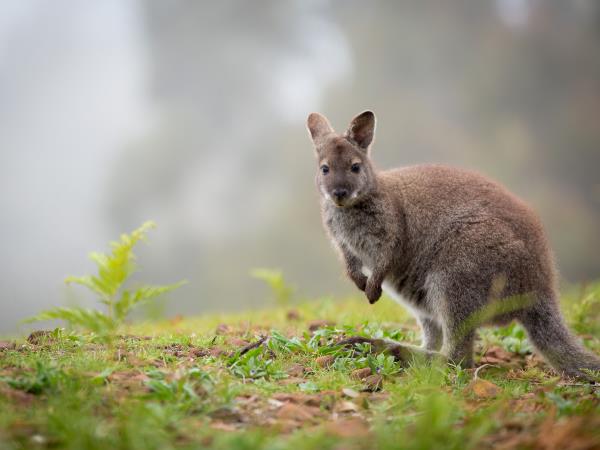
B&B self drive tour of Tasmania, meet the locals
Explore coastal expanses and mountainous magnificence on this Tassie tailor made trip
From
AU $1995 to AU $8000
8 days
ex flights
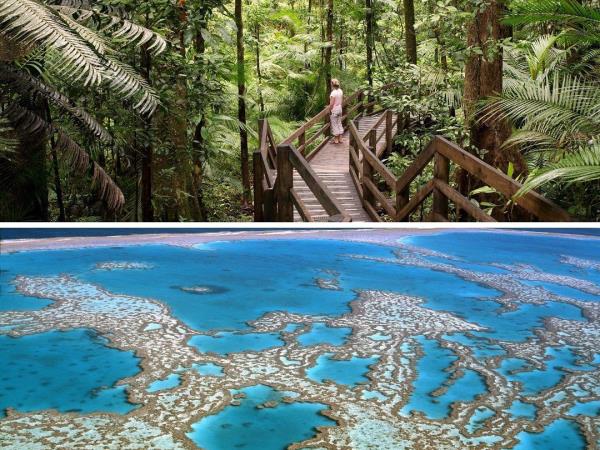
Sydney to Cairns self drive holiday
City stays, campervan and rainforest experiences.
From
£8591
27 days
ex flights
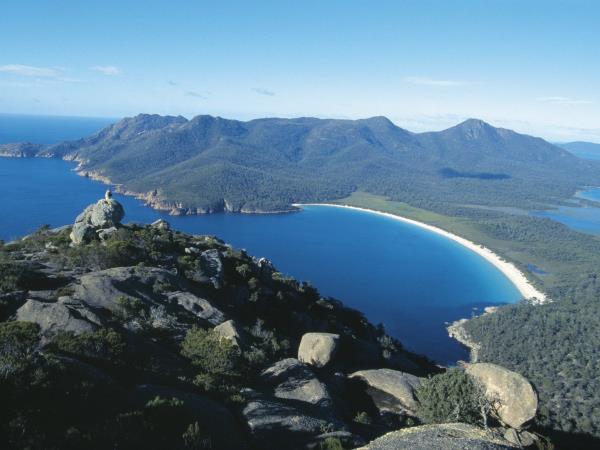
Tasmania self drive holiday for Australians
Discover the hidden paradise on your doorstep
From
AU $1495
8 days
ex flights
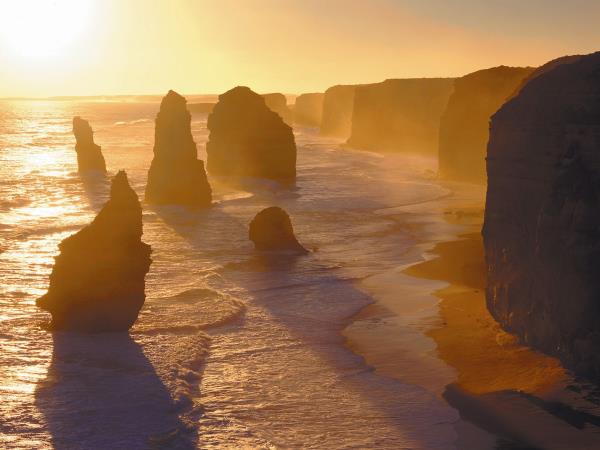
Southern Australia & Tasmania tailor made holiday
See Tasmania, Victoria and South Australia, tailor-made
From
£10900
15 days
ex flights
Holiday to Tasmania for New Zealanders
An off-beaten-track self drive round Tasmania's hidden gems
From
AU $2995 to AU $7995
21 days
ex flights
Western Australia self drive holiday
Tailor-made itinerary to Australia's Coral Coast
From
£6080
16 days
inc UK flights


What’s it like driving in Australia's outback?
Roo bars fixed to the front of yutes, roadhouses where you can stay for the night after you’ve fuelled up at the servo: outback driving has its own language.![]()
You’re never going that fast: speed limits aren’t just there for your safety, they also protect wildlife and livestock, which also sometimes use Australia’s roads, especially in the interior.
You’re always driving in the day. Our trips are designed so that you don’t drive at night – in the outback, this is the time when you’re most likely to encounter wildlife and it can be hard to avoid collisions. “We only drove at night once, and never again,” says Jo. “We were on constant alert for roos, whose gigantic frames would suddenly appear, lit up by our headlights at the side of the road. Frankly, we were very lucky!"
You might not make many turns. The Mitchell Highway between Queensland and New South Wales and the Eyre Highway between Western and Southern Australia are two famous examples of Australia’s rod-straight roads. Sometimes, there isn’t all that much to see out of the window, either.
You can wave at other road users – as there are so few of you. In Western Australia, the recorded traffic volumes on roads are just a few hundred cars a day – London’s M25 orbital motorway gets 200,000.
You’ll make more stops than you expect. In the outback, the general rule is that if you see a servo (fuel station) you should probably stop and fill up, even if you’ve got plenty of fuel. “Fuel stops were few and far between,” says Jo. “But each one was had its own character - each petrol station stocked souvenirs, but the star of the stop was always the 'servo pie', or service station pie, much tastier than it sounds!"
You may need to adjust your tyre pressure. If you’re going off road you will change your tyre pressure depending on the terrain – once you get to the Red Centre you may be driving over sand, and will need to let out a bit of air, or have your tyres changed.
Not all outback road trips go off road, and you can explore in a camper van or an ordinary car: for example, all roads are sealed in Ulu?u-Kata Tju?a National Park.
You’re always driving in the day. Our trips are designed so that you don’t drive at night – in the outback, this is the time when you’re most likely to encounter wildlife and it can be hard to avoid collisions. “We only drove at night once, and never again,” says Jo. “We were on constant alert for roos, whose gigantic frames would suddenly appear, lit up by our headlights at the side of the road. Frankly, we were very lucky!"
You might not make many turns. The Mitchell Highway between Queensland and New South Wales and the Eyre Highway between Western and Southern Australia are two famous examples of Australia’s rod-straight roads. Sometimes, there isn’t all that much to see out of the window, either.
You can wave at other road users – as there are so few of you. In Western Australia, the recorded traffic volumes on roads are just a few hundred cars a day – London’s M25 orbital motorway gets 200,000.
You’ll make more stops than you expect. In the outback, the general rule is that if you see a servo (fuel station) you should probably stop and fill up, even if you’ve got plenty of fuel. “Fuel stops were few and far between,” says Jo. “But each one was had its own character - each petrol station stocked souvenirs, but the star of the stop was always the 'servo pie', or service station pie, much tastier than it sounds!"
You may need to adjust your tyre pressure. If you’re going off road you will change your tyre pressure depending on the terrain – once you get to the Red Centre you may be driving over sand, and will need to let out a bit of air, or have your tyres changed.
Not all outback road trips go off road, and you can explore in a camper van or an ordinary car: for example, all roads are sealed in Ulu?u-Kata Tju?a National Park.
Essentials for Australian outback driving
“Our playlist for the drive north out of Perth was a compilation my Aussie uncle had put together that he had named 'country music for city slickers',” says Jo. “It was the perfect accompaniment for two urbanites on their first outback journey!”
Whilst a playlist is near top of the list of essentials for long stretches of outback driving – downloaded or in physical media because there might not be any signal – you’ll need a jack, not the Jackson 5, for emergencies.
Drivers planning to go into remote areas usually go fully kitted out – think a Toyota Landcruiser, fitted with a roo bar and a fridge, carrying a first aid kit featuring a snake bite kit. Cars often carry a compressor, additional oil, and additional proper tyres to replace any tyres on the road (you don’t want to rely on a temporary spare tyre to drive long distances to the next garage). With no mobile signal, carry paper maps, and consider taking a communications devices like an EPIRB (emergency position-indicating radio beacon, more often used on boats), long range radio tuned to the Royal Flying Doctor Service, or satellite phone. Some drivers swear by Starlink (a satellite internet service).
If you’re sticking to familiar tourist routes and not doing any off road driving you can scale this down somewhat – but wherever you go, you should always carry plenty of spare water and non-perishable snacks and an extra jerry can of fuel in case the service station you were banking on happens to be closed.
Going with a responsible holiday company can ensure that you are safe and travelling with the right kit. “We give you the most appropriate vehicle for you and your journey,” says Kate Tyler, from our partner Journey in Style. That might be a 4x4 vehicle, if your trip includes driving on unsealed roads, and you will call up a number provided to get your tyres switched as you approach more sandy terrain. “In Australia you can drive for four hours and not see anyone else,” adds Kate. “It’s vital to plan and pack well with plenty of water onboard and emergency kits in your car and your phones fully charged. Journeys can be very long – so it’s about really preparing before you go.”
Whilst a playlist is near top of the list of essentials for long stretches of outback driving – downloaded or in physical media because there might not be any signal – you’ll need a jack, not the Jackson 5, for emergencies.
Drivers planning to go into remote areas usually go fully kitted out – think a Toyota Landcruiser, fitted with a roo bar and a fridge, carrying a first aid kit featuring a snake bite kit. Cars often carry a compressor, additional oil, and additional proper tyres to replace any tyres on the road (you don’t want to rely on a temporary spare tyre to drive long distances to the next garage). With no mobile signal, carry paper maps, and consider taking a communications devices like an EPIRB (emergency position-indicating radio beacon, more often used on boats), long range radio tuned to the Royal Flying Doctor Service, or satellite phone. Some drivers swear by Starlink (a satellite internet service).
If you’re sticking to familiar tourist routes and not doing any off road driving you can scale this down somewhat – but wherever you go, you should always carry plenty of spare water and non-perishable snacks and an extra jerry can of fuel in case the service station you were banking on happens to be closed.
Going with a responsible holiday company can ensure that you are safe and travelling with the right kit. “We give you the most appropriate vehicle for you and your journey,” says Kate Tyler, from our partner Journey in Style. That might be a 4x4 vehicle, if your trip includes driving on unsealed roads, and you will call up a number provided to get your tyres switched as you approach more sandy terrain. “In Australia you can drive for four hours and not see anyone else,” adds Kate. “It’s vital to plan and pack well with plenty of water onboard and emergency kits in your car and your phones fully charged. Journeys can be very long – so it’s about really preparing before you go.”
Contact Us

Call us for a chat about our holidays. We are happy to discuss your holiday and help in any way we can. No bots, queues or awful hold music.

01273 823 700
Call us after 10am
Calling from outside the UK


Safety when driving in Australia's outback
In Australia you can drive for four hours and not see anyone else. It’s vital to plan and pack well with plenty of water onboard and emergency kits in your car.![]()
Is it safe driving in Australia's outback?
It’s safe to drive in the outback, but take it seriously – these distances are massive. One cattle farm in South Australia is the size of Belgium. One road doesn’t have fuel for hundreds of kilometres.
It’s driving that’s dangerous, not necessarily driving in the outback. Like anywhere in the world, the vast majority of the very small number of tourist deaths in Australia are from road accidents, not heat or dangerous snakes.
It’s driving that’s dangerous, not necessarily driving in the outback. Like anywhere in the world, the vast majority of the very small number of tourist deaths in Australia are from road accidents, not heat or dangerous snakes.
Where to go driving in the outback on our holidays
For a short taste of the outback, drive to Kakadu National Park – Australia’s largest national park – from Darwin on our Kakadu and Arnhelm land tour. Some of the park can only be accessed by 4WD, but most can be accessed with a normal vehicle. Continue from Kakadu to Alice Springs and you’ll be following the famous Red Centre Way.
For a truly epic drive that features both outback driving and great beaches and marine life, drive between Perth and Exmouth along the Coral Coast – where the outback meets the ocean – on our Western Australia self drive holiday.
Head north from Adelaide, South Australia, and you’ll soon hit the outback. Our Australia tour includes car hire so you can do just that, exploring the Flinders Range. Park up and enjoy long hikes in the mountains to see the landscape in a different light.
Most importantly, explore the outback like you intend to come back – you’ll never see it all on one trip.
For a truly epic drive that features both outback driving and great beaches and marine life, drive between Perth and Exmouth along the Coral Coast – where the outback meets the ocean – on our Western Australia self drive holiday.
Head north from Adelaide, South Australia, and you’ll soon hit the outback. Our Australia tour includes car hire so you can do just that, exploring the Flinders Range. Park up and enjoy long hikes in the mountains to see the landscape in a different light.
Most importantly, explore the outback like you intend to come back – you’ll never see it all on one trip.
More Australia self drive articles
Read our guide to find out why road trips are the best way to really get to know Australia.
The massive state of Western Australia is best accessed with a car – and then by snorkel.
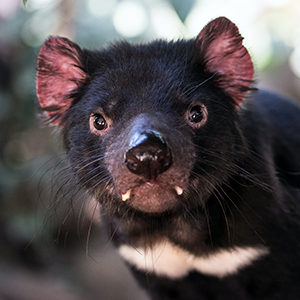
Discover the wild delights of exploring the island state on a self drive itinerary.
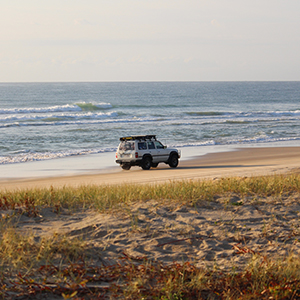
It would take something pretty special to induce many travellers to leave Sydney – like this.





.jpg)