Food & drink in Georgia
All my memories of Georgian food are generous.
We over-ordered in every restaurant because everything was so abundant, and delicious, and good value. On the first night in Tbilisi, I had mushroom khinkali so tasty that I resolved to have them again, only to be led into temptation by other dishes on menu after menu.
We ate plates of deep-fried aubergine studded with pomegranate next to rushing rivers under church-topped hills. We ate homemade chicken salad flavoured with blue fenugreek and marigold. In homestays, homemade breakfast came with fruits from the trees that shaded the house. We wandered markets flushed with freshness in late spring where there were spring onions as long as my arm. On hikes, we gorged on fruit leather and sweet dried persimmons.
I didn’t visit Georgia for the food, but I’d go back just to eat it all over again.
We ate plates of deep-fried aubergine studded with pomegranate next to rushing rivers under church-topped hills. We ate homemade chicken salad flavoured with blue fenugreek and marigold. In homestays, homemade breakfast came with fruits from the trees that shaded the house. We wandered markets flushed with freshness in late spring where there were spring onions as long as my arm. On hikes, we gorged on fruit leather and sweet dried persimmons.
I didn’t visit Georgia for the food, but I’d go back just to eat it all over again.

Georgian dishes: A very old cuisine indeed
“Georgian cuisine is rich, vibrant and full of surprises,” says Responsible Travel’s Jenny, who spent months working from Tbilisi. “Khinkali was my favourite; the filled soupy dumplings are a staple. Satsivi – poultry in a creamy walnut, garlicky sauce – is traditionally served cool and it’s delicious. I also loved the tangy fruit sauces and dips, like tsitsila isrim-maqvalshi: chicken in a sweet-but-tart, sticky blackberry sauce.”
Our Caucasus food and wine tours show you the best of the region.
Georgian cuisine is very old. There’s evidence of winemaking here from 8,000 years ago, giving the country the rightful title: birthplace of wine. There’s evidence that wheat was first cultivated here too, around eight millennia ago – meaning that Georgians may have been among the first farmers, and the first bakers, too. Georgian churchkhela: strings of walnuts dipped in syrupy grape juice, which you see dangling like sausages from market stalls for tourists, dates back 1,000 years, and were once a handy snack dangling off the saddles of warriors. Wheat, winemaking and churchkhela are inscribed on the UNESCO Lists of Intangible Cultural Heritage.
Traditional farming prevails over mass mechanised farming in many corners of the country, religion dictates periods of fasting and appropriate fasting foods, and feast days still take place with animal sacrifice. We once got stuck in the day’s traffic, our car crawling alongside a family carrying a chicken in a cat carrier. The supra – or feast – is a strong tradition featuring heaps of dishes accompanied by speeches and music. Today eating with friends is still a major pastime – at a long picnic or at the table.
Our Caucasus food and wine tours show you the best of the region.
Georgian cuisine is very old. There’s evidence of winemaking here from 8,000 years ago, giving the country the rightful title: birthplace of wine. There’s evidence that wheat was first cultivated here too, around eight millennia ago – meaning that Georgians may have been among the first farmers, and the first bakers, too. Georgian churchkhela: strings of walnuts dipped in syrupy grape juice, which you see dangling like sausages from market stalls for tourists, dates back 1,000 years, and were once a handy snack dangling off the saddles of warriors. Wheat, winemaking and churchkhela are inscribed on the UNESCO Lists of Intangible Cultural Heritage.
Traditional farming prevails over mass mechanised farming in many corners of the country, religion dictates periods of fasting and appropriate fasting foods, and feast days still take place with animal sacrifice. We once got stuck in the day’s traffic, our car crawling alongside a family carrying a chicken in a cat carrier. The supra – or feast – is a strong tradition featuring heaps of dishes accompanied by speeches and music. Today eating with friends is still a major pastime – at a long picnic or at the table.
Georgian food now: a fresh & funky cuisine
This is a cuisine that chimes with modern sensibilities. Some of the food traditions are old but the dishes, especially in spring, exude freshness. No cuisine seems to use herbs with such joyous abundance. Georgians eat seasonally – from spring lamb dishes to lacto-fermented winter pickles.
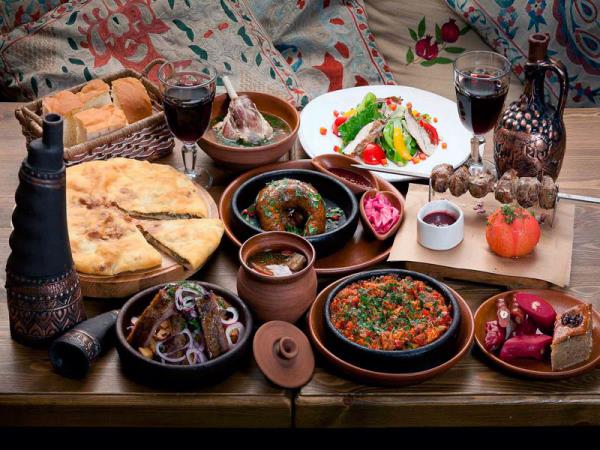
Dishes at a supra are designed to be shared and are set out as small plates along the length of the banquet table; a communality that wouldn’t be out of place at a modern shared plates restaurant.
There’s also an abundance of vegan and vegetarian Georgian dishes – phkali are vegan pates made with ground walnut and vegetables like leek, beetroot, aubergine or carrot that are served at the start of a meal. On menus you’ll find stuffed aubergines, cheese dips, vegetable and bean stews, and filled breads more than holding their own against any meat dishes.
This is also fusion cuisine thanks to Persian, Greek, Mongol, Arab and Russian cultures invading and leaving their mark (and their recipe books), and Georgia’s position hosting traders travelling along the Silk Road. Georgia has the tonir – a bread oven where the bread is cooked on the inside wall – that resembles an Indian tandoor in purpose and in name: both cultures probably got the idea from passing Persians. The famous Georgian dumpling, the khinkali, probably came from the army of Genghis Khan.
Georgian restaurants have long been popular in Russia, but more recently other internationally famous celebrity chefs have turned their attention to the country and Georgian recipe books are popular. At the turn of the millennium there were just two Georgian restaurants in the UK, both in London. Now, there are dozens in the capital alone. Georgian food feels trendy, but our love for it certainly isn’t going anywhere.
Dishes at a supra are designed to be shared and are set out as small plates along the length of the banquet table; a communality that wouldn’t be out of place at a modern shared plates restaurant.
There’s also an abundance of vegan and vegetarian Georgian dishes – phkali are vegan pates made with ground walnut and vegetables like leek, beetroot, aubergine or carrot that are served at the start of a meal. On menus you’ll find stuffed aubergines, cheese dips, vegetable and bean stews, and filled breads more than holding their own against any meat dishes.
This is also fusion cuisine thanks to Persian, Greek, Mongol, Arab and Russian cultures invading and leaving their mark (and their recipe books), and Georgia’s position hosting traders travelling along the Silk Road. Georgia has the tonir – a bread oven where the bread is cooked on the inside wall – that resembles an Indian tandoor in purpose and in name: both cultures probably got the idea from passing Persians. The famous Georgian dumpling, the khinkali, probably came from the army of Genghis Khan.
Georgian restaurants have long been popular in Russia, but more recently other internationally famous celebrity chefs have turned their attention to the country and Georgian recipe books are popular. At the turn of the millennium there were just two Georgian restaurants in the UK, both in London. Now, there are dozens in the capital alone. Georgian food feels trendy, but our love for it certainly isn’t going anywhere.
Our top ways to experience Georgian culinary culture

The most memorable part of the holiday? Being served up different foods and wine each night, such a lovely surprise. Sitting in a farmhouse eating locally grown food and making pastry and watching cheese being made.![]()

– our traveller Paul Rabin on a Georgia food tour
Exploring regional cuisines with homestays & home cooking
I loved homestays in Georgia, where the breakfast was fruits picked by leaning over the side of the veranda, and dinner had homemade bread and home-brewed wine. “Some of our favourite food memories in Georgia are the simple ones,” says our partner and Georgia expert, Caucasus-based Arara Tour, who organises local food experiences in Georgia, “sitting at a family table, eating homemade food, drinking local wine and listening to stories.”
“There is a lot of variety,” Arara Tour adds. “The food can be quite different from one region to another, with each area having its own specialties and traditions.”
The Pankisi Valley in Kakheti is one such region: the valley is inhabited by the Kist people, the descendants of Chechens who settled here in the 19th century. Our tours include time with a local Kist family, preparing a meal. “These experiences feel very personal and are often what visitors remember long after the tour finishes,” says Arara Tour. The wider Kakheti region is very famous for wine.
Svaneti is another region for food adventures. Sing with your supper when you stay with the Svan – an ethnic subgroup in Georgia who have their own language and traditions. Homestays here may come with a side of the polyphonic singing for which the Svan are famous.
“There is a lot of variety,” Arara Tour adds. “The food can be quite different from one region to another, with each area having its own specialties and traditions.”
The Pankisi Valley in Kakheti is one such region: the valley is inhabited by the Kist people, the descendants of Chechens who settled here in the 19th century. Our tours include time with a local Kist family, preparing a meal. “These experiences feel very personal and are often what visitors remember long after the tour finishes,” says Arara Tour. The wider Kakheti region is very famous for wine.
Svaneti is another region for food adventures. Sing with your supper when you stay with the Svan – an ethnic subgroup in Georgia who have their own language and traditions. Homestays here may come with a side of the polyphonic singing for which the Svan are famous.
Enjoying elevated Georgian cuisine in the capital
When I first got to Tbilisi, my friend who lived there warned me away from the capital’s Georgian restaurants. “Once you get out of the capital,” she said, “it’s all that’s available – have something else!” I didn’t heed this advice at all. I was interested in trying some of Tbilisi’s modern dining options. Over the last couple of decades, Tbilisi’s historic heart has been restored and given a facelift. Many modern Georgian restaurants have opened in the city – including Shavi Lomi, which opened in 2011, Polyphonia, which opened in 2016, and Cafe Daphna, which offers traditional Georgian cuisine with a modern twist, in a trendy dining room.
To see where it all begins, take a look in a city market – Tbilisi’s vast Dezerter Bazaar has stalls and sellers spilling out into the surrounding streets. What’s for sale depends on the season, but look out for tubs of fermented vegetables, crates of apples, mounds of spices, drifts of walnuts.
To see where it all begins, take a look in a city market – Tbilisi’s vast Dezerter Bazaar has stalls and sellers spilling out into the surrounding streets. What’s for sale depends on the season, but look out for tubs of fermented vegetables, crates of apples, mounds of spices, drifts of walnuts.
Tastings, cooking masterclasses & monasteries
Could you make a perfectly folded khinkali, baste a glossy skewer of mchvadi (Georgian barbecue), avoid making a total sticky mess of churchkhela, or knead the perfect loaf of bread? Cooking masterclasses help you fully appreciate what you’re eating in Georgia. “We want to work with people who use traditional recipes, local ingredients and methods,” says Arara Tour.
Hands-on cookery workshops are fun and relatively easy, but you might want to stand back and watch when it comes to making tenili cheese – this UNESCO-listed string cheese is the hardest to make in the country, and its long strands are created with a complicated curd braiding process.
Monasteries and convents are sources of traditional produce – making excellent honeys and cheeses. “A simple food experience can turn into a long conversation with a winemaker, baker or local host, and guests sometimes get to hear personal stories about the food and traditions they are experiencing.”
Hands-on cookery workshops are fun and relatively easy, but you might want to stand back and watch when it comes to making tenili cheese – this UNESCO-listed string cheese is the hardest to make in the country, and its long strands are created with a complicated curd braiding process.
Monasteries and convents are sources of traditional produce – making excellent honeys and cheeses. “A simple food experience can turn into a long conversation with a winemaker, baker or local host, and guests sometimes get to hear personal stories about the food and traditions they are experiencing.”
A seat at the feast – the traditional supra
Lastly, if you can, see if you can get an invite to a traditional supra, where you’ll be wined and dined, toasted and serenaded as part of the feast: “For visitors, taking part in a supra can be a very special way to understand Georgian culture and hospitality,” says our partner Arara Tour.
Supra simply means tablecloth – the dishes that you present for the feast should be so numerous that they overlap each other and cover the table.
I bought my own supra as a souvenir from Georgia from a traditional block dye printing workshop. It’s on my dining room table right now, where I’m writing this. I didn’t visit Georgia for the food, but I’ve come back with it as my prevailing memory of the place.
Supra simply means tablecloth – the dishes that you present for the feast should be so numerous that they overlap each other and cover the table.
I bought my own supra as a souvenir from Georgia from a traditional block dye printing workshop. It’s on my dining room table right now, where I’m writing this. I didn’t visit Georgia for the food, but I’ve come back with it as my prevailing memory of the place.
Georgia food holiday
A food tour taking in Georgia's most fascinating sites
From
£1345 to £1375
8 days
ex flights
Armenia and Georgia food and wine tour
Discover this mouthwatering Caucasian food and wine
From
£1735
10 days
ex flights
Culinary tour of Armenia and Georgia
Enjoy a premium culinary journey through the Caucasus
From
£-1 to £5560
15 days
ex flights


Contact Us
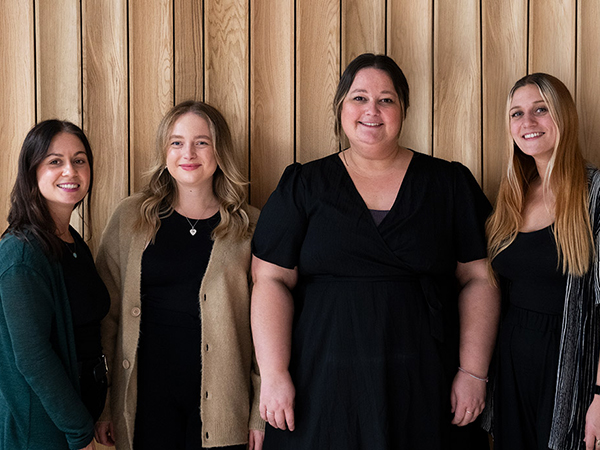
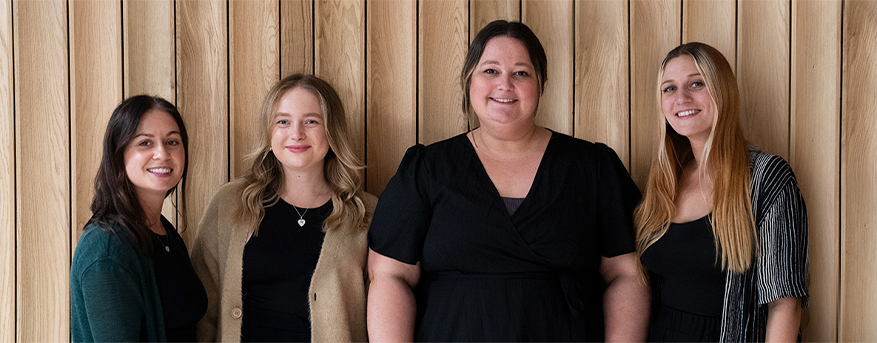
Call us for a chat about our holidays. We are happy to discuss your holiday and help in any way we can. No bots, queues or awful hold music.

01273 823 700
Call us until 4pm
Calling from outside the UK

Traditional Georgian dishes to try
Be prepared for a surfeit of delicious food at every single meal!![]()
– our traveller Joy Davies on a Georgia cultural holiday
To start
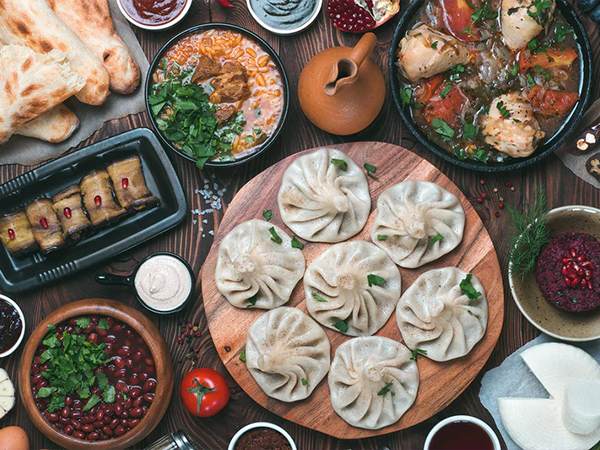
Georgian salad – on every menu for a reason, this hearty, chunky cucumber and tomato salad with ground walnuts showcases the country’s reverence for fresh vegetables and herbs, generous portions, and the importance of walnuts.
Phkali (vegetarian starters) – moulded vegetable balls – colourful, seasoned walnut paste acts as their glue. And although they are vegan, the reason stems from orthodox fasting, which takes meat out of the diet at certain times of year, and economical reasons – vegetables are cheaper to make into meals than meat is.
Nigvziani badrijani – strips of aubergine rolled around a smear of walnut sauce, garnished with pomegranate seeds: a popular starter alongside phkali.
Kharcho – a hearty beef soup where the base is an interesting plum puree thickened with walnuts and flavoured with spices.
Phkali (vegetarian starters) – moulded vegetable balls – colourful, seasoned walnut paste acts as their glue. And although they are vegan, the reason stems from orthodox fasting, which takes meat out of the diet at certain times of year, and economical reasons – vegetables are cheaper to make into meals than meat is.
Nigvziani badrijani – strips of aubergine rolled around a smear of walnut sauce, garnished with pomegranate seeds: a popular starter alongside phkali.
Kharcho – a hearty beef soup where the base is an interesting plum puree thickened with walnuts and flavoured with spices.
To follow
Khinkali – so well-known you can buy them as fridge magnets, or a print on your socks: these are boiled dumplings filled with meat or vegetables. There’s an art to making them, and an art to eating them. They’re lovely served with sour cream, hot butter, black pepper and heaps of fermented pickles on the side, including typically Georgian pickled endemic bladdernut flower buds.
Lobio – ‘lobio’ means beans, and beans means deliciousness when it comes to this dish, which is a bean and walnut stew, where the flavours are best left to develop overnight – that’s what makes this comfort food sing.
Mtsvadi – Georgian barbecue typically involves skewered chunks of pork neck cooked over the embers of burnt-down vineyard trimmings. It’s glazed repeatedly during the cooking process to give it a burnished sheen.
Chakapuli – this lamb stew signals the start of spring: the meat is braised with sour plums and herbs. It’s often served with adjika, a sharp, salty seasoning.
Shkmeruli – spatchcocked chicken cooked until deliciously crisp, served with a sauce made from heaps of shredded garlic and cream.
Jijig galnish – a traditional Kist meal of a garlicky lamb stew. The broth is soaked up by heaps of small oblong dumplings that resemble large orzo.
Satsivi – chicken in walnut sauce.
Chakhokhbili – a tomato-based chicken stew.
Lobio – ‘lobio’ means beans, and beans means deliciousness when it comes to this dish, which is a bean and walnut stew, where the flavours are best left to develop overnight – that’s what makes this comfort food sing.
Mtsvadi – Georgian barbecue typically involves skewered chunks of pork neck cooked over the embers of burnt-down vineyard trimmings. It’s glazed repeatedly during the cooking process to give it a burnished sheen.
Chakapuli – this lamb stew signals the start of spring: the meat is braised with sour plums and herbs. It’s often served with adjika, a sharp, salty seasoning.
Shkmeruli – spatchcocked chicken cooked until deliciously crisp, served with a sauce made from heaps of shredded garlic and cream.
Jijig galnish – a traditional Kist meal of a garlicky lamb stew. The broth is soaked up by heaps of small oblong dumplings that resemble large orzo.
Satsivi – chicken in walnut sauce.
Chakhokhbili – a tomato-based chicken stew.
To wash it down: typical Georgian drinks
Georgia’s famous wine aside, my memory of drinks in Georgia? The abundance of unusual flavours: tarragon-flavoured lemonade, homemade chacha flavoured with rose, the very sulphurous Borjomi sparkling water (an acquired taste that I didn’t fully acquire) and mountain teas made with herbs grown on the wild slopes of the Caucasus.
To snack
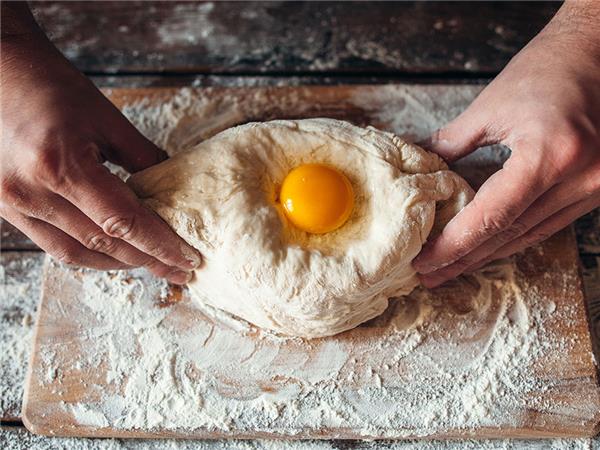
Khachapuri – delicious things come out of simple hole in the wall bakeries in Georgia. The most eye-catching khachapuri is the boat-shaped bread filled with cheese, with an egg in the middle – Adjaruli khachapuri. There are many other varieties of cheese bread out there.
Kubdari – this filled bread dish from the Svaneti region is the national dish of the Svans.
Lobiano – bean bread in which red bean paste is folded into dough and baked (I wasn’t a fan).
Mchadi – Georgia has a wheat belt, and a corn belt, which is wetter and warmer, and more suitable for growing corn. Mchadi is a simple cornbread that goes well with a bean stew.
Kubdari – this filled bread dish from the Svaneti region is the national dish of the Svans.
Lobiano – bean bread in which red bean paste is folded into dough and baked (I wasn’t a fan).
Mchadi – Georgia has a wheat belt, and a corn belt, which is wetter and warmer, and more suitable for growing corn. Mchadi is a simple cornbread that goes well with a bean stew.
More Georgia articles
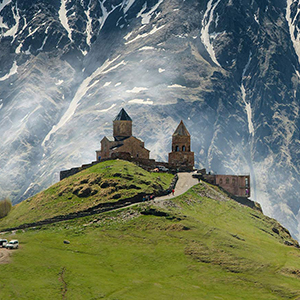
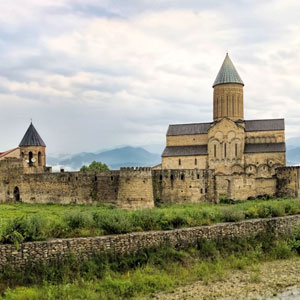
A crossroads of civilisations, the birthplace of wine, bordered by the Caucasus and the Black Sea - Georgia has a long history.
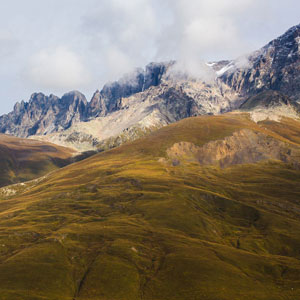
Discover monasteries and cave cities, stay in local homes and discover a rich food culture.
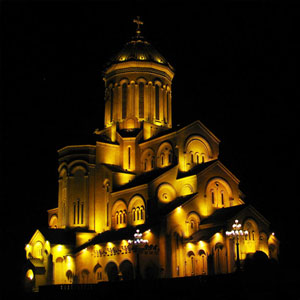
Deepen your understanding of the Eastern Europe Orthodox church in Georgia.
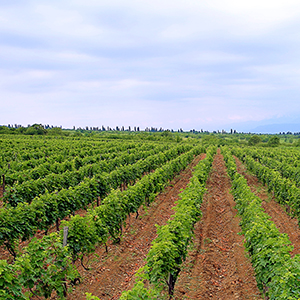
Traditional techniques still hold sway in one of the world's oldest wine producers.
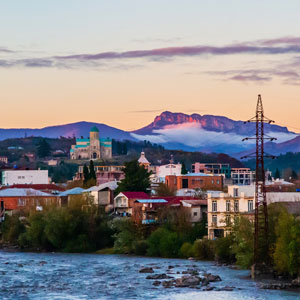
Neighbours, yes, but not the same: explore in the furthest reaches of Eastern Europe.

Consider combining your trip with a visit to Armenia and Azerbaijan, too.

Gung-ho types will be in their element on a family holiday in Georgia.
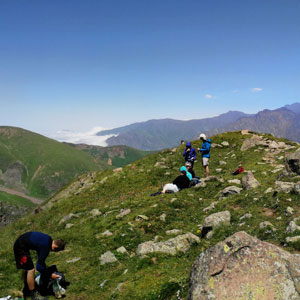
Get travel advice from our local experts on everything from where to stay to local culture, and hiking in the mountains.

A responsible holiday here can create sustainable incomes and reduce urban migration.




.jpg)

