Namibia cycling advice
John Penge from our specialist for Namibia cycling, Exodus, has this advice:
What’s this trip like?
"This trip for someone who wants to see the classic Namibia itinerary, but with a different spin. It’s not a full-on cycling trip. You’ll have to be reasonably fit, but apart from the fat biking excursion, there’s minimal off-roading. You’ll be cycling along gravel tracks for the most part. There are some long days, but it’s not steep. All our guides are Namibian – from the fat biking excursion to our two-three tour leaders."
The joys of fat biking
"The fat biking is incredible. I had a two hour session with our local supplier, who is based in Swakopmund and I really enjoyed it. You’d think cycling on sand would be difficult and that you’d skid around, but the fat bikes are geared towards it. You’ll get a briefing on how to use the gears, and how to use your weight on the bike, and then around three hours to try them out. There are a fewer steeper dunes and drops for people who want more of a challenge."
Spotting wildlife
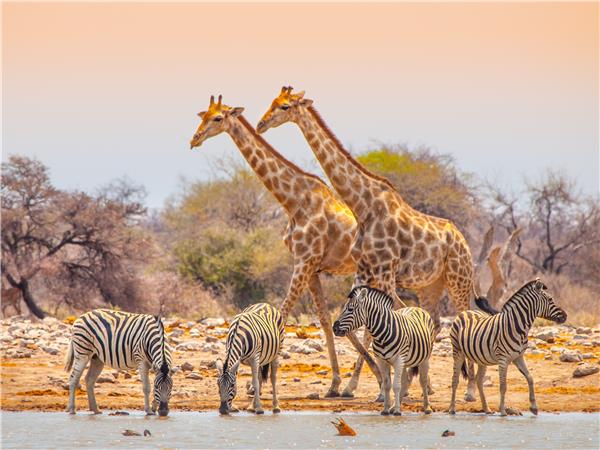
"The best place to see wildlife on this trip is in Etosha National Park. Some people do see wildlife outside the park, too. Once you head north, from Spitzkoppe onwards, you might see some of the bigger animals. I went to Etosha in April after a particularly wet rainy season. The wildlife was more dispersed than normal (it tends to gather around watering holes in dry season, and is easier to spot), but I still saw a leopard, a lion, an elephant."Is it busy?
"Tourism in Namibia is on the up – we do have to book some accommodation far in advance – at least a year in advance. This isn’t because it’s overcrowded, it’s because there are fewer places to stay in the first place.I went a couple of years ago and I didn’t find it touristy at all, and neither did my colleague, who went in the summer. Etosha National Park is popular, and you will see other people, but it’s nowhere near as busy as, say, the Masai Mara.
Sossusvlei is popular, too, but it’s not like you’re going to the Taj Mahal. You won’t be the only group climbing the dune – there will be a line of people all climbing up – but I didn’t find that that took away from the experience."
Travelling responsibly
"Namibia is a very clean country, and you can tell that Namibian people take pride in the fact that it’s unspoilt. The cities and towns are clean. The tap water in Namibia is drinkable, and the support vehicle has a water tank on board. I spoke to our operator today and they’re experiencing the worst drought in seven years at the moment. Drought affects the country’s agriculture, but it hasn’t impacted our departures so far."
Our top trip
Namibia cycling holiday
Wide open spaces, endless skies & sand dunes
From
£3275 to £3604
12 days
ex flights
Small group travel:
2026: 11 Oct
2027: 9 May, 23 Jun, 18 Jul, 15 Aug, 26 Sep, 3 Oct, 14 Nov
2026: 11 Oct
2027: 9 May, 23 Jun, 18 Jul, 15 Aug, 26 Sep, 3 Oct, 14 Nov
Contact Us
Call us for a chat about our holidays. We are happy to discuss your holiday and help in any way we can. No bots, queues or awful hold music.

01273 823 700
Call us after 10am
Calling from outside the UK

Health and safety
HEALTH
SAFETY
More Namibia cycling articles
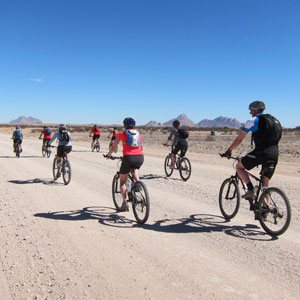
Do you get ecstatic about emptiness? On a cycling holiday you can eat up Namibia’s deserts under two wheels.
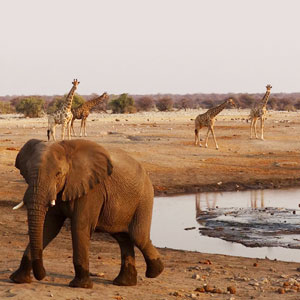
It’s hard to appreciate Namibia’s size – but cycling certainly helps you take in its vast landscapes.