Walking in US national parks

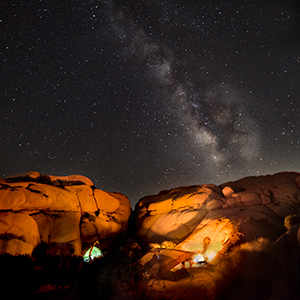
More than anything it’s the little vignettes you remember from walking in US national parks. Eight years on from my own time road-tripping around the country, I mostly recall specific moments: helping my son clamber onto the hulking trunk of a fallen giant redwood tree; the feel of a bear skin displayed at a ranger-led talk in Grand Teton; the baking late-afternoon heat of a stroll in Joshua Tree, and the constant stench of sulphur, and the rocketing whoosh of the geysers, in Yellowstone.

David Kay, product manager for our partner Ramble Worldwide, feels the same about his own adventures. “One memorable walk was from the floor of the Grand Canyon back up to the rim. I said to my daughter ‘you probably don’t realise the enormity of what you’ve just done but it’s something that very few visitors here experience.’”
In the western USA you have probably the highest concentration of unique geological features in a smallish area anywhere in the world.
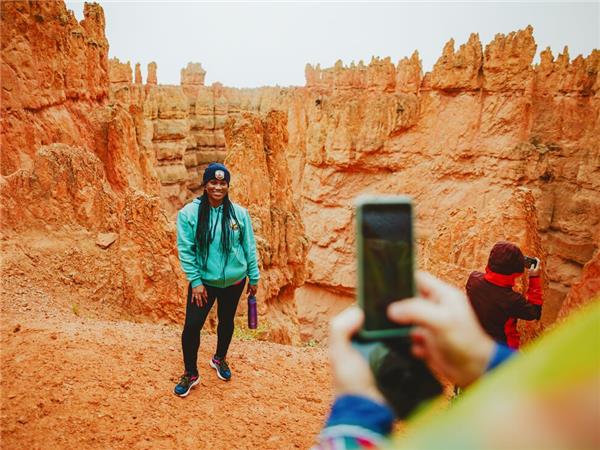
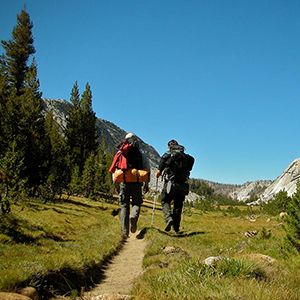
Many people never get out of their vehicle while visiting US national parks, but the best way to experience them is on foot. Our walking holidays in US national parks predominantly focus on those in the west of the country, with a range of circuitous routes available. They include hikes in Zion, Bryce Canyon, Arches, and of course Grand Canyon. “I think in the western USA you have probably the highest concentration of unique geological features in a smallish area anywhere in the world,” says David. “If we wanted, we could create dozens of different walking holidays in this region alone.”

All visitors must pay a park entrance fee which contributes towards trail maintenance as well as conservation projects. Our holidays also make financial donations to conservation-focused organisations such as the Sierra Club and the Southern Utah Wilderness Alliance, and support renewable energy projects like wind and solar power.

“We have excellent driver-guides on our walking trips, and in some parks you’ll meet up with rangers who are very good at bringing to life subjects like biodiversity, park geology and botany,” says David.

Parklife! – where to walk

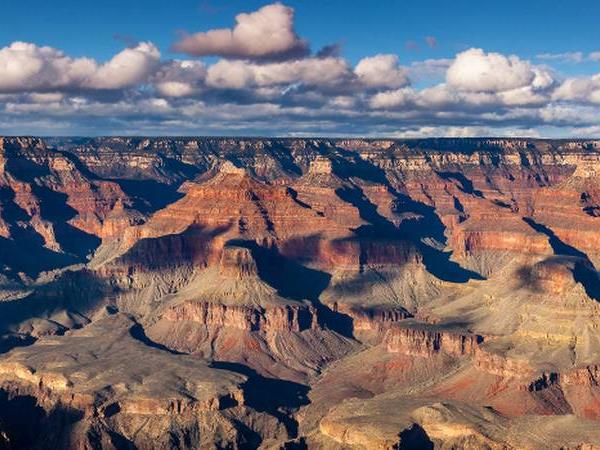
From the rim, the Grand Canyon is nothing more than a very big hole; you have no real concept of its scale until you’re inside it surrounded by millions of years of history.
Typically, our US national park walking holidays focus on just one of the larger parks such as Yellowstone or Yosemite, or visit a handful of them with one or two days exploring each. Between the national parks there are many state parks, wildlife reserves and other protected areas, not to mention Monument Valley, where you might stop for a brief hike en route.

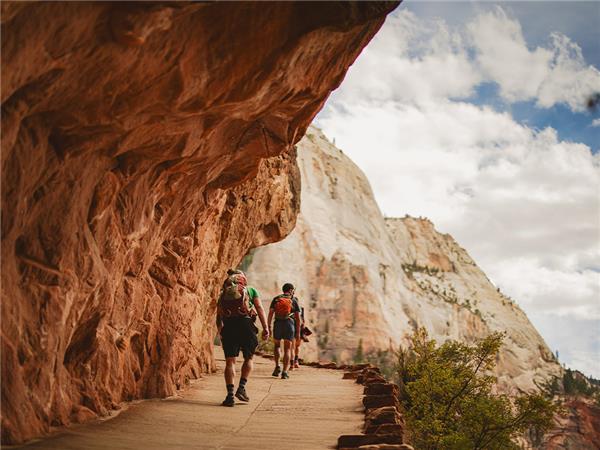
Itineraries vary, but with several great western parks clustered together there is a range of options for road trips eastwards. Bryce Canyon with its otherworldly hoodoos and Zion, its red rock canyons a staple of Hollywood Westerns, are normally paired together as the journey between them is under two hours.

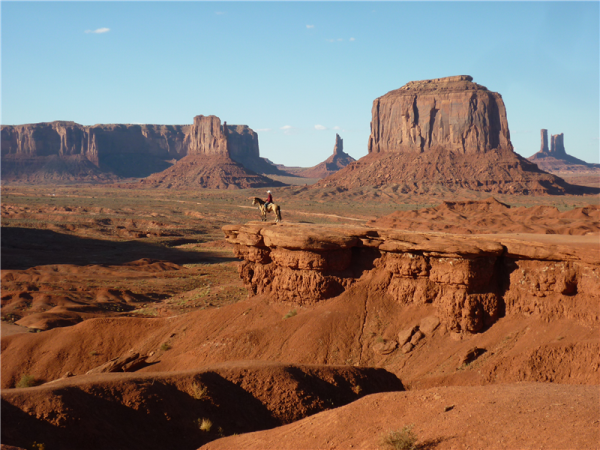
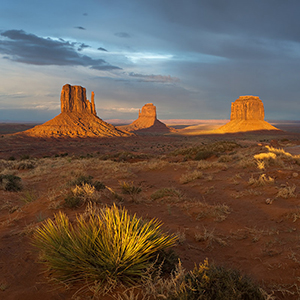
Though not itself a national park, Monument Valley is a regular stop on walking holidays and can easily be looped in with Bryce and Zion, Death Valley, Mesa Verde and the Grand Canyon. The valley lies within the reservation of the Navajo Nation, and the immense sandstone buttes here that have formed a backdrop to many classic Western movies are sacred to the Navajo. Navajo guides accompany you on walks through the backcountry to admire this staggering scenery and learn more of its significance.

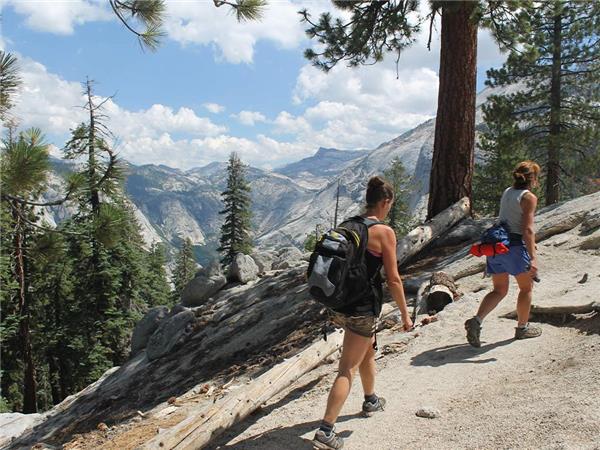
Yellowstone, 9,000sqkm and set apart from the other parks, can be the sole focus of a trip, as can Yosemite in California’s Sierra Nevada mountains. Once you escape the busier paths, these parks can be paradise for walkers.

The iconic Grand Canyon, like Monument Valley, is a stalwart of walking holidays, in part because it’s so easy to dodge the crowds by ducking below the canyon’s rim, and perhaps also in part because it is easily reached from both Las Vegas and Salt Lake City. On multi-park tours you can expect some long drives though. By example, from Grand Teton south to Monument Valley is a 1,000km, 11-hour drive necessitating a stopover in the Rocky Mountains (and a few exhilarating hikes therein, naturally).

Contact Us

Responsible Travel, Travel Team

Call us for a chat about our holidays. We are happy to discuss your holiday and help in any way we can. No bots, queues or awful hold music.

Responsible Travel, Travel Team

What does walking in US national parks involve?

Types of tour

In most cases these are small group trips, so all the thorny logistics are handled for you. Small group trips are very sociable, making them ideal for solo travellers. Trips are usually 10 days-plus, but you can get fast-paced five-day walking holidays which can form part of a wider US itinerary. Since most holidays focus on western USA, usually they get underway in Las Vegas, but others begin in San Francisco or Salt Lake City. Each city has more than enough points of interest to merit flying in a day or so early for a look around before you break out the walking boots.

Depending on the holiday you choose you may have a dedicated tour leader accompanying you throughout as well as a driver-guide, and you may meet up with local guides or park rangers in places as well. They also ensure that everyone keeps to marked trails to avoid any damage to habitats, or any danger to themselves – Yellowstone’s Mammoth Hot Springs is not a place to go jumping over any ropes.

How fit do I need to be?

Our holidays feature walking in up to six or more parks across two weeks. You’ll be walking on trails that are well-marked and well-maintained, so you won’t need a super high degree of fitness.

Since you will often be with both a tour leader and a driver-guide, some trips can offer either shorter or longer walks in each park depending on the amount of challenge you want, or the weather. A typical day might be a two-hour walk in one park or reserve, followed by lunch, a drive to the next location, and then another two-hour walk in the late afternoon.

Accommodation

Where you’re staying in hotels and inns these will usually be just outside park perimeters, so that you can enter early and leave late, thereby avoiding the coach group queues. Locally owned and operated lodges are used wherever possible.

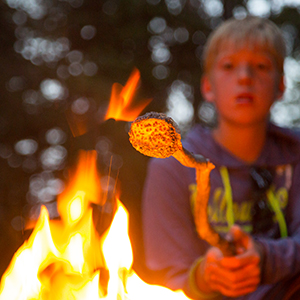
Our walking and camping holidays in America use high quality, heavy-duty tents. Groups share the load of erecting and disassembling tents and camp kitchens, making short work of it once they’ve been doing it for a few days. ‘Leave no trace’ principles are followed assiduously.

Will we see wildlife?

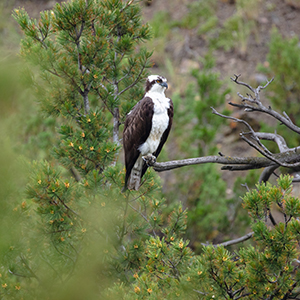
With the exception of Yosemite and Yellowstone, which are known for bears and wolves respectively, the western parks are known mostly for their landscapes, so any wildlife sighting is a bonus. “Even the little ground squirrels we’d see everywhere were very exciting to begin with,” enthuses David. “I was particularly struck by the hummingbirds we found, surprisingly at high altitudes – they’re tiny but very easy to spot as they hover in one place. The contrast between them and the size of the condor I saw in Grand Canyon was stunning.”

When to go

Our walking holidays are available from March through to November. There are July and August departures available but unless you’re restricted to those months you may want to give peak season a miss. “August is just too hot, really,” says David. “We go in May and September and in fact on our September tour you reach the Grand Canyon in early October when it’s not unknown to find snow.”

As well as reaching temperatures well into the 30s°C the summer months see America’s national parks getting very crowded. Once you leave the most famous viewpoints and paths behind, however, things tend to get a lot quieter, especially in the larger parks. In smaller parks such as Zion and Bryce Canyon, guides will seek out lesser-known routes. Other holidays find different ways to provide relief in hot months – for instance mixing up the walking with a day of kayaking and swimming on Lake Powell on the Colorado River to cool down.
Written by Rob Perkins
Photo credits: [Page banner: Fernando Gago] [Intro: David Kay, Ramble Worldwide] [Types of tour: David Kay, Ramble Worldwide] [Will we see wildlife?: Dulcey Lima]