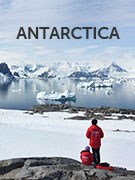
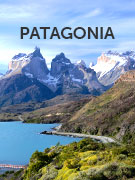
Seeing Patagonia & Antarctica together
Explore Patagonia, then travel on a Chilean boat in Antarctica to see the similarities – as well as the chasm of difference, between the two wildernesses either side of the Drake Passage.
Uniquely epic – hence why people are willing to part with thousands to see it – what does Antarctica have in common with anywhere? More than you’d think. If you visit Patagonia as well as Antarctica on one trip, you’ll find more shades of similarity than you’d first expect.
Every year, 120,000 people visit the White Continent, and most of them depart from Ushuaia, in Argentine Patagonia, the southernmost city in the world. As more people visit Antarctica – passenger numbers have increased tenfold since the 1990s – increasingly, travellers look to Patagonia, too: to visit ‘the end of the world’ before they continue onwards.
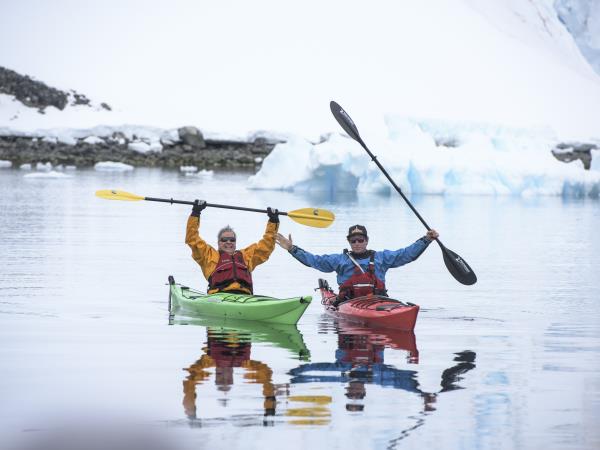
Patagonia’s landscapes are vast wildernesses with landscapes that barely fit in a viewfinder. A week of hiking, kayaking and exploring in its famous national parks are a worthy companion to an Antarctic cruise.
Oxana Protchenko from our partner EcoChile explains how they have been expanding our travellers’ options for exploring both continents on one trip, “It makes sense to combine Antarctica with Argentina and Chile,” she says. “It’s a natural continuum – Antarctica basically at the end of the continent.”
Uniquely epic – hence why people are willing to part with thousands to see it – what does Antarctica have in common with anywhere? More than you’d think. If you visit Patagonia as well as Antarctica on one trip, you’ll find more shades of similarity than you’d first expect.
Every year, 120,000 people visit the White Continent, and most of them depart from Ushuaia, in Argentine Patagonia, the southernmost city in the world. As more people visit Antarctica – passenger numbers have increased tenfold since the 1990s – increasingly, travellers look to Patagonia, too: to visit ‘the end of the world’ before they continue onwards.
Patagonia’s landscapes are vast wildernesses with landscapes that barely fit in a viewfinder. A week of hiking, kayaking and exploring in its famous national parks are a worthy companion to an Antarctic cruise.
Oxana Protchenko from our partner EcoChile explains how they have been expanding our travellers’ options for exploring both continents on one trip, “It makes sense to combine Antarctica with Argentina and Chile,” she says. “It’s a natural continuum – Antarctica basically at the end of the continent.”

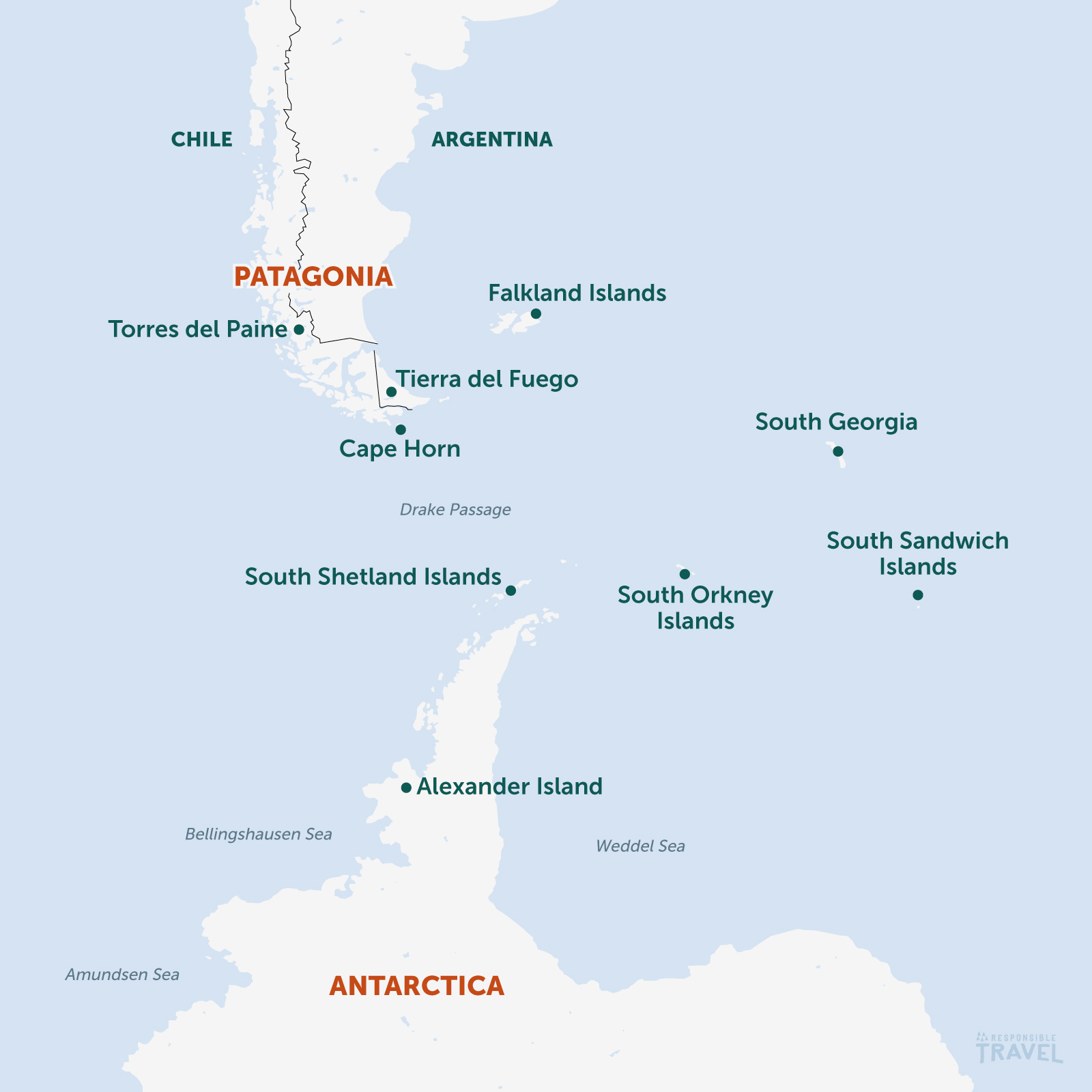
Patagonia & Antarctica map
Windswept wildernesses
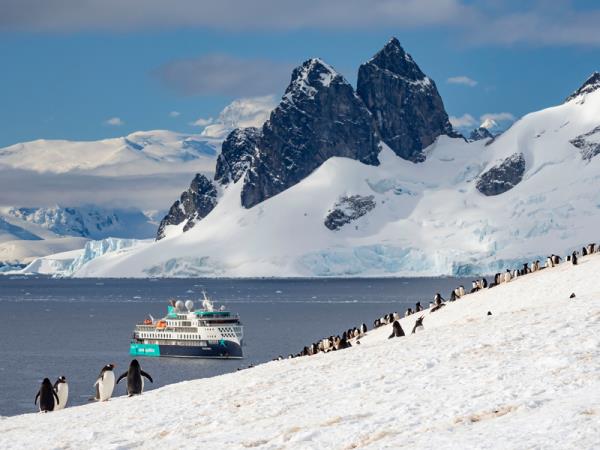
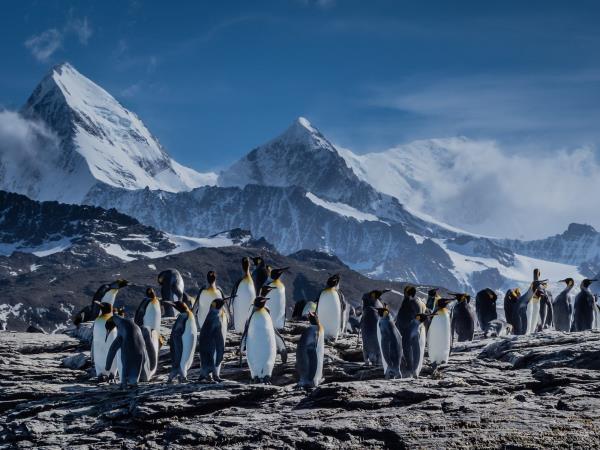
Long ago, these two continents were joined. 200 million years ago, the Antarctic Peninsula – a continuation of South America’s Andes – and Patagonia, were connected by the Antarctic land bridge. The two massive, windswept wildernesses still share similarities, including some similar wildlife – whales and seals, penguins and seabirds exist on both coasts, different species present either side of the water, but birdwatching guides often incorporate the two regions of South America and Antarctica in one book.Historically, these two remote regions hosted more explorers – and in the case of Patagonia, itinerant Indigenous peoples – than settlers. The place names mark out both Patagonia and Antarctica as lands of adventurers: the Beagle Channel, the Straits of Magellan. Cross the Drake Passage and the names continue down the Antarctic Peninsula: Lemaire Channel, Grandidier Channel, Davis Coast: named for explorers, geographers and sealers.
It’s a mark of their incredibly hostile geography and weather. Patagonia is in the Roaring Forties, the latitudes between 40° and 50° S where there are very strong winds. As you head further south you get the Furious Fifties and then Screaming Sixties. Commonwealth Bay in Antarctica is widely thought to be one of the windiest places on Earth, whilst Punta Arenas in Patagonia has ropes strung between lampposts to help pedestrians in strong gusts. In Torres del Paine 160km/h gusts can sweep hikers off their feet.
Making the most of the Magallanes
Chile’s Magallanes Region incorporates Chile’s claim on Antarctica, as well as the famous landscapes of the south of Patagonia: Torres del Paine, Cape Horn, Tierra del Fuego Island and the Strait of Magellan.
Argentina has similar claims: Tierra del Fuego is part of the province of Tierra del Fuego, Antarctica and South Atlantic Islands – which covers Argentina’s claims on Antarctica, which overlap with the UK's and with Chile’s.
Our local Chilean partner for Antarctica cruises has a foundation devoted to promoting and protecting the Magallanes region as a whole: including publishing a photo book about the relationship between Punta Arenas and Antarctica.
Close to Punta Arenas is a green hydrogen plant powered by the area’s famously strong winds. The foundation has been supporting a project that looks into the viability of using the green hydrogen produced near Punta Arenas to power Chilean bases in Antarctica. Their boats provision in Patagonia before heading into Antarctica, so you’ll be trying Patagonian produce whilst you sail in Antarctica, too.
The Antarctic land bridge is no more, but as more and more people cross into Antarctica on cruises from Patagonia, the need for responsible practices – and responsible tourism – that bridges both is ever clearer.
Argentina has similar claims: Tierra del Fuego is part of the province of Tierra del Fuego, Antarctica and South Atlantic Islands – which covers Argentina’s claims on Antarctica, which overlap with the UK's and with Chile’s.
Our local Chilean partner for Antarctica cruises has a foundation devoted to promoting and protecting the Magallanes region as a whole: including publishing a photo book about the relationship between Punta Arenas and Antarctica.
Close to Punta Arenas is a green hydrogen plant powered by the area’s famously strong winds. The foundation has been supporting a project that looks into the viability of using the green hydrogen produced near Punta Arenas to power Chilean bases in Antarctica. Their boats provision in Patagonia before heading into Antarctica, so you’ll be trying Patagonian produce whilst you sail in Antarctica, too.
The Antarctic land bridge is no more, but as more and more people cross into Antarctica on cruises from Patagonia, the need for responsible practices – and responsible tourism – that bridges both is ever clearer.
Exploring both, protecting both
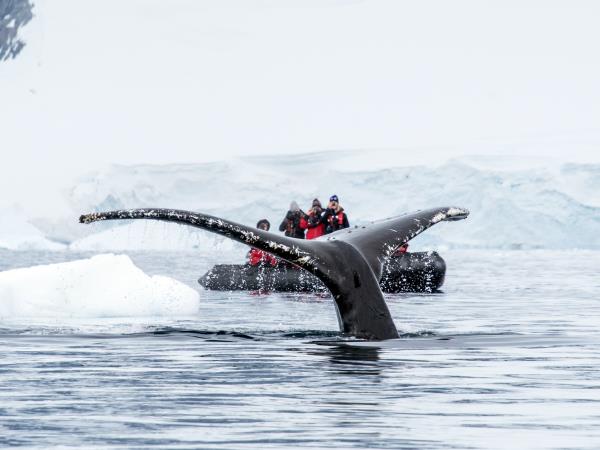
As you move south through Patagonia and down across the Drake Passage to Antarctica, you move further away from urban areas, and eventually from people in general – but, ironically, you’ll become more aware of the effects of humans on the environment, the further from civilisation you travel.The Antarctic Peninsula is known for its amazing wildlife watching, but each sighting comes with painful context as you learn about shrinking sea ice and threatened food sources. “Due to climate change,” says Oxana – “Even though they are further from humanity, they suffer the most.”
Many cruises and tours will openly talk about climate change, a shift in narrative that is only recent. “Ten years ago people wouldn’t notice,” says Oxana “But now there’s a lot of education on cruises.”
Rather than just learning, passengers can also take part in research on their cruise – collecting seawater samples, tracking and photographing whales – to help ongoing conservation efforts.
Patagonia and Antarctica holiday
Argentina’s highlights + Antarctica on a small-ship expedition!
From
£10905
16 days
ex flights
Active Argentina and Antarctic cruise holiday
Quintessential Patagonia & Antarctica for adventure-lovers
From
£16130
22 days
ex flights
Argentina & Antarctica 1 month holiday
Argentina & Antarctica slowly and off-the-beaten-path
From
£21341
4 weeks
ex flights
Patagonia and Classic Antarctic cruise holiday
Wildlife and adventure in Chilean Patagonia and Antarctica
From
US $23574
15 days
ex flights
Luxury Chile & Antarctic cruise holiday
Travel Chile in style plus fly-in Antarctic cruise
From
£23041
16 days
ex flights


Contact Us

Call us for a chat about our holidays. We are happy to discuss your holiday and help in any way we can. No bots, queues or awful hold music.

01273 823 700
Call us until 4pm
Calling from outside the UK


What does combining Patagonia & Antarctica entail?
Hiking poles & Polar cruises
Whilst you can cruise in Patagonia’s fjords, most travellers opt for a land-based holiday in Patagonia to combine with their boat-based time in Antarctica. Our holidays can be active breaks where you can work your way down through Patagonia from Buenos Aires – flying to El Chalten to explore Argentine Patagonia, including the hiking hub that is El Calafate, before flying to Ushuaia to embark on a cruise to Antarctica. Alternatively, take to the Chilean side and fly from Santiago de Chile to Punta Arenas – from here you can explore Torres del Paine National Park.
Small ships for big adventures
We never use ships with more than 250 people, and you can find cruises with even fewer passengers. “Antarctica already suffers a lot from big boats, especially since the hype around the destination started,” says Oxana. “We are really glad to see tendencies shift towards smaller vessels.” Their cruises favour smaller boats, and newer boats that are experimenting with e-fuels and other responsible practices.
“Smaller boats are a win-win-win,” says Oxana “It feels more personal, it feels more manageable, it’s not overcrowded. You can have more flexibility with the route; the idea of the cruise is not to set a set itinerary each day. The captain is always aware of what’s going on around so if there’s wildlife activity reported you can reroute.”
“Smaller boats are a win-win-win,” says Oxana “It feels more personal, it feels more manageable, it’s not overcrowded. You can have more flexibility with the route; the idea of the cruise is not to set a set itinerary each day. The captain is always aware of what’s going on around so if there’s wildlife activity reported you can reroute.”
How long to spend in Patagonia & Antarctica?
“14 days is the minimum trip,” says Oxana. Exploring two massive regions, the trip time can tot up if you’re travelling from outside the Americas. “It’s a long-haul flight just to get to Chile or Argentina – just to the capital,” says Oxana. “From there we recommend at least four or five days for either Chile or Argentina, and that’s not deep immersion.” Additionally, crossing the Drake Passage takes two days each way.
The shortest trip in Antarctica is five days and involves flying the Drake Passage between Punta Arenas and King George Island in the South Shetland Islands to save time. From the South Shetland Islands it’s easy to access the western coast of the Antarctic Peninsula.
You can also go on far longer trips: we have a four week itinerary that takes in the Falklands, South Georgia and Buenos Aires, too.
The shortest trip in Antarctica is five days and involves flying the Drake Passage between Punta Arenas and King George Island in the South Shetland Islands to save time. From the South Shetland Islands it’s easy to access the western coast of the Antarctic Peninsula.
You can also go on far longer trips: we have a four week itinerary that takes in the Falklands, South Georgia and Buenos Aires, too.
Best time to visit Patagonia & Antarctica together?
The Austral summer from November to February is the time to visit both Patagonia and Antarctica – for ice free Antarctica seas, warmer weather and more daylight hours in both Antarctica and Patagonia. This is peak season in Patagonia and you’ll notice lots of hikers in Torres del Paine. Whilst you can visit Patagonia outside of the Austral summer for a quieter visit, ice locks up Antarctica’s shores.