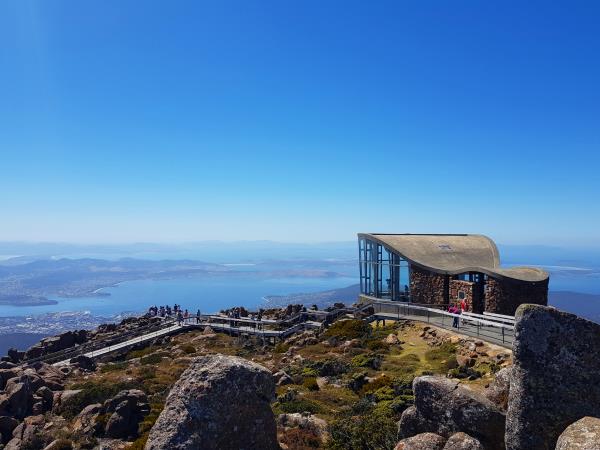
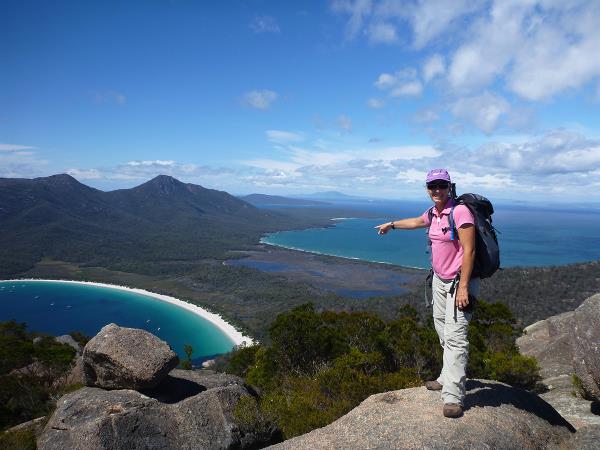
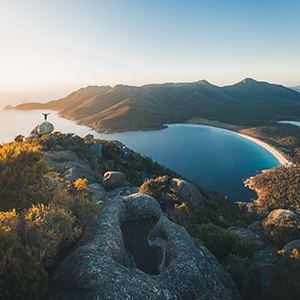
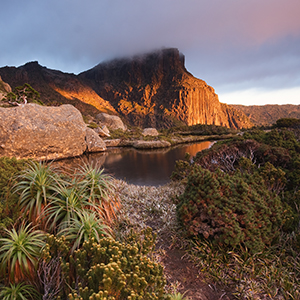
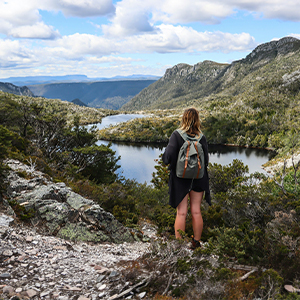
Score a line down the centre of Tasmania, and you’ll find that the west is home to less than five percent of the population. That’s largely down to the terrain, including the first-growth rainforests, moorlands, gorges, peaks and glacial lakes of Cradle Mountain-Lake St Clair National Park. This is also the land of the endemic Tasmanian
Fagus – the only native tree to put on a dramatic autumn show nicknamed ‘the turning of the fagus’.
This region tends to be the domain of the two extremes of tourists to Tasmania: trekkers and day-trippers. Our
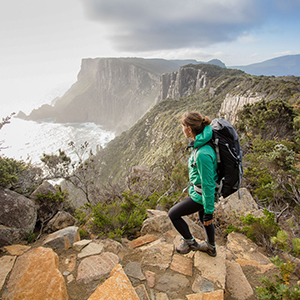
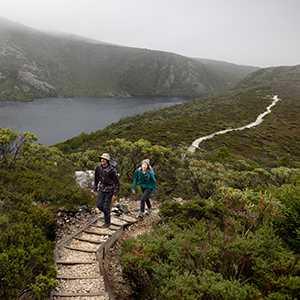
Western Tasmania wilderness tours, on the other hand, strike a happy balance of sightseeing and strolls that work for everyone. “We don’t want to exclude people from being able to participate,” says Morgan. “Short scenic walks are more kind of our style so that everyone can join in.”
This spectacular west side of the island forms part of the Tasmanian Wilderness World Heritage Area, which has been managed by Aboriginal people for over 35,000 years. Slowing down and making stops means taking the chance to learn about over 1,000 ancestral sites, from rock shelters and geometric paintings to the prints of ancient coastal villages.
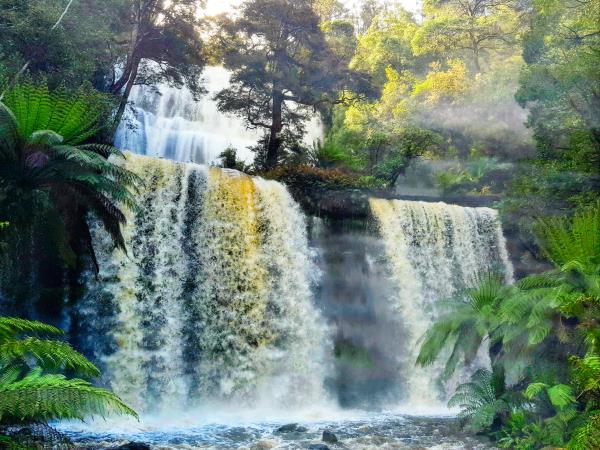
The Central Highlands are also a lesser-visited highlight – and the origins of the century-old hydro project that now fuels 80 percent of Tasmania’s electricity. And where there’s hydropower, there’s a whole lot of water – including Great Lake/Yingina and the multi-tiered Russell Falls.
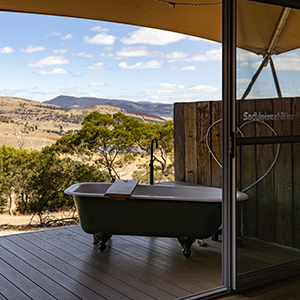
Our longer tours take the time to put you up in an old hydro town, in a remote lodge set amongst the candy-coloured cabins and cottages and manicured lawns once used by the employees and families working on Tasmania’s early hydroelectric projects. “It only has nine rooms and, as far as I’m aware, we’re the only operator that takes tours in there,” says Morgan. “No one’s ever heard of it – and then you pull up and the grounds are beautiful… It’s got a real wow-factor.”