Visiting the Dead Sea in Jordan
For years, I’ve kept an enormous lump of salt on my bookcase. Occasionally it sweats a bit, but mostly it just sits there, presenting a dusting challenge. It’s from the Dead Sea. It reminds me that there are some very strange things in the world.
The Dead Sea is a weird place. Its banks are the lowest lands on Earth – over 400m below sea level. It’s a lake that’s almost ten times as salty as a sea, and getting saltier, lower, and denser all the time as more water evaporates from its surface. This makes its density higher and everything more buoyant – so you float eerily high on the surface of the water, and can even read a book whilst suspended in saline. There’s nowhere like it in the world, which means it’s an essential stop on nearly all of our Jordan holidays.
Lots of our reviews find floating in the Dead Sea the most memorable part of the trip. It’s peculiar, slimy, a little disconcerting. The process is not like swimming or bathing in a regular sense: more inserting yourself in the water as best you can and trying to stay broadly upright. Even if you’re not there to explore the sea’s many health benefits, the bathing process feels curative: as though you are taking part in a treatment you’ve been prescribed but don’t really know how to administer.
“It's so unique,” says Ant from our expert Jordan partners, Encounters Travel. “You can't sink, and everyone ends up doing the reading-a-newspaper photo.” Grab a copy of the Jordan Times from a newsstand (your guide might bring one as a prop for you to use) and prepare your own news item: Tourist Discovers Miraculous Power of Very Salty Water.

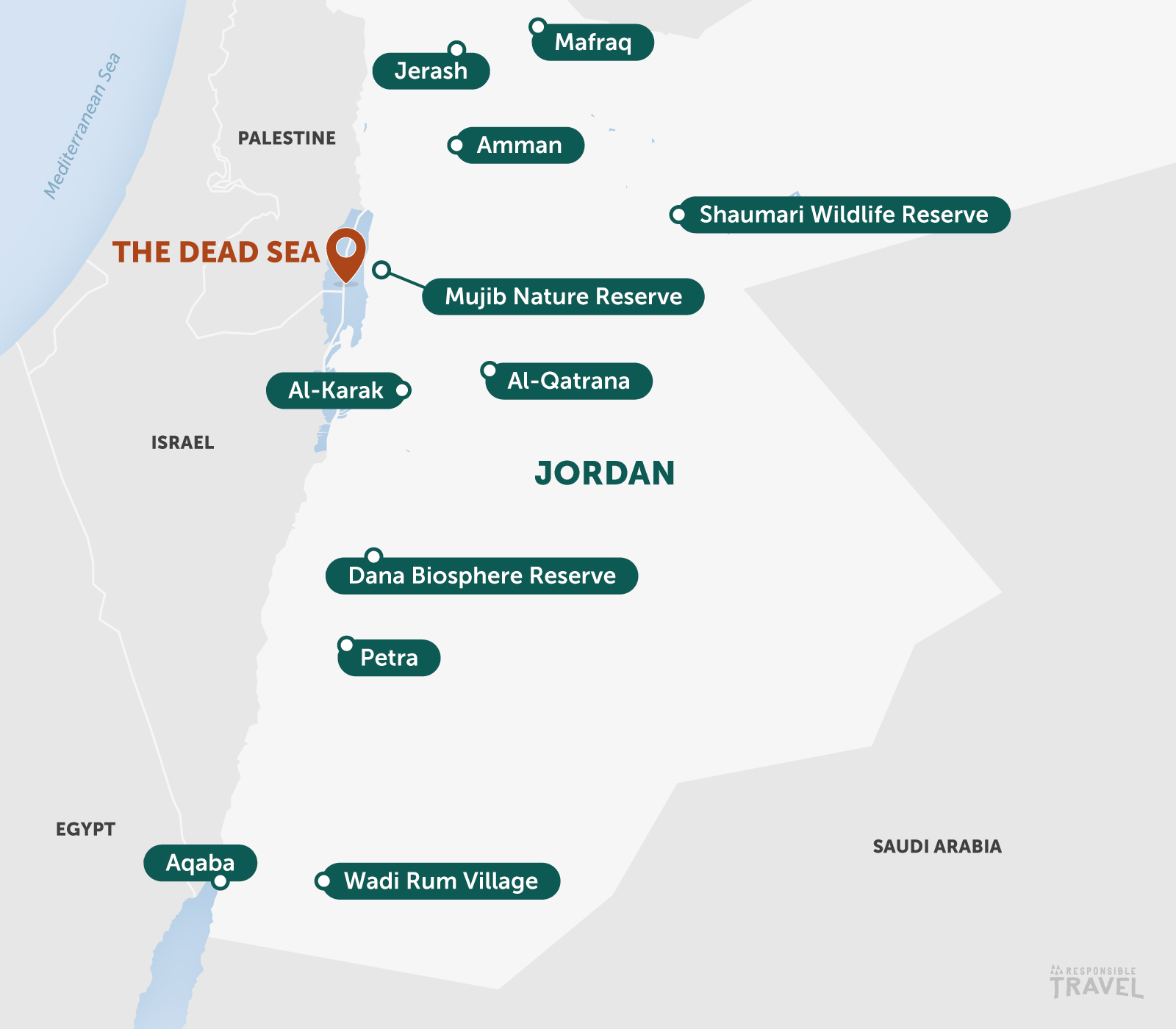
Where is the Dead Sea in Jordan?
What’s it like visiting the Dead Sea?

The feeling of floating and bobbing helplessly made me laugh and laugh – Henrietta Whipsfield on our Jordan holiday on a shoestring ![]()

Your ears popping as you descend down to the shore, you stop at a sign in the middle of a bare rocky escarpment that reads “sea level” and then you keep going down.
The view over the sea is beautifully desolate – no boats, no gulls, no fish – and a view of Israel’s high plateau on the opposite shore. It’s a restful palette of pale blue and pale white and pale dun, all smothered in a heat haze. “I found the experience very peaceful, especially in the late afternoon when the light reflects across the water and you can look back towards the opposite shore,” says Ant.
The Dead Sea has various health benefits due to its special situation and properties. The atmospheric pressure is high, the oxygen concentration in the air is high, and the dry desert air clear from pollen – some find this helps with asthma. It’s also said to be a good place for heliotherapy. The dry climate and mild winters (summer temperatures can soar to 45°C-47°C, while winter sees comfortable highs of up to 25°C) make it a popular winter health resort, and it’s one of the oldest in the world. There are some 35 different elements and minerals in the waters, and a mineral-rich mud makes a popular treatment at the water’s edge – people slap it straight on, leading to a second amusing photo opportunity once you’ve done the newspaper gag.
There are many resorts on the shores of the Dead Sea, their spas providing everything from Dead Sea mud treatments to flotation pools that use Dead Sea water. Up in the hills away from the sea, you’ll also find the therapeutic Ma’in Hot Springs, where warm waterfalls feed bathing pools.
It’s salty: watercraft corrode too quickly in the water to be worth running on its surface and beneath the surface of the lake scientists have found it actually ‘rains’ salt onto the lakebed. Chunks of salt washing against a sloping shore are worn down to rounded ‘pearls’, and you’ll also find large cubes, and big chunky halite formations. Salt is also available to buy in many a gift shop, as a scrub or as a souvenir.
Aristotle reported on stories he’d heard about the ‘thickness’ of a strange lake![]()
The history of the Dead Sea
Floating might provide some light relief in the midst of all the historical sites you visit in Jordan – but the Dead Sea has historic significance, too, and has been important since ancient times. The King’s Highway, one of the oldest trading routes in the world, runs along its length. According to the Old Testament of the Bible, the cities of Sodom and Gomorrah were engulfed by the waters. Even Aristotle reported on the ‘thickness’ of a strange lake about which he’d heard stories, but never visited.
On our Jordan Dead Sea tours you can take a short trip to the supposed site of Jesus’s baptism at Bethany Beyond the Jordan, just a short drive north from the shore. From the top of this mountain, Moses looked out over the view and sighted the promised land for the first time. He is said to be buried up here. You can also pop to Mount Nebo, half an hour’s drive northwest of the sea. If you want a break from history, there’s the nearby Wadi Mujib Nature Reserve – a place to swap the dead for the living – it’s on a bird migration route and is home to jackals, hyenas, foxes and honey badgers.
The Dead Sea is often woven into itineraries towards South Jordan: it’s a useful stop on the way to Kerak, Petra, and the Red Sea, where you can enjoy a totally different watery experience at Aqaba.
The uncertain future of the Dead Sea
Shared between Israel, Jordan and Palestine’s West Bank, the Dead Sea has a long history, but it appears to have a short future – it’s vanishing at a rate of a metre a year.
My visit to the Dead Sea involved skipping around sinkholes – thousands have opened up – particularly on the lake’s western bank. Its main water source is the famous Jordan River, which has been reduced in flow significantly since the 1960s as nations divert its water for agriculture. The entire south part of the lake has been separated from the north for decades and artificially divided into industrial salt evaporation ponds. A project to pipe seawater back into the Dead Sea from the Red Sea via pipeline was abandoned in the early 2020s.
But the Dead Sea won’t ever vanish for good – as it becomes more salty it will eventually reach a concentration level where it’s too difficult for water to evaporate (she writes, straining to remember GCSE Physics). Until then, signs stuck in the ground showing its former bounds, and salt stains on the rocks, point to where it used to lap.

Jordan holiday, a week in Jordan
A week to explore the spectacular sites and scenery of Jordan
From
£1179 to £1763
9 days
ex flights

Jordan trekking holiday, Dana to Petra
Best hike in Jordan along the Jordan Trail!
From
US $1595 to US $1695
9 days
ex flights
Walking holiday in Jordan
Walk through some of the world's most iconic historic sites
From
£1040 to £1239
8 days
ex flights
Jordan self drive holiday
Be independent & explore Jordan at your own pace
From
US $1310
10 days
ex flights

Jordan bird watching tour
Migrating birds plus Petra, Wadi Rum and Red Sea
From
US $3350
14 days
ex flights
Jordan small group holiday
Travel through Jordan on a comfort-style adventure
From
£1377 to £1960
8 days
ex flights


Contact Us
Call us for a chat about our holidays. We are happy to discuss your holiday and help in any way we can. No bots, queues or awful hold music.

01273 823 700
Call us after 9am
Calling from outside the UK

Practicalities for visiting the Dead Sea
How long do you need at the Dead Sea?
Some people spend weeks here as part of a curative programme, especially in winter. If you just want to say you’ve floated in it, you only need half an hour. On our Jordan cycling holidays, you freewheel down to its shore from the top of Mount Nebo for an experimental dip. If you’re interested in its curative properties, a few nights at a spa hotel might be in order, and you could also use it as the end point of a tour as it’s relatively close to Amman.Why visit the Dead Sea in Jordan?
There’s nowhere like the Dead Sea on Earth, meaning it always warrants a stop if you’re in the relatively small country of Jordan, where it’s not far from many of the other sites you’ll visit. By visiting the Jordan side you can do a south Jordan tour that also takes in Petra, a three-hour drive away.
Why visit the Dead Sea as part of a tour?
Over to Ant, our tour expert, on how a tour will give you the best Dead Sea experience: “Instead of stopping at crowded public access points, we sort out entry through established resort properties with private beach access, clean changing rooms, freshwater showers, and mineral mud stations. Also, our itineraries time these visits to bypass peak tour bus hours and avoid the extreme midday heat, while our guides provide essential advice on safety and floating etiquette.”
Tips for visiting the Dead Sea
More Jordan articles
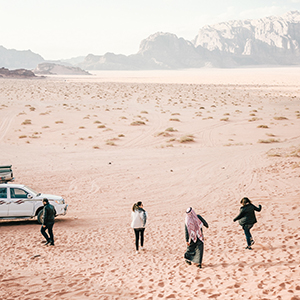
The best time to visit Jordan is spring (March to May) or autumn (September to November), when the days are warm.
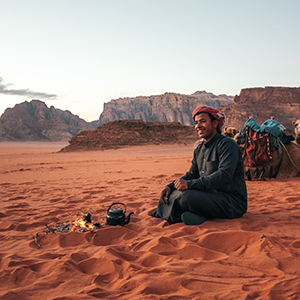
Reliable and useful information about this Middle Eastern marvel, featuring the Dead Sea, Petra and Mount Nebo.

The must-see places of a country with a history and geography that has been shaped over thousands of years.

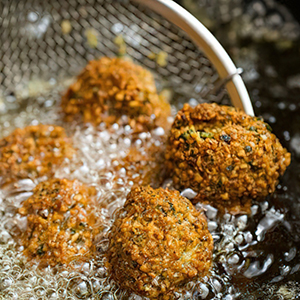
Food and drink in Jordan is heavily influenced by Arabic and Mediterranean cuisines, and has many delicacies.

Where to go in Jordan with your little ones, and what to do with them while you’re there.

Explore with expert guides on desert adventure holidays that go beyond the ordinary.

Jordan's natural areas include two key areas for bird watching, the Azaraq Wetland Reserve and the Dana Reserve.

A culture shaped by many different civilisations throughout history, many represented by still-standing ruins.

Discover key routes including the long distance Jordan Trail, the Dana Village Trail and the Soap Makers Trail.

Drive the King’s Highway and go hiking and camp out with the Bedouin in the desert.
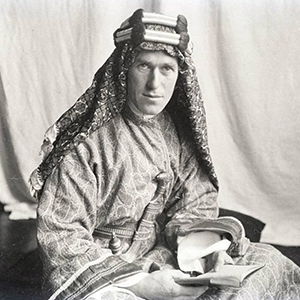
Discover the remarkable legacy of Lawrence of Arabia, Captain T.E. Lawrence, in Jordan.

Jordan has several hot springs renowned for their rejuvenating and medicinal qualities, and yes, you can visit.
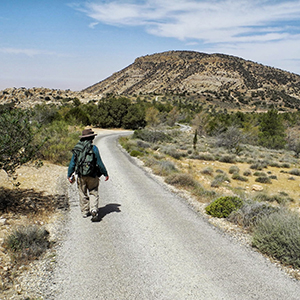
The Dana Reserve is on the very edge of the Great Rift Valley with mountain peaks that tumble down to sandstone canyons.

Is it okay to ride camels in countries such as Jordan, Morocco and Egypt? We investigate for you.
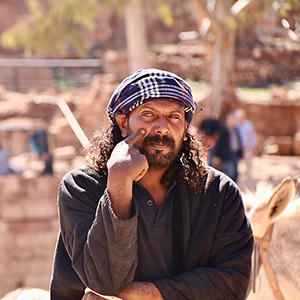
Exciting adventures in Jordan that also benefit local communities and nature.