Cycling the length of Portugal on the N2
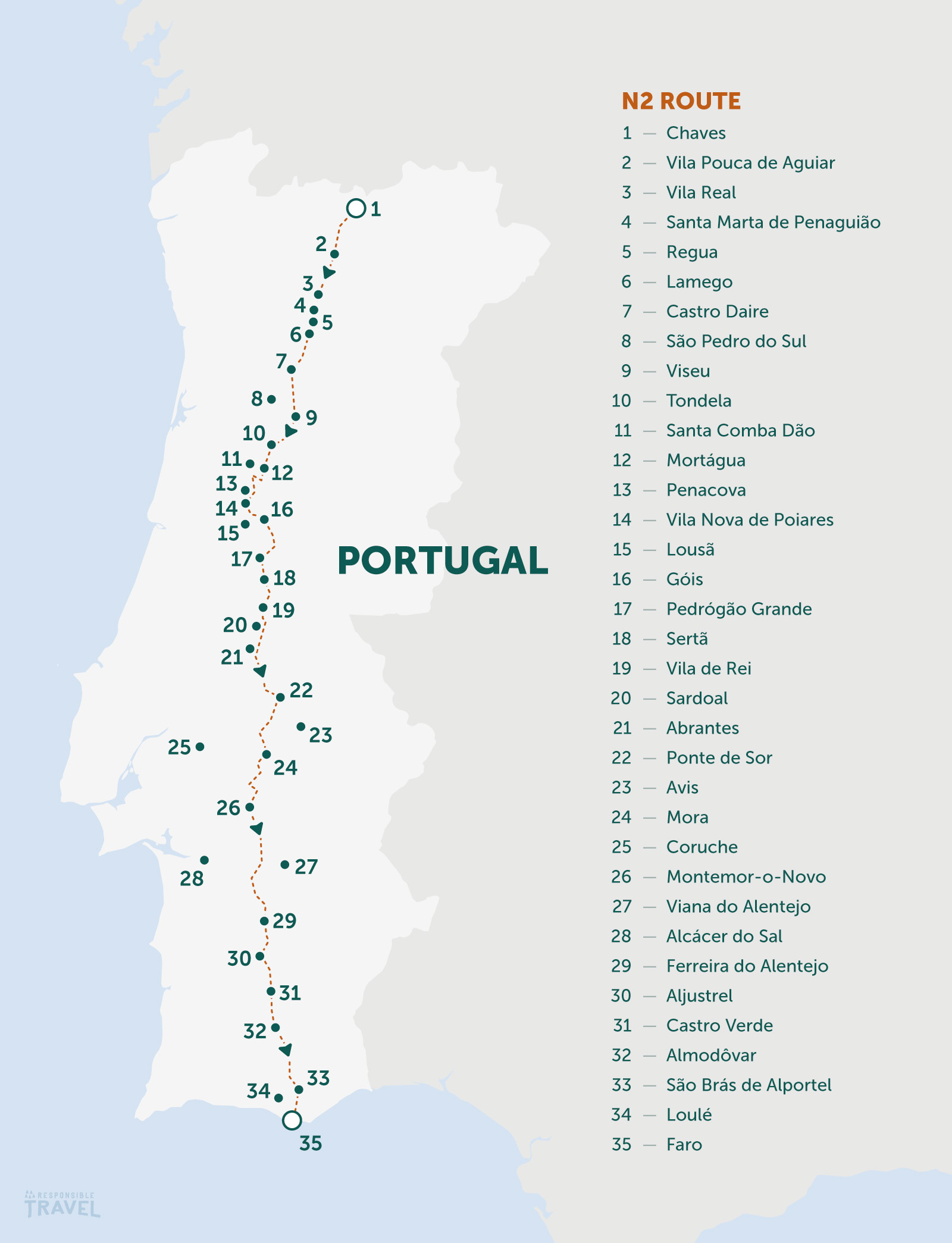
Nine days, four mountain ranges, 11 rivers and 730km of road lie ahead of you on one of our most satisfying European adventures by bike: cycling the length of Portugal on the N2.
There are not many roads in the world that span an entire country, but the N2 is one of them. Beginning in the mountains north of Porto and close to the border with Spain, it meanders gently down the spine of Portugal through the Douro wine region, the lush green valleys of the Alentejo and across Castro Verde, the flat ‘Portuguese steppe’, before coming to a finish on the dramatic coastline of the Algarve.
Once the main road south, the N2 has now largely been superseded by a motorway, so for the most part the only other vehicles on the road are local traffic. Over a week of cycling (a well-paced duration, offering a degree of challenge, while not rushing the journey) you’ll ride through parts of rural Portugal that are far beyond the well-known tourism destinations, via whitewashed villages and small towns, old castles and churches, cork groves and wine terraces, and protected nature areas where you may see deer and wild boar by the roadsides.
“The appeal of Portugal for cyclists is a combination of a lot of things,” says Lucy Burnett, a cycling guide for our partner Pedal Nation. “Good reliable weather, very friendly and helpful locals, and landscapes that, while not as awe-inspiring as the Alps, are consistently scenic and varied. And the N2 gives you a genuine sense of the 'real Portugal.’”
There are not many roads in the world that span an entire country, but the N2 is one of them. Beginning in the mountains north of Porto and close to the border with Spain, it meanders gently down the spine of Portugal through the Douro wine region, the lush green valleys of the Alentejo and across Castro Verde, the flat ‘Portuguese steppe’, before coming to a finish on the dramatic coastline of the Algarve.
Once the main road south, the N2 has now largely been superseded by a motorway, so for the most part the only other vehicles on the road are local traffic. Over a week of cycling (a well-paced duration, offering a degree of challenge, while not rushing the journey) you’ll ride through parts of rural Portugal that are far beyond the well-known tourism destinations, via whitewashed villages and small towns, old castles and churches, cork groves and wine terraces, and protected nature areas where you may see deer and wild boar by the roadsides.
“The appeal of Portugal for cyclists is a combination of a lot of things,” says Lucy Burnett, a cycling guide for our partner Pedal Nation. “Good reliable weather, very friendly and helpful locals, and landscapes that, while not as awe-inspiring as the Alps, are consistently scenic and varied. And the N2 gives you a genuine sense of the 'real Portugal.’”

Highlights of our N2 cycling tours in Portugal
Groups typically meet in the northern city of Porto before transferring, with their bikes, to the town of Chaves, where the N2 begins. Riders will often buy an N2 passport, which makes a nice keepsake of the adventure, and get it stamped in each of the 35 municipalities that the route passes through.
You set off through the Douro Valley. “I love the end of day one and the start of day two,” says Lucy. “The descent into and climb away from the valley are incredibly scenic.” Reaching the historic city of Viseu, the birthplace of Vasco Fernandes, one of the country’s greatest painters, you pause for a couple of nights’ rest because day four is the most challenging of the trip. Beginning in the village of Gois, it's a day of climbs, though they are for the most part long and gradual, with exhilarating hairpin bends on the descent.
Day four is also marked by a 50km stretch on the Dao Eco Path, a greenway built over an old railway line that runs mostly along the bank of the River Dao. Flat, car-free and lined with imposing mountains, it makes for another memorable section of the journey as you approach the magnificent UNESCO-listed city of Evora.
Continuing on into parts of Portugal that see far fewer tourists than the city and coastal hotspots, you cycle over rolling hills through the fields that feed the rich gastronomy and wines of Montemor-o-Novo, the terrain flattening out as you enter the olive and cork plantations of the Alentejo region. On reaching the plains of Castro Verde, calm villages seem baked white by the sun, while endangered Spanish imperial eagles patrol the vast Iberian grasslands.
There is one final push upwards into the mountains as you reach Faro, diverting off the N2 as it gets busier, to almost traffic-free roads that reward you with magnificent Mediterranean views before the triumphal descent into the city. “It’s a really fun way to end the tour,” adds Lucy. “The route rolls up and down without ever being too challenging, and the olive-covered hills are super-pretty.”
Day four is also marked by a 50km stretch on the Dao Eco Path, a greenway built over an old railway line that runs mostly along the bank of the River Dao. Flat, car-free and lined with imposing mountains, it makes for another memorable section of the journey as you approach the magnificent UNESCO-listed city of Evora.
Continuing on into parts of Portugal that see far fewer tourists than the city and coastal hotspots, you cycle over rolling hills through the fields that feed the rich gastronomy and wines of Montemor-o-Novo, the terrain flattening out as you enter the olive and cork plantations of the Alentejo region. On reaching the plains of Castro Verde, calm villages seem baked white by the sun, while endangered Spanish imperial eagles patrol the vast Iberian grasslands.
There is one final push upwards into the mountains as you reach Faro, diverting off the N2 as it gets busier, to almost traffic-free roads that reward you with magnificent Mediterranean views before the triumphal descent into the city. “It’s a really fun way to end the tour,” adds Lucy. “The route rolls up and down without ever being too challenging, and the olive-covered hills are super-pretty.”
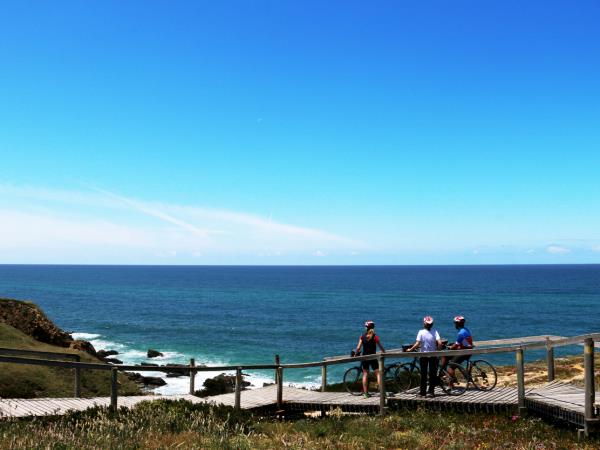
Porto to Lisbon cycling holiday, self guided
Easy flat scenic ride along beautiful coastline
From
€1019 to €1280
8 days
ex flights
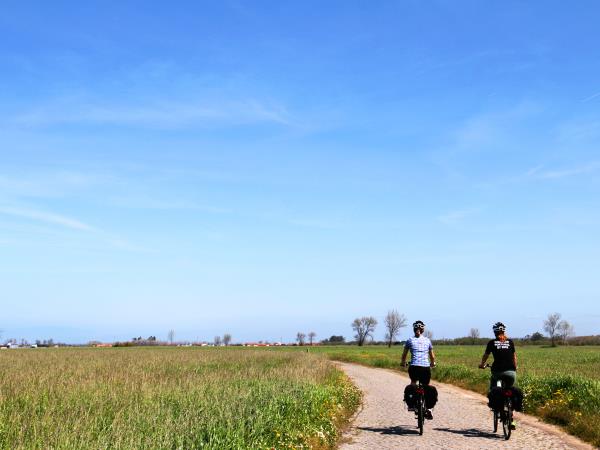
Cycle from Porto to Coimbra, Portugal
Leisurely cycling & culture along the Atlantic Coast
From
€979 to €1249
7 days
ex flights
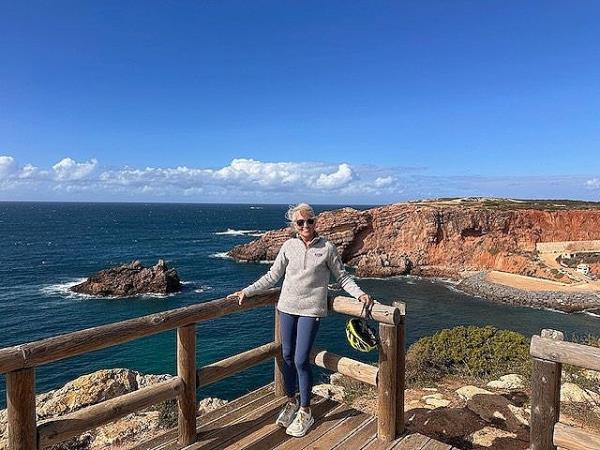
Algarve self guided cycling holiday in Portugal
Great food & wine, historical towns, breathtaking coastline
From
€975 to €1175
8 days
ex flights
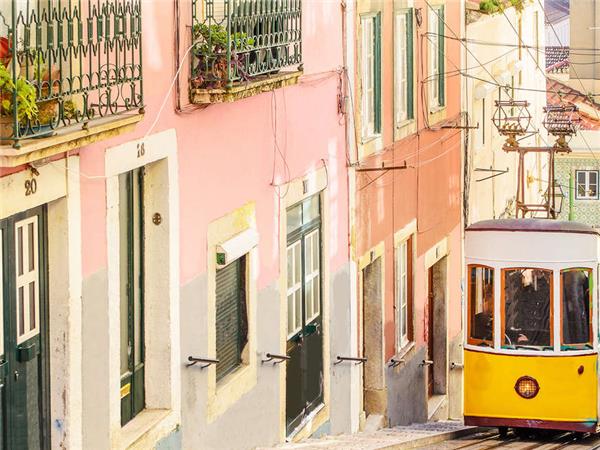
Lisbon to Algarve cycling holiday in Portugal
Cycle wild coastal landscapes, pristine coves and beaches
From
£1520 to £1695
8 days
ex flights
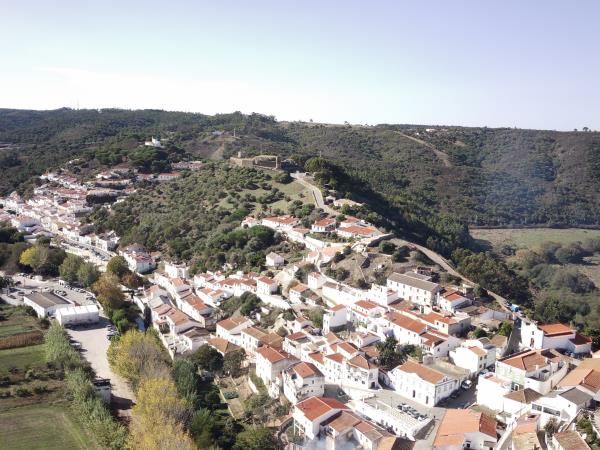
Alentejo self guided cycling holiday, Portugal
center-based holiday sw portugal with great hotels
From
€1186 to €1336
8 days
ex flights
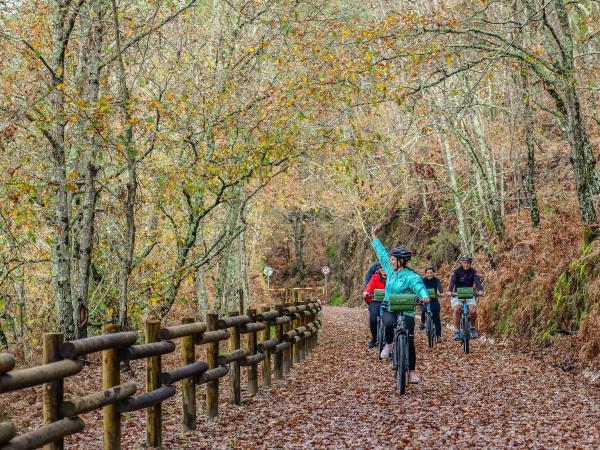
Atlantic Ring cycling tour, Portugal
Bike the scenic circular route along rivers & coastline
From
€1539 to €2190
9 days
ex flights


Contact Us
Call us for a chat about our holidays. We are happy to discuss your holiday and help in any way we can. No bots, queues or awful hold music.

01273 823 700
Call us after 10am
Calling from outside the UK

What does cycling the length of Portugal involve?
Small group tours
These are typically small group tours led by a professional and experienced cycling guide. You will also have a support van carrying luggage, water and spare parts, so any punctures or other minor complaints can be dealt with promptly. The guide handles all the navigation, while you enjoy the ride. You eat on the go, pausing in picturesque picnic stops, with food purchased daily from local shops and bakeries.
Groups will be diverse – you may have club cyclists in their 20s, and retirees with longstanding passions for cycling, and everything in between. That makes for an interesting and sociable dynamic, and while you’ll meet up regularly at pre-agreed rest stops, you can ride at a pace that suits you.
Groups will be diverse – you may have club cyclists in their 20s, and retirees with longstanding passions for cycling, and everything in between. That makes for an interesting and sociable dynamic, and while you’ll meet up regularly at pre-agreed rest stops, you can ride at a pace that suits you.
How fit do I need to be?
This is a Grade Three (out of Four) trip, so you do need to be in decent shape, in the sense of being able to cycle consecutive days of between 80 and 110km. Even though there are a fair few ascents, the gradients are almost always gradual, says Lucy. “The route starts with some stunning easy ups and downs to the Douro Valley, before a hillier middle section, two quite easy days, and then a delightful last day through the Alentejo olive groves.” Overall, cycling the N2 sees you climb almost 10,000m.
Where do we stay?
Our N2 cycling holidays in Portugal tend to use a mix of locally owned and chain hotels, depending on what is available. They are bike-friendly, with secure storage. Given that you will be following a generally rural route there is not a great deal of choice when it comes to accommodation, but our holidays try to find boutique, characterful properties, often with a pool where you can enjoy a soak after a long day in the saddle.
Groups will typically go out to a local restaurant in the evenings, an opportunity to sample cuisine from the different regions of Portugal. That of the UNESCO-listed Douro Valley is particularly fine.
Groups will typically go out to a local restaurant in the evenings, an opportunity to sample cuisine from the different regions of Portugal. That of the UNESCO-listed Douro Valley is particularly fine.
When to go
Our holidays that cycle the length of Portugal typically go either side of summer, so April into May, and September into October. These are some of the best months for cycling here, when you can anticipate warm, dry weather, but not the overpowering heat that characterises Portugal from June through to August.
Can I bring my own bike?
If you are coming from the UK, then we can often help you take your bike across to Portugal in the support van, which travels by ferry. You just need to get it to a pre-agreed drop-off location. If you’re flying your bike over, it can be transferred from Porto to the start point in Chaves free-of-charge.
Bikes are not generally included in the tour price, but we can hire you one if necessary. E-bikes are also available.
Bikes are not generally included in the tour price, but we can hire you one if necessary. E-bikes are also available.
More Portugal cycling articles
From the volcanic wonders of the Azores to the sunny Algarve, Portugal might have been made for cycling.
Our best Portugal cycling routes are full of little-known gems, from the Azores to the Alentejo. Read our guide to discover more.
Cycling in Peneda-Geres is the perfect way to discover Portugal's only national park.
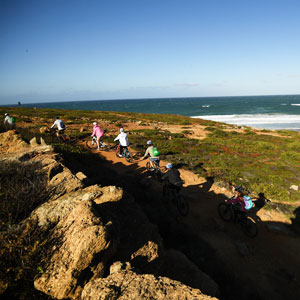
Portugal's western coast invites leisurely bike rides along sandy trails.
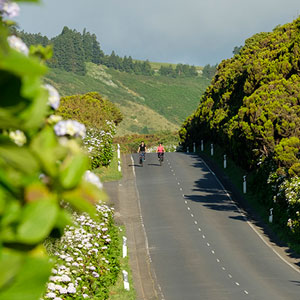
The Azores are developing a reputation as an exciting destination for cycling.
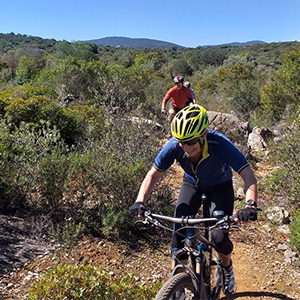
Our cycling holidays in the Algarve explore inland and along the coast outside summer.
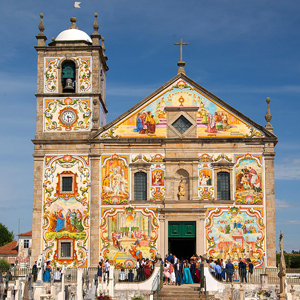
Discover our top cycling tours in Portugal, including pilgrimage paths and island trails.




_between_London_planes_(Platanus_%C3%97_hispanica),_Montargil,_Portugal_julesvernex2.jpg)