How will climate change affect holidays in Kenya?
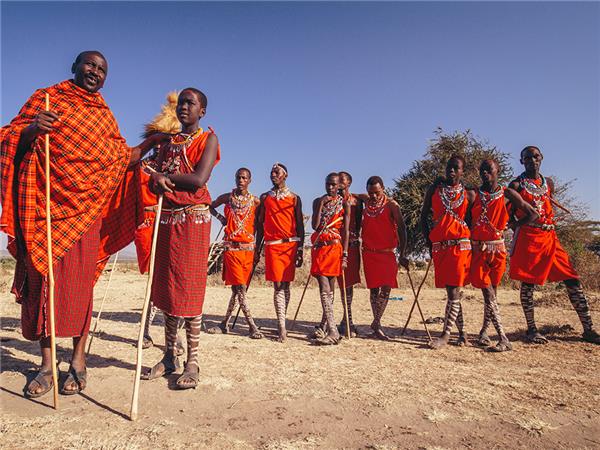
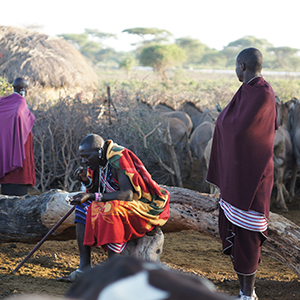
“Absolutely climate change is something our travellers talk about. As soon as they walk into the communities that we work in they can see the effect of drought, just in the quality of the cattle, in the way the land is being eaten away.” Colin Murray is the co-founder of our partner, One Horizon Africa, a nonprofit social enterprise that supports a range of community projects in and around Nairobi, funded largely by cultural tours. For the most part they work with Maasai people, whose traditional ways of life are threatened by a constant cycle of drought and flooding.
“People know they will need to adapt,” continues Colin. “The Maasai people are herders, but some are now asking us to help them farm crops. They’re spiritually connected to their herds. When these animals are dropping and dying, everyone crowds around to try and get them back up. It’s very traumatic for them – I visited some Maasai people who ended up in hospital because of stress. It’s a whole social problem.”
Ironically, tragically and entirely predictably, while Kenya produces less than 0.1 percent of global greenhouse gas emissions, it will be disproportionately affected by a warming world. The imbalance demonstrates the unfairness of the climate crisis and why wealthy countries should face penalties for emissions while also helping poorer countries adapt to its effects.
“People know they will need to adapt,” continues Colin. “The Maasai people are herders, but some are now asking us to help them farm crops. They’re spiritually connected to their herds. When these animals are dropping and dying, everyone crowds around to try and get them back up. It’s very traumatic for them – I visited some Maasai people who ended up in hospital because of stress. It’s a whole social problem.”
Ironically, tragically and entirely predictably, while Kenya produces less than 0.1 percent of global greenhouse gas emissions, it will be disproportionately affected by a warming world. The imbalance demonstrates the unfairness of the climate crisis and why wealthy countries should face penalties for emissions while also helping poorer countries adapt to its effects.

Deforestation in Kenya

If we want to truly solve deforestation then we’ve got to solve jobs and poverty.![]()

Deforestation is a significant problem in Kenya. Causes range from overgrazing to charcoal-burning, logging and mining, and the expansion of human settlements. Without tree roots, quality topsoil can be easily washed away, leading to landslides.
One Horizon Africa supports several biogas projects, such as converting cow manure to organic fertiliser, which Colin points out also reduces the need for women to go out and cut down trees for firewood. “The Kenyan government says, ‘you mustn’t cut trees because of climate change, because of biodiversity, because of the ill health it causes burning wood in the house.’ But it still goes on, just at night, and that has risks. The more trees they cut down, the further they must go to forage firewood. Someone in this area was gored by a buffalo recently.”
I also spoke to Lucy Booth, whose company Kenya Treks specialises in walks on Mount Kenya, and her head guide, John Karumba. Like most of the porters Kenya Treks hires, John comes from the Kikuyu tribe, who live on Mount Kenya’s southern and western flanks. “Deforestation is an issue in Mount Kenya National Park, yes,” says John. “The Kenya Wildlife Service is trying to stop people from burning. And our community is planting trees. We’re varying what we grow too, looking for drought tolerant crops. Now many people are growing avocados as they don’t need much water, compared to coffee and tea.”
Avocados are a water-intensive crop, requiring 70 litres of water for a single fruit, with western diets dictating global farming patterns. But coffee is much worse – the United Nations estimates that it can take 140 litres of water to grow, process, and transport enough beans for just one cup of coffee.
One Horizon Africa is aiming to plant 10,000 trees to help combat erosion. Local people earn through digging the holes, then travellers plant drought-resistant trees and water them – some returning year after year to see the progress. But Colin Murray admits that just planting more trees is not a solution in itself: “If we truly want to solve deforestation then we’ve got to solve jobs and poverty. You can ban people from cutting down trees for charcoal or grazing pasture but what is their alternative? If you don’t fix the underlying problem, then deforestation will just go on.”
One Horizon Africa supports several biogas projects, such as converting cow manure to organic fertiliser, which Colin points out also reduces the need for women to go out and cut down trees for firewood. “The Kenyan government says, ‘you mustn’t cut trees because of climate change, because of biodiversity, because of the ill health it causes burning wood in the house.’ But it still goes on, just at night, and that has risks. The more trees they cut down, the further they must go to forage firewood. Someone in this area was gored by a buffalo recently.”
I also spoke to Lucy Booth, whose company Kenya Treks specialises in walks on Mount Kenya, and her head guide, John Karumba. Like most of the porters Kenya Treks hires, John comes from the Kikuyu tribe, who live on Mount Kenya’s southern and western flanks. “Deforestation is an issue in Mount Kenya National Park, yes,” says John. “The Kenya Wildlife Service is trying to stop people from burning. And our community is planting trees. We’re varying what we grow too, looking for drought tolerant crops. Now many people are growing avocados as they don’t need much water, compared to coffee and tea.”
Avocados are a water-intensive crop, requiring 70 litres of water for a single fruit, with western diets dictating global farming patterns. But coffee is much worse – the United Nations estimates that it can take 140 litres of water to grow, process, and transport enough beans for just one cup of coffee.
One Horizon Africa is aiming to plant 10,000 trees to help combat erosion. Local people earn through digging the holes, then travellers plant drought-resistant trees and water them – some returning year after year to see the progress. But Colin Murray admits that just planting more trees is not a solution in itself: “If we truly want to solve deforestation then we’ve got to solve jobs and poverty. You can ban people from cutting down trees for charcoal or grazing pasture but what is their alternative? If you don’t fix the underlying problem, then deforestation will just go on.”
Drought in Kenya, and its effects on wildlife & people
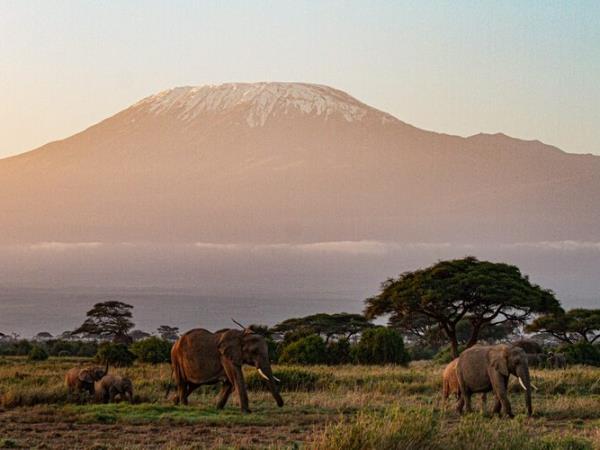
Between 2021 and 2022 more than 100 elephants were recorded dead as a result of drought in Kenya’s Tsavo National Park. Elephants need a lot of water – up to 240 litres a day, more when it’s hot – but they’re far from the only animals affected. The carcasses of giraffes, wildebeest and zebras, including Grévy's zebra, the rarest in the world, are being seen in worryingly frequent numbers.
Climate change is now killing 20 times as many elephants in Kenya as poachers do.![]()
In 2023, the ‘Horn of Africa’ suffered through its sixth consecutive failed wet season. Inadequate rainfall caused a prolonged drought that has had catastrophic effects for wildlife as well as local communities, and the livestock they often depend on.
Shockingly, Kenya has lost around 70 percent of its wildlife since 1977. Much of the reason for this is competition for land and resources from a growing human population, but climate change is also a significant factor. It’s thought that it is now killing 20 times more elephants than poaching.
As water sources dry up, rainfall becomes more erratic, grazing terrain vanishes, birth rates drop and herds shrink. Some species will disperse, forced to seek more favourable terrain. Safari-goers in future will need to get up earlier, travel further, endure hotter weather, and they will also need to accept that sightings will not be as regular and predictable as before.
Long periods of drought can also make it harder for land to absorb water when it does rain, resulting in flooding. This can waterlog roads to parks and reserves making some impassable for weeks or months at a time.
Shockingly, Kenya has lost around 70 percent of its wildlife since 1977. Much of the reason for this is competition for land and resources from a growing human population, but climate change is also a significant factor. It’s thought that it is now killing 20 times more elephants than poaching.
As water sources dry up, rainfall becomes more erratic, grazing terrain vanishes, birth rates drop and herds shrink. Some species will disperse, forced to seek more favourable terrain. Safari-goers in future will need to get up earlier, travel further, endure hotter weather, and they will also need to accept that sightings will not be as regular and predictable as before.
Long periods of drought can also make it harder for land to absorb water when it does rain, resulting in flooding. This can waterlog roads to parks and reserves making some impassable for weeks or months at a time.
Climate change will disrupt Kenya’s Great Migration
Tom Kearney is the owner of our partner Escape Adventures, who organise cycling holidays in Kenya. “One of the main problems our safaris face is inconsistent weather. Previously you could almost set your watch by the end of the wet season and the start of the dry season, but now they spill over into each other. Which for some people can be part of the fun, but it does make logistics trickier.”
Every July, after the rainy season, the Maasai Mara witnesses the Great Migration, where millions of wildebeest move into the reserve to feed and mate. Their journey is one of the most sensational wildlife spectacles on earth, but by 2050 it could be unrecognisable.
Every July, after the rainy season, the Maasai Mara witnesses the Great Migration, where millions of wildebeest move into the reserve to feed and mate. Their journey is one of the most sensational wildlife spectacles on earth, but by 2050 it could be unrecognisable.
The Great Migration could be unrecognisable by 2050![]()
In the past Kenya played host to four different wildebeest migrations but the famous Serengeti to Mara route is the only one that survives today. A warming climate brings with it more unpredictable weather patterns – dry seasons blurring into wet seasons, hotter droughts, sporadic and heavy downpours leading to flooding. If the Mara’s grazing pastures disappear, fewer wildebeest will migrate here, and those that do won’t stay as long. Wildebeest numbers have tumbled 60 percent in the Mara since 1977. There are fears that the migration could collapse altogether by 2050 – or even earlier.
And if the wildebeest do stop coming, it will contribute to a negative feedback loop. These rapacious herbivores are known as ‘the lawnmowers of the Mara’, grazing the long grass and helping to reduce the frequency of fires during dry weather. Fewer wildebeest means more fires, means more carbon emissions, means still more destabilised weather.
And if the wildebeest do stop coming, it will contribute to a negative feedback loop. These rapacious herbivores are known as ‘the lawnmowers of the Mara’, grazing the long grass and helping to reduce the frequency of fires during dry weather. Fewer wildebeest means more fires, means more carbon emissions, means still more destabilised weather.
Conflict between herders, farmers, parks, and wildlife
There seems to be a realisation that communities can’t solely depend on herding livestock anymore.![]()
“In 2022 I was in Kenya, on the border with Tanzania on the outskirts of Amboseli National Park,” says Tom Kearney, “and there was this noticeable lack of herders and animals in the villages. The herders were having to go further and further away to find water and food. People’s wealth there is so tied up in livestock that the men were forced to just desert their villages for long periods.”
Herders are increasingly entering national parks, hoping to find fresh pastures for their animals. In some cases they will actually cut the fences for access, which lets animals like elephants get out. Marauding elephants can cause havoc in surrounding villages: raiding crops, slaking their thirst on precious water supplies, and posing severe risks to life.
And of course, holes in fences are not only used by herbivores. Communities can soon find themselves doing battle with predators. In May 2023, eleven lions were killed by farmers in just one week as a retaliatory measure after lions killed their livestock.
When herders successfully find grazing land within park boundaries, it means less is available for wild animals, which can lead to confrontations with park authorities. Human-wildlife conflict will grow as the climate crisis brings increasing droughts, diminishing suitable grazing land. “There does seem to be a realisation that communities can’t solely depend on herding livestock anymore,” says Tom Kearny.
Herders are increasingly entering national parks, hoping to find fresh pastures for their animals. In some cases they will actually cut the fences for access, which lets animals like elephants get out. Marauding elephants can cause havoc in surrounding villages: raiding crops, slaking their thirst on precious water supplies, and posing severe risks to life.
And of course, holes in fences are not only used by herbivores. Communities can soon find themselves doing battle with predators. In May 2023, eleven lions were killed by farmers in just one week as a retaliatory measure after lions killed their livestock.
When herders successfully find grazing land within park boundaries, it means less is available for wild animals, which can lead to confrontations with park authorities. Human-wildlife conflict will grow as the climate crisis brings increasing droughts, diminishing suitable grazing land. “There does seem to be a realisation that communities can’t solely depend on herding livestock anymore,” says Tom Kearny.
Kenya 13 day safari
Experience 3 amazing, distinct safari ecosystems in Kenya
From
£8618
13 days
ex flights
Kenya safari with a beach stay
Small-group adventure through Kenya’s wild heart to coast.
From
£1795 to £2605
8 days
ex flights
The Masai Heartlands safari
Great value truck safari to Kenya & Tanzania
From
£2272 to £3260
15 days
ex flights
Kenya safari and beach family holiday
Masai Mara wildlife & Lamu Island for families
From
£3188
10 days
ex flights
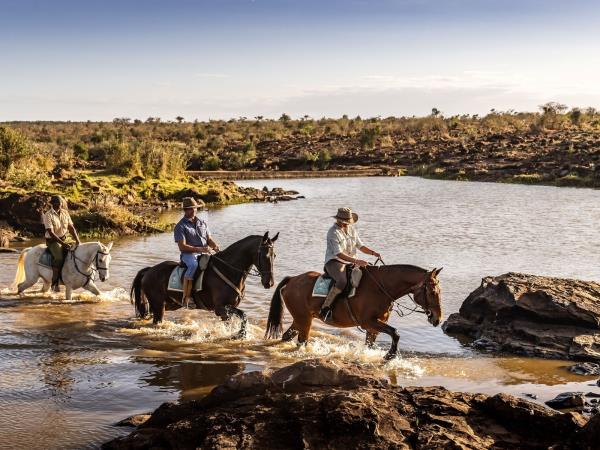
Kenya luxury safari holiday, 10 days
Luxury, adventure & unforgettable wildlife experiences
From
US $8760 to US $9310
10 days
ex flights
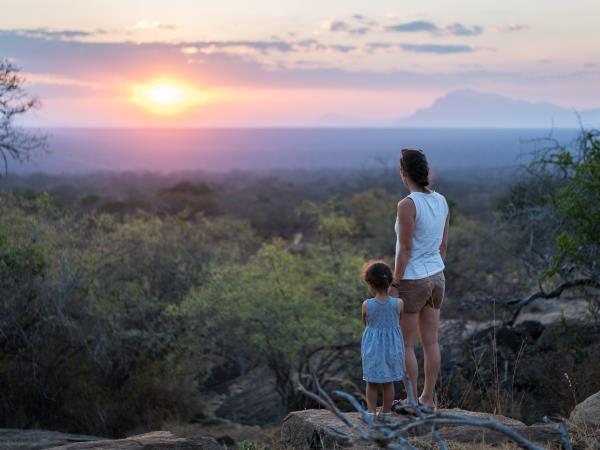
Kenya safari and beach by train
Explore Tsavo National Parks & the Kenyan coast
From
£2800 to £4000
12 days
ex flights


Contact Us

Call us for a chat about our holidays. We are happy to discuss your holiday and help in any way we can. No bots, queues or awful hold music.

01273 823 700
Call us until 4pm
Calling from outside the UK


Flooding displacing communities
The trouble in Kenya is that it’s always either floods or drought.![]()
– Lucy Booth of Kenya Treks
Kenya is home to ten percent of the lakes in Africa. Most are freshwater, though a few are saltwater, bodies of water that sustain a wide range of marine and bird species from cranes to flamingos, eagles and hippos. Among the most well-known lakes in Kenya are the eight that line the Great Rift Valley running from north to south. The climate crisis is bringing torrential rains out of season that are swelling highland rivers and causing the lakes to spread. But worryingly, when the rains stop, the lakes don’t shrink back – in fact, they keep growing.
So far hundreds of thousands of people have already been forced to leave their homes as the waters swallow up their villages. Churches, clinics, farms, fields, schools and houses – all disappearing underwater in the space of a few short years. Crocodiles and hippos swim around submerged structures, posing a threat to anyone who remains.
There are close to a million people living in the basin around Lake Turkana alone. The lake has expanded by some 10 percent since 2012. Lake Naivasha has grown by around 50 percent over the same period. The water level in Lake Baringo has risen by 12 metres – swamping tourist resorts and hotels, along with residents’ homes. One lakeside safari lodge that has now reopened had water up to the third-floor balconies in 2014. What will stop the lakes from growing? Perhaps only a punishing drought.
So far hundreds of thousands of people have already been forced to leave their homes as the waters swallow up their villages. Churches, clinics, farms, fields, schools and houses – all disappearing underwater in the space of a few short years. Crocodiles and hippos swim around submerged structures, posing a threat to anyone who remains.
There are close to a million people living in the basin around Lake Turkana alone. The lake has expanded by some 10 percent since 2012. Lake Naivasha has grown by around 50 percent over the same period. The water level in Lake Baringo has risen by 12 metres – swamping tourist resorts and hotels, along with residents’ homes. One lakeside safari lodge that has now reopened had water up to the third-floor balconies in 2014. What will stop the lakes from growing? Perhaps only a punishing drought.
Climate change will harm traditional ways of life in Kenya
Kenya’s Indian Ocean coast is fringed with resorts and small communities where holidaymakers can enjoy the catch of the day, fresh off the boat, in restaurants and shacks. But as the seas warm they become less oxygenated, a condition that is unsuitable for many marine species. Warmer waters will affect their life cycles, breeding habits and their migratory habits. Fishing boats will have to travel further, and work harder, for a catch, and smaller fishing businesses will struggle to survive. Those that do continue may be forced to adopt ever more unsustainable practises if they are to earn a living, such as overfishing and catching younger fish.
Coastal communities will change as people are forced to consider different work, or perhaps leave altogether, making areas less appealing for visitors. And Kenya’s coral reefs, already affected by bleaching due to warmer waters, will be inhabited by even fewer fish. Scuba divers and snorkellers will find pristine underwater worlds harder to come by.
Flooding issues aren’t restricted to the coast, though. “Some of the farms we work with have lost 20-25 percent of their pasture,” says Colin Murray. “Because of the degradation of the land and lack of drainage options, many roads we used to use are just trenches now. In the areas we work there have been more drought years than good years recently. You have a drought that dries up the soil, then a month of rain, and, well, you can imagine what happens.”
Kenya has a type of soil, known as ‘black cotton soil’, that is notoriously porous. When it gets wet it’s like cement, and you can sink in it up to your knees. When it’s dry however, great cracks open up in it. Despite this the Maasai continue to walk over it with their herds. Their cows, already suffering from dehydration and malnutrition, can pick up disease from this poor-quality soil. “One guy we know lost half his head of cattle,” says Colin.
Coastal communities will change as people are forced to consider different work, or perhaps leave altogether, making areas less appealing for visitors. And Kenya’s coral reefs, already affected by bleaching due to warmer waters, will be inhabited by even fewer fish. Scuba divers and snorkellers will find pristine underwater worlds harder to come by.
Flooding issues aren’t restricted to the coast, though. “Some of the farms we work with have lost 20-25 percent of their pasture,” says Colin Murray. “Because of the degradation of the land and lack of drainage options, many roads we used to use are just trenches now. In the areas we work there have been more drought years than good years recently. You have a drought that dries up the soil, then a month of rain, and, well, you can imagine what happens.”
Kenya has a type of soil, known as ‘black cotton soil’, that is notoriously porous. When it gets wet it’s like cement, and you can sink in it up to your knees. When it’s dry however, great cracks open up in it. Despite this the Maasai continue to walk over it with their herds. Their cows, already suffering from dehydration and malnutrition, can pick up disease from this poor-quality soil. “One guy we know lost half his head of cattle,” says Colin.
Kenya is leading African climate action
They are very economical in their use of water in Kenya. They are used to waiting for it to rain.![]()
“There’s still a day-to-day mindset in some parts of Kenya,” says Tom Kearney. “People are more concerned with what’s going to happen in the next days, weeks, and months, so planning for something they’ve been told will affect them in future doesn’t necessarily come naturally. We need to be mindful that many people are more worried with where their next meal is coming from than the climate changing.” But with the climate crisis is well underway, many Kenyan people do recognise the challenge, and are not sitting still.
Coping with an unprecedentedly long drought across the Horn of Africa that has killed thousands of animals and left millions of people reliant on humanitarian relief, Kenya is taking a leading role in dealing with it. One example is the development of a County Climate Change Fund that helps vulnerable communities to access finance for adaptation projects. A pastoral community, for instance, can gain funds to dig a borehole, so that herds don’t need to travel long distances to find water. “They are very economical in their use of water in Kenya,” says Colin Murray. “The tanks they use are really big as people are reliant on natural rainfall. They are used to waiting for it to rain.”
Lucy Booth sees a mixed picture on Mount Kenya. “Obviously the glaciers are retreating, and they weren’t very big in the first place. I’d imagine in twenty to thirty years they may well be gone. Like everywhere else in the world I suspect it’s too late to rescue them. But Mount Kenya has its own microclimate, its own ecosystem, and that’s functioning pretty well still. The mountain is effectively a water tower for thousands of people, and the rivers still fill up in rainy season, and agriculture can go on. So the communities here are very lucky in that respect.”
Kenya has also joined the International Fund for Animal Welfare’s (IFAW) Room to Roam initiative, which links habitat corridors across international borders so that elephants threatened by climate change can safely reach food, water and shelter.
The country has also embarked on an ambitious forest restoration project. Currently, Kenya has just eight percent forest cover, dramatically less than the global average of 30 percent. By planting five million trees by 2030 it aims to reach a minimum of 10 percent. That may seem an ambitious target, but many projects, such as one in Mount Kenya National Park, are already well underway. The Eden Project alone has 26 tree-planting projects across Kenya in places such as the Kijabe Forest that are helping to restore waterways and create wildlife habitats.
Safari operators and camps are moving to renewable energy sources, as well as gradually introducing electric vehicles. Obviously, the carbon footprint of safari jeeps in Africa is nothing compared to transport emissions in Europe and North America. But electric jeeps have another benefit beyond the fact that they don’t belch poisonous fumes out across the landscape. They’re much quieter than regular diesel engines, which means less disturbance for animals and, hopefully, a lot more breeding going on. The Great Migration is not doomed yet.
Find out more about how you can reduce your holiday’s carbon emissions
Coping with an unprecedentedly long drought across the Horn of Africa that has killed thousands of animals and left millions of people reliant on humanitarian relief, Kenya is taking a leading role in dealing with it. One example is the development of a County Climate Change Fund that helps vulnerable communities to access finance for adaptation projects. A pastoral community, for instance, can gain funds to dig a borehole, so that herds don’t need to travel long distances to find water. “They are very economical in their use of water in Kenya,” says Colin Murray. “The tanks they use are really big as people are reliant on natural rainfall. They are used to waiting for it to rain.”
Lucy Booth sees a mixed picture on Mount Kenya. “Obviously the glaciers are retreating, and they weren’t very big in the first place. I’d imagine in twenty to thirty years they may well be gone. Like everywhere else in the world I suspect it’s too late to rescue them. But Mount Kenya has its own microclimate, its own ecosystem, and that’s functioning pretty well still. The mountain is effectively a water tower for thousands of people, and the rivers still fill up in rainy season, and agriculture can go on. So the communities here are very lucky in that respect.”
Kenya has also joined the International Fund for Animal Welfare’s (IFAW) Room to Roam initiative, which links habitat corridors across international borders so that elephants threatened by climate change can safely reach food, water and shelter.
The country has also embarked on an ambitious forest restoration project. Currently, Kenya has just eight percent forest cover, dramatically less than the global average of 30 percent. By planting five million trees by 2030 it aims to reach a minimum of 10 percent. That may seem an ambitious target, but many projects, such as one in Mount Kenya National Park, are already well underway. The Eden Project alone has 26 tree-planting projects across Kenya in places such as the Kijabe Forest that are helping to restore waterways and create wildlife habitats.
Safari operators and camps are moving to renewable energy sources, as well as gradually introducing electric vehicles. Obviously, the carbon footprint of safari jeeps in Africa is nothing compared to transport emissions in Europe and North America. But electric jeeps have another benefit beyond the fact that they don’t belch poisonous fumes out across the landscape. They’re much quieter than regular diesel engines, which means less disturbance for animals and, hopefully, a lot more breeding going on. The Great Migration is not doomed yet.
Find out more about how you can reduce your holiday’s carbon emissions
More Kenya articles
The best time to visit depends on whether you’re interested in visiting the Masai Mara, Mombasa or Mount Kenya.
The Maasai, the Mara and the greatest of migrations - our guide reveals how to explore these vast landscapes.
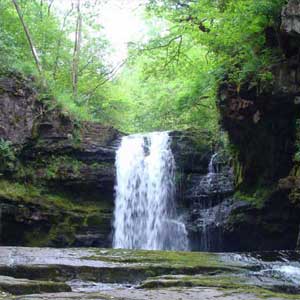
There are a remarkable amount of places to visit, including Samburu, Amboseli, Tsavo and the Mara River Crossing.
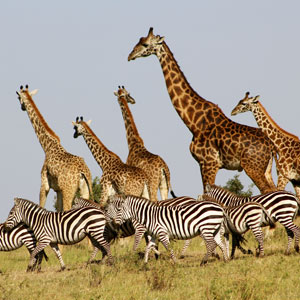
The Masai Mara is one of Kenya’s most compact reserves, yet huge populations of wildlife thrive.
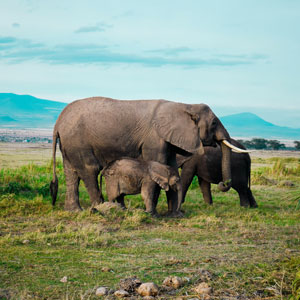
Amboseli National Park is one of Kenya’s most popular safari destinations.
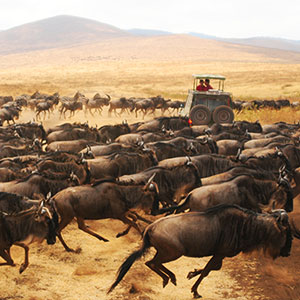
The annual wildebeest migration in Kenya sees mega herds on the move, and predators too.
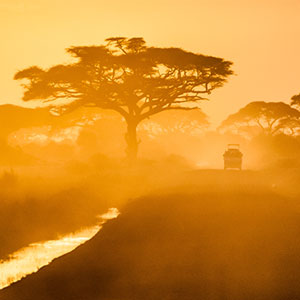
Long established as a superb destination for a safari holiday, Kenya has abundant wildlife and iconic landscapes.
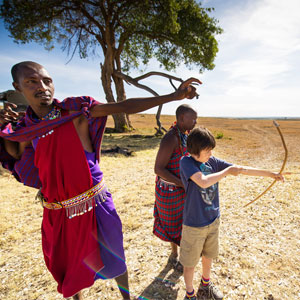
From village visits to a stay at a Maasai-run camp, there are plenty of ways to get close to these landscape custodians.
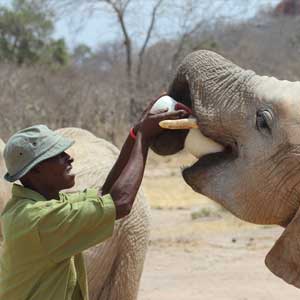
There is an abundance of child friendly activities here, and you'll be spoiled for choice.
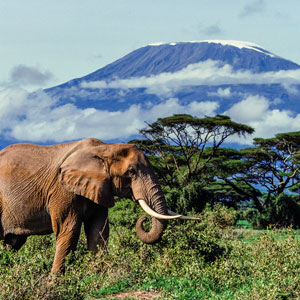
For first time travellers, Kenya is usually about three things: wildlife, wildlife, wildlife.
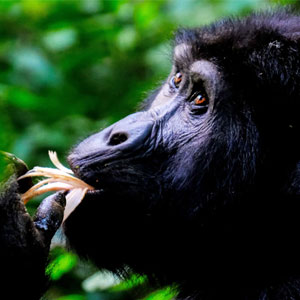
Travel to East Africa and you can squeeze the maximum wildlife watching from a single holiday.
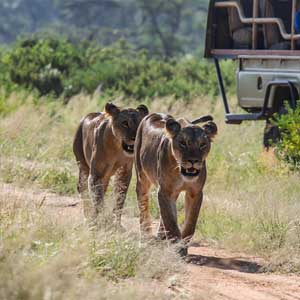
From game drives and walking safaris to meeting the Maasai, kicking back on the coast or volunteering...
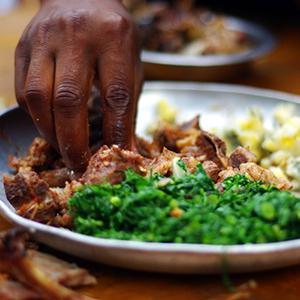
Our tips on what to eat in Kenya, with some tasty highlights of the country's diverse traditional cuisine.
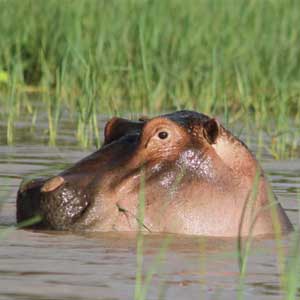
We share our top tips on the Great Rift Valley, climbing a mountain in East Africa and staying safe in Nairobi.
Learn about the importance of tourism in Kenya – and why it needs to be done right.




.jpg)
