Overtourism in Menorca

The little Balearic island of Menorca is prized for being quiet and unspoilt, but its nearest neighbours, Ibiza and Mallorca, experience huge problems from too many summer visitors. Could Menorca be next?

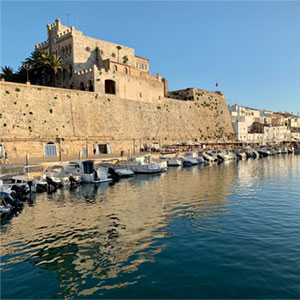
In the bars of Mahon, Menorca’s capital, local aromatics: rosemary, lemon, and pink peppercorns, are applied to a fishbowl-shaped glass in preparation for the island speciality, the G&T. The gin is distilled down on the harbour, at Xoriguer. It was popularised here by British sailors.

Enormous glasses of gin used to be the most extravagant offering in Menorca, an island prized by visitors for its understated nature. Gin aside, its calling cards range from humble sandals (avarcas, with soles originally made from recycled tyres) to stallions (the Menorquin, a black riding horse native to the island). But in recent years, Menorca has become more upmarket. Now, it’s struggling to stay out of the spotlight as wealthy investors buy its properties (cheap, given prevailing Balearic prices), and as oversaturated Mallorca, the largest and most-visited island, starts actively to deter travellers.

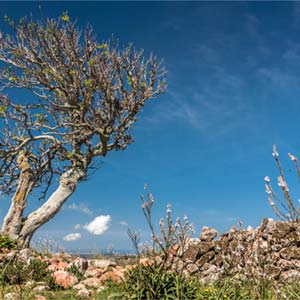
Over the last few decades, Menorca has been known as the place you go on holiday if you don’t want to encounter a crowd. Neighbouring Mallorca’s gravitational pull is strong, whilst Ibiza, next door but one, mops up the wellness and clubbing crowds. Whilst Mallorca has busy cities like Palma, and resorts like Magaluf, Palma Nova and Santa Ponsa, the local joke among Menorcans is that Menorca is ‘the bit between Mahon and Ciutadella’; its only two significant towns sit at either end of the island, and there’s not much in between. Menorca is a gently hilly, limestone expanse, with no proper forest, but garigue and wildflowers. And beaches, lots of quiet beaches; Menorca has more beaches than Mallorca and Ibiza combined.

Menorca is a choice, then – a quieter choice, for older visitors, for families, and for walkers, who come to walk the Cami de Cavalls, a 13th-century riding trail that once linked the island’s defensive watchtowers.

Or at least it was. Tourism in the Balearics has grown, and on little Menorca, it has grown the most. There was a 13.8 percent increase in travellers in 2022, compared to 2019 – 1.6 million travellers, compared to 1.4 before the pandemic. In the same period, tourism to Mallorca decreased slightly. Tourism to Mallorca is a far larger problem for now: Mallorca had over 11 million visitors in 2022. The island is roughly five times the size of Menorca.

The rise of upmarket tourism on Menorca

French visitors are the fastest-growing group of holidaymakers. Whilst they are outnumbered by visiting Brits, Germans and Italians, trendy French creatives have been buying up abandoned fincas – country farms – on the island. Millionaires flock to Menorca – including Spanish entrepreneurs and the Swarovski family. A Hauser and Wirth gallery – which also has locations including Zurich, Monaco, Hong Kong and London, opened in Menorca’s Mahon harbour in 2021. Neighbouring Mallorca now has the highest income per capita in Spain.

Post-pandemic, the world’s quieter places are increasingly celebrated for their seclusion. In 2023, Vogue – harbinger of all that is high fashion – issued a travel guide praising Menorca’s ‘laid back appeal and sense of spaciousness’. Menorca became a Starlight Reserve, in recognition of its commitment to defending the quality of its night sky from light pollution. The island was touted as one of the Top 100 Sustainable Destinations at ITB Berlin, a tourism trade fair.

As Ibiza gets more expensive – clubbing at Pacha can set you back a few hundred euros – its habitual visitors are looking elsewhere. For now, Menorca only has a handful of clubs, one of which is Cova d'en Xoroi, memorable, not for Ibiza-rivalling DJs, but because it is situated in a cave.

Where the wealthy, trendy and influential go, the world tends to follow. In July 2023, Jet2 announced direct flights from Liverpool to what the Liverpool Echo called the ‘new Ibiza’ after a Times article in April 2023 called Menorca the ‘hottest place to holiday’. This joins preexisting direct Tui flights from Manchester. The Manchester Evening News reported that you can fly to Menorca for as little as £30 in high summer.

Menorca need only look over the sea to Mallorca to see what might come next.

Overtourism in the Balearics

Beware of dangerous jellyfish; Caution: falling rocks. In 2023, Mallorcan activists, tired of overcrowded beaches, put up fake warning signs in a bid to deter tourists. In smaller letters, the signs clarified to Catalan speakers that there were no real dangers.

The small act was a sign of a massive dissatisfaction on the largest Balearic island, where tourists antagonise locals every summer. In 1966, Mallorca received a million tourists. By 2012 this had leapt to nine million.

In 2022, there were 16.5 million visitors to the Balearic Islands as a whole – a number that nearly matched the unsustainable pre-pandemic visitor numbers. The Balearic government briefly considered – but then abandoned – plans to place what it called a ‘moratorium’ on visitors at the start of 2023; 16.5 million, it said, was an absolute maximum that it couldn’t exceed. Yet this number was immediately exceeded the following year.

On Mallorca, ghost villages of second homes and holiday homes are hollowing out local communities and pushing up house prices – leading to the government contemplating banning them. A joint campaign between the British Embassy and the Balearic Government clamps down on the ‘tourism of excess’ – meaning that certain beaches have become smoke-free, and all-inclusive resorts in Mallorca have restricted the amount of alcohol they serve to their guests.

As of 2023 and 2024, no more than three cruise ships carrying over 500 passengers each are permitted to dock in Palma de Mallorca in one day – alongside one mega cruise ship, and one with over 5,000 passengers.

Overtourism’s risk of spreading to Menorca

If Mallorca bans cruise ships, they will just go elsewhere; it was reported that MSC cruises was looking at adding more stops in Menorca instead. Mallorca’s overtourism may make not just cruise ships, but holidaymakers too, cast around for local alternatives.

Always busy in summer, Menorca more than doubled its inhabitants in August 2022, with 160,000 tourists visiting an island of 100,000. Up to 70,000 vehicles come from Mallorca and mainland Spain in high summer, over on the ferry to Mahon and Ciutadella. Menorcans suffer from the increased traffic on their roads, and through their towns.

In 2024, mass protests against overtourism took place in Mallorca, with multiple thousands-strong groups of activists taking to the streets of Palma, and to the beaches. Menorca followed suit with hundreds protesting in a similar fashion. All are calling for restrictions on property sales so that local people are not priced out of the area.

One settlement in particular, Binibeca Veli, has more problems with overtourism than most. The development of 165 units, was built in 1964 by Spanish architect Antonio Sintes Mercadal and is often included on island tours. It resembles a tiny fishing village, but has been seeing upwards of 800,000 visitors a year in the 2020s. The community owners have instated visiting hours, and, as reported in the Guardian, threatened to close to the public.

Islands have finite resources. As well as clogging car parks and streets, summer tourists put immense strain on Menorca’s water supply – including its ability to purify wastewater – and the electricity grid.

Climate change exacerbates the problems caused by too many people, as it increases the risk of drought, and the risk of wildfire breaking out.

Islanders are concerned about holiday rentals, and there are increasing suspicions about illegal rentals, which increase in number whenever there are restrictions placed on the rental market. Local environmental nonprofit GOB Menorca repeated a local council estimate that there were over 6,000 properties illegally used for tourism on the island.

Menorca’s sustainable future

Menorca wants to export sandals, not import more sandal-wearing tourists
Whilst Menorca is threatened by overtourism, it has a good track record for encouraging sustainable development. This is in part thanks to the island’s long legacy of environmental protection.

In 2019, Menorca’s UNESCO biosphere reserve, established in 1993, was extended to 19km offshore, making it the largest biosphere reserve in the Mediterranean. The reserve has always been a great source of pride for local people and in 2023, the approved Menorca Reserva de la Biosfera law (Menorca Biosphere Reserve Law) made Menorca the first place in Spain to have a law made expressly for a biosphere. It doesn’t just protect the natural landscape, but the island’s cultural heritage, too, and can been used to shape island development.

The ‘Menorca Biosphere Reserve Law’ has allowed Menorca to limit the number of vehicles in circulation on the island at any one time, the number of boats, and the facilities at beaches. Menorca and Ibiza have both recently placed restrictions on the number of cars that could visit by ferry.

Menorca also imposes an eco tax. A sustainable tourist tax of up to €4 a night has applied to people aged 16 and over since 2016. The highest fee is for those staying in luxury hotels, the lowest for hostels and campers, and the rate is lower in off season – November to April. The money goes towards actions that protect the island and ensure tourism develops sustainably, everything from promoting the island off-season, to signposting walking trails and repairing historic buildings and sites.

Menorca wants more tourists to come outside the summer season. The Winter Med project, funded by the European Region Development Fund, and running from 2019 to 2022, was set up to devise a strategy for Mediterranean islands to attract a more sustainable type of tourism that ran year round. Corsica, Croatia, and the Balearics were all involved. At the moment, winter tourism in Menorca is restricted by the fact that many hotels close their doors in October – though some have started to stay open throughout the year, encouraged by a new year-round flight from London by low-cost Spanish operator Vueling.

Some Menorcan businesses focus on ‘circular’ tourism – that is, tourism that doesn’t simply overuse resources and create excess waste, but contributes to the economy in more sustainable ways: an example is a small project turning old fishing nets into handicrafts. 

Plastic Free Menorca wants to halve plastic use by tourists by 2030. The island will ban petrol cars by 2030 and aims to run 85% of its energy from renewable sources.

What you can do

By going on a walking holiday, rather than a ‘fly and flop’ to a Menorcan beach, you can ease the pressure on the island’s hot summer peak. Trips tend to run in May and June, and September and October, taking you out of the main towns, and off down the rocky coastline to visit the low-rise little fishing villages built into the cliffs.

Whilst you’re on the island, you can look out for ways to contribute to the island’s aim for a circular economy – some producers still make their Menorcan avarca sandals out of recycled tyres.

Whilst Mallorca imposes drastic measures to curb its overtourism crisis, Menorca still has a little more time to batten down its hatches against the coming storm.

During the summer, the island still parties like nobody’s watching. At the Festival of St Joan there are horseback processions, fireworks, and jousting. They are matched by parties in every town and village during the summer. The local jaleos, where Menorcan horses are paraded into the town, continue long into the July nights. These are Menorcan crowds, here on their own terms – here’s hoping they can continue to dictate what those terms are.
Read more over at our overtourism hub
Written by Eloise Barker
Photo credits: [Page banner: Jez Timms] [Intro: Alberto Almajano] [Overtourism in the Balearics: Olaf Tausch] [Menorca’s sustainable future: Elisabeth Agustin]