Douro Valley holidays, Portugal
Making wine is a true labour of love in the Douro Valley, but a relaxing holiday here certainly isn’t.
Arriving by train into the heart of the Douro Valley, I experienced a series of false starts – the hills rose up around the curving river, I spotted my first terraces – were we already here? But as we drew further upstream, the hills got even higher, the terracing even tighter. At last, we were in an unmistakable landscape of high hills, corrugated by thousands of years of wine production.
The Douro Valley has been a wine region for longer than nearly anywhere else. The Romans were here long before English merchants settled to ship Portuguese wine to England. The area is divided into three wine regions, from west to east: Baixo Corgo, Cima Corgo and Douro Superior, closest to Spain. Cima Corgo is where you’ll find the most typical landscape; further east you’ll find the Douro International Nature Park, with its high plateaus and circling vultures, a great place to start a cycling holiday.
The Douro is a region of extremes of altitude, heat and cold, 40°C in summer, frosty in winter, with hills that climb from the riverbank, terraced all the way up to create seemingly empty, convex amphitheatres. The valley’s vineyards are built into rocky mineral rich schist soil, so full of stones that landscaping it often used to involve dynamite.
It’s a landscape that’s not only hand-carved, but hand-labelled: looking out across the hills, you see the names of port producers propped up on the hillsides like Hollywood signs, announcing their different domains, from Sandeman to Taylor’s.
And not only hand-carved and hand-labelled, but hand-harvested too. It’s so steep here that often machinery cannot be used, and grape harvesting is done by human labour – a massive feat for such a vast wine region.
Arriving by train into the heart of the Douro Valley, I experienced a series of false starts – the hills rose up around the curving river, I spotted my first terraces – were we already here? But as we drew further upstream, the hills got even higher, the terracing even tighter. At last, we were in an unmistakable landscape of high hills, corrugated by thousands of years of wine production.
The Douro Valley has been a wine region for longer than nearly anywhere else. The Romans were here long before English merchants settled to ship Portuguese wine to England. The area is divided into three wine regions, from west to east: Baixo Corgo, Cima Corgo and Douro Superior, closest to Spain. Cima Corgo is where you’ll find the most typical landscape; further east you’ll find the Douro International Nature Park, with its high plateaus and circling vultures, a great place to start a cycling holiday.
The Douro is a region of extremes of altitude, heat and cold, 40°C in summer, frosty in winter, with hills that climb from the riverbank, terraced all the way up to create seemingly empty, convex amphitheatres. The valley’s vineyards are built into rocky mineral rich schist soil, so full of stones that landscaping it often used to involve dynamite.
It’s a landscape that’s not only hand-carved, but hand-labelled: looking out across the hills, you see the names of port producers propped up on the hillsides like Hollywood signs, announcing their different domains, from Sandeman to Taylor’s.
And not only hand-carved and hand-labelled, but hand-harvested too. It’s so steep here that often machinery cannot be used, and grape harvesting is done by human labour – a massive feat for such a vast wine region.

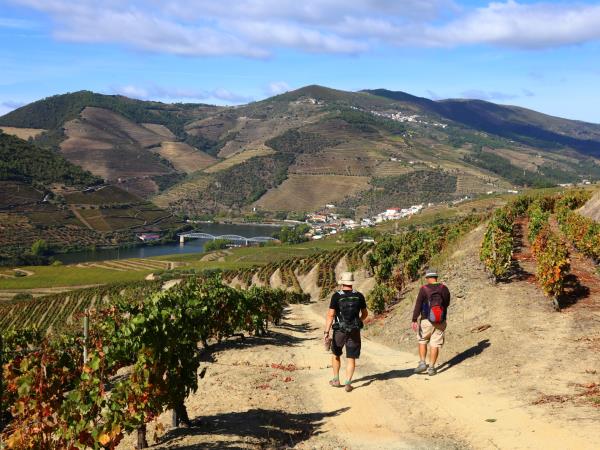
Douro Valley self guided walking holiday in Portugal
Walking in Douro Valley through astonishingly landscape
From
€1230 to €1350
8 days
ex flights
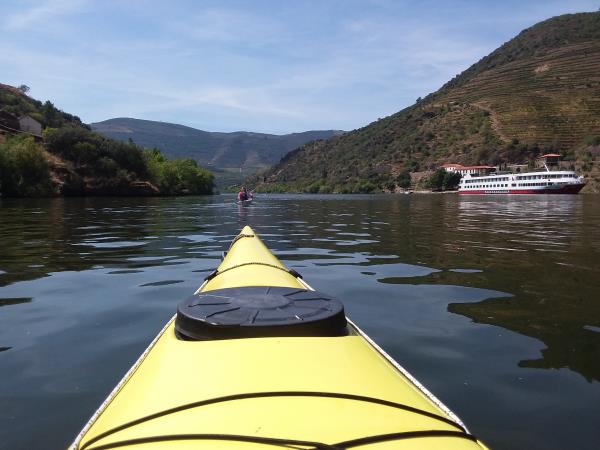
Douro valley by kayak holiday, across Portugal
Kayak across Portugal on the Douro River
From
€3370
10 days
ex flights
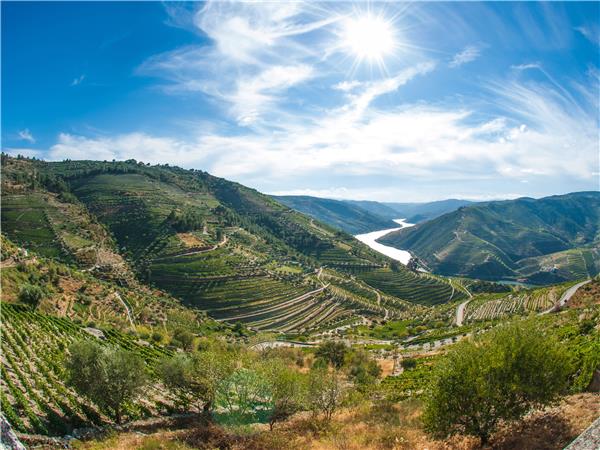
Northern Portugal small group tour
Discover culture & landscapes from Aveiro to Porto
From
£3229
8 days
ex flights
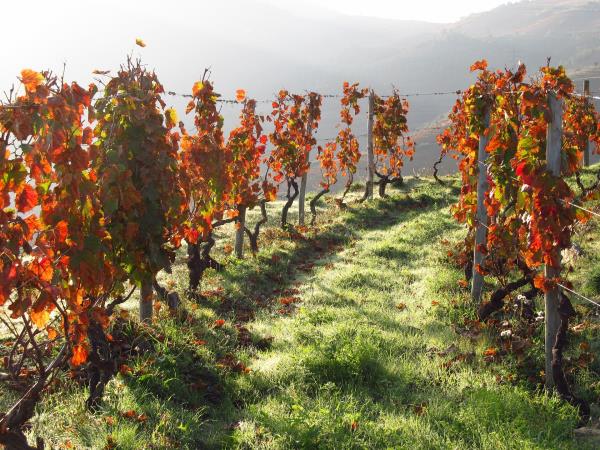
Portuguese Douro wine region walking holiday
Discover and walk through the Portuguese Douro Wine Region
From
£1345 to £1455
8 days
ex flights
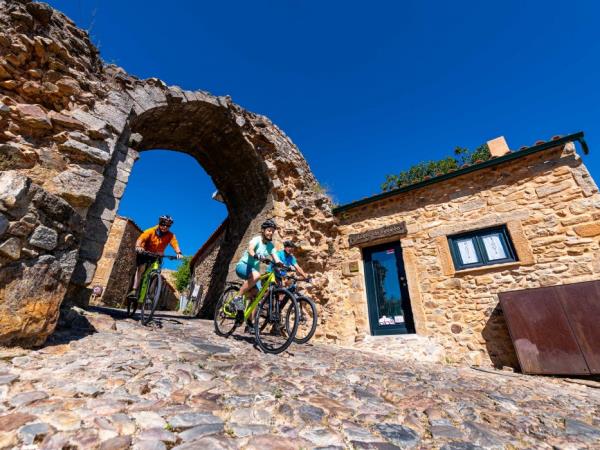
Cycle the Douro Valley, Portugal
Cycling, wine tasting & historical villages in UNESCO wine region
From
€1369 to €1615
8 days
ex flights
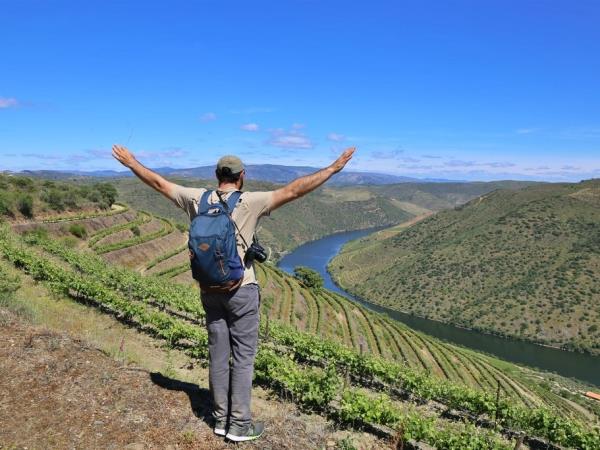
Self guided walking holiday in the Douro valley
1 week self-guided walking holiday in northeast Portugal
From
€1120 to €1320
8 days
ex flights


Contact Us
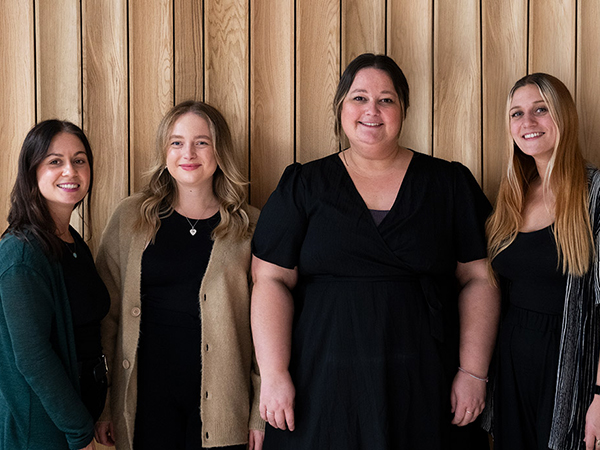
Call us for a chat about our holidays. We are happy to discuss your holiday and help in any way we can. No bots, queues or awful hold music.

01273 823 700
Call us until 4pm
Calling from outside the UK


God made the Earth, but man made the Douro![]()

“Man made the Douro”
“Cycling through this historic region allows visitors to witness first-hand the unique relationship between the landscape and those who have shaped it over centuries,” says Carlos Santos, from our cycling expert, Portugal A2Z. He references the local saying: "God made the Earth, but man made the Douro." A cycling holiday in the Douro Valley is one way to enjoy the region, but you could also walk up through the steep terraces, pausing to picnic among the vines on one of our self guided walking holidays, or even paddle down the prettiest sections of the river on our kayaking holidays.
People who live here get used to navigating the hills. You can gain elevation very quickly thanks to precipitously steep climbs up the slopes; roads and paths are forced into serpentines; driving is done with care.
Up in the hills, you’ll find elegant quintas (country houses, usually wine estates), some with restaurants so fancy that I, a scruffy walker, was intercepted in the driveway by one before I could get too close. Others are more than happy to offer tastings, tours and dining.
People who live here get used to navigating the hills. You can gain elevation very quickly thanks to precipitously steep climbs up the slopes; roads and paths are forced into serpentines; driving is done with care.
Up in the hills, you’ll find elegant quintas (country houses, usually wine estates), some with restaurants so fancy that I, a scruffy walker, was intercepted in the driveway by one before I could get too close. Others are more than happy to offer tastings, tours and dining.
Vines, vines & more vines
It’s not all vines here. Farmers produce excellent ingredients beside the famous grapes: “It’s a region where the farmers produce wine and olives. And almonds as well,” says Sergio Lucena from our kayaking partner, 7 Rivers. There are also cherries – “very tasty cherries,” he says, “which are very sweet.”
“And one of the things that Douro is rich for is the thermal waters,” says Sergio. “There’s a place that has thermal waters and we always include a thermal session for our participants.” Most towns have a spring, where Sergio encourages guests to fill up their water bottles.
Then there’s the UNESCO-listed Coa Valley Archaeological Park, known for its palaeolithic art, which provides a glimpse at human life in the region long before the Romans started their mass landscaping efforts.
Visiting Porto at the start or end of your trip provides a wonderful counterpoint to the valley, especially if you have time to spend in Villa de Gaia, where port houses provide tastings in English-feeling rose gardens, complete with wandering peacocks.
“And one of the things that Douro is rich for is the thermal waters,” says Sergio. “There’s a place that has thermal waters and we always include a thermal session for our participants.” Most towns have a spring, where Sergio encourages guests to fill up their water bottles.
Then there’s the UNESCO-listed Coa Valley Archaeological Park, known for its palaeolithic art, which provides a glimpse at human life in the region long before the Romans started their mass landscaping efforts.
Visiting Porto at the start or end of your trip provides a wonderful counterpoint to the valley, especially if you have time to spend in Villa de Gaia, where port houses provide tastings in English-feeling rose gardens, complete with wandering peacocks.
Douro Valley holiday ideas
Walking
Jornaleiros – day labourers who didn’t own land of their own – travelled to work on the land in the region using a network of old paths; walking the same paths today is strictly for pleasure. Whilst hikes up the slopes from the riverside can include some very steep sections, the rewards are incredible views, family-owned hotels with pools, country houses with wine tastings – and the option of calling a taxi for the next leg if you’ve slightly overindulged.Cycling
At first glance, there doesn’t seem to be a square metre of flat ground in the Douro region, but our holidays have found the perfect routes, so you don’t have to worry about making up the time if you choose to stop for a tasting or pause for a picnic. Expect routes that coast downhill to banks of the Douro or explore the plateau of the Douro International Natural Park, close to the Spanish border.
Kayaking
As the valley heats up through spring, the urge to be closer and closer to the water grows. A series of dams, built since the 1970s and not without controversy, have turned the Douro from a wild river prone to flooding into a tame flow that is navigable, not just by the tourist boats you see shuttling up from Porto, but by kayak, too. And as the river flows all the way across Portugal, our kayaking trips follow it downstream, staying in traditional accommodation along the way.
River cruising
A far more elevated affair than the tourist boats that do day tours down the river, on multi-night river cruises there are plenty of opportunities to stop at local quintas for port and wine tastings, plus fantastic traditional dining experiences. You can embark on a round trip from Porto on our week-long Douro River cruise holiday – reaching into the Douro Valley as far as the Spanish border, before returning via Regua, then passing under Porto’s famous seven bridges to disembark in the centre of the city again.
Taking the train
From the tiled interior of Porto’s Sao Bento station you can take a direct, slow train into the heart of the Douro Valley. The little diesel trains have bright, retro interiors and doors that the foolhardy can open whilst the train is moving. Pulling you into increasingly attractive landscapes – for long stretches of the journey, the tracks go right along the riverbank – you’ll pass many little stations before you alight at Pocinho, in the heart of the Douro.
Wine tasting
There are some big wineries in the Douro Valley, including famous port brands like Sandeman. But there are also smaller businesses. “We partner closely with local guides and smaller wineries, ensuring that a greater share of tourism revenue directly benefits the community and helps preserve the valley’s unique traditions,” explains Carlos. Trips include visits to family-run vineyards, and restaurants that prioritise produce from local farmers.
Quinta and village stays
“Normally we don’t stay in hotels, we try to run away from the conventional,” says Sergio from 7 Rivers. They use locally owned accommodation when they can, basing their kayakers in a traditional village for the first few nights of the kayaking trip. “The owner has restored five houses there and we can get to know the way that people used to live in these houses, they are integrated into the village and community,” says Sergio. If you want to stay in a quinta, you might get free board if you offer to help with the harvest.
When to visit the Douro Valley
The Douro Valley’s mountains shelter it from the wind, so vines thrive, but summer is incredibly hot. It’s common for temperatures to be in the high thirties and creeping into the forties, whilst winter can be surprisingly chilly. Cyclists and hikers might prefer to head over in spring, early summer and early autumn. Kayakers can enjoy the summer heat from the waterline: kayaking trips run from March to September. Depending on the conditions through the year, September is usually the grape harvest and the hive of activity that surrounds it; grapes snipped from their vines and jolted down the roads to the wineries. Since so much happens by hand, you might be invited to help.
More Portugal articles
Discover the breadth of destinations across Portugal where you can hit the trail.
Along with some great recommendations, discover the best of culture tours in Portugal.
Portugal travel advice starts with a few tidbits from friendly folks we know and trust.
Where to go, and what to do while you’re there, with tips from our expert partners.
Find all of our Portugal guides conveniently in one place so you can plan your trip.