Responsible tourism in Zimbabwe

When Robert Mugabe, whose repressive regime was responsible for many human rights atrocities, was finally forced from power after nearly four decades, the hope was that Zimbabwe would enjoy a brighter future. But while some things have improved – certainly the economy is in a much state, with tourism a major driver of that, and there is a willingness to reengage with the rest of the world – in other ways the same old problems persist. Corruption, disputed elections, and allegations of violent repression have all been laid at the door of Emmerson Mnangagwa, the man who succeeded Mugabe, and of course Mnangagwa’s party is ZANU-PF, which has ruled Zimbabwe since independence. So the guy at the top may have gone, but many of the people below him are still running the country.

In our view tourism has a vital role to play in how things unfold politically in Zimbabwe. The industry makes up some 12 percent of the country’s GDP, and tourists will only come if they believe the country is stable. And given that most visitors are there for the wildlife and the national parks, tourism may also prove essential in protecting these precious natural assets.

Wildlife & the environment

Canned hunting

There are a number of places around Zimbabwe where hunters can engage in canned hunting. The animal, usually a lion, is penned into a large enclosure, so it has no hope of escape from the hunter’s gun. Foreign tourists will pay thousands of dollars to take part in this pre-packaged slaughter, an unfair fight, and worse still, unethical operators will sometimes bait the lions out of protected areas so that they can be shot.

We totally condemn canned hunting at Responsible Travel but sadly it, along with elephant hunting for ivory, is still a feature in Zimbabwe. And so we urge all supporters of ethical tourism to condemn it too. Read more on our stance on canned hunting which is when wild animals are reared only for this purpose. With Zimbabwe’s tourism opening up again, it is a particularly important time to nip this unethical and unthinkable industry in the bud. And the best way to do this is to go on wildlife safaris and show poachers, as well as the government authorities which are said to support the export of animals to foreign zoos, that so much more money can be made in the long term from sustainable wildlife watching.
What you can do
Support the work of the Zimbabwe Conservation Task Force and read up on the history of elephants and conservation politics in the extraordinary book ’Elephant Dawn’ by Sharon Pincott. She worked tirelessly for 13 years monitoring African elephants here but was forced to leave in the end. The struggle continues to preserve these sumptuous survivors of the savannah.

With regards to canned hunting of lions, thanks to lobbying of some governments and airlines to prevent the export of trophies, as well as massively negative PR, hunters are finally deterred from going on such trips. The superb Wild Aid/Panthera report lays out the facts and figures very clearly. Shockingly, the EU still allows the import of trophies from certain African countries, including Zimbabwe, if authorities believe that the hunting has been done sustainably i.e. it generates income for conservation purposes. Tragically, canned hunting is all about money and the pride of the shoot, rather than protecting the prides. Nothing makes that point better than Ian Michler’s 2015 film ‘Blood Lions’, a brilliant, hard-hitting documentary that exposes the dark underbelly of South Africa’s captive breeding and canned hunting industries. Although it is based in South Africa, you will get the message.

Habituating wild animals for tourism

As tourism is on the rise again in Zimbabwe, we want to make sure that tourists and tourism providers don’t fall into that dreadful trap of thinking that riding elephants, walking with lions or indeed cuddling lions is something that any of us should be doing. It happens around the Victoria Falls region, and it is something that we actively take a stance against at Responsible Travel.
Although on rare occasions, it is suggested that the money earned from it is put towards elephant conservation, in Zimbabwe we don’t buy that. It generally doesn’t and it is also a tourist trap which involves wild animals being coerced into behaviour that isn’t natural to them. And will make their eventual release into the wild nigh on impossible. Read more on our stance on elephant trekking and general advice on wildlife tourism.

A positive story: Peace Parks

"I know of no political movement, no philosophy, no ideology, which does not agree with the peace parks concept as we see it going into fruition today. It is a concept that can be embraced by all. In a world beset by conflicts and division, peace is one of the cornerstones of the future. Peace parks are a building block in this process, not only in our region, but potentially in the entire world." – Nelson Mandela

Zimbabwe gets a lot of negative press, much of it merited. However, there are some wonderfully positive stories going on here too, and the existence of two regions that are members of the Peace Parks Foundation is worthy of note. More formally known as Trans Frontier Conservation Areas (TFCAs), the idea behind them is that conservation can not only work nation by nation, but by creating wildlife corridors across borders, protecting all important habitats from country to country. These are of major importance when it comes to supporting sustainable development through tourism and, in so doing, promulgate peace and stability. The member countries work together to help combat wildlife crime, protect ecosystems, work on disease control, advocacy and political support, as well as supporting community development projects.

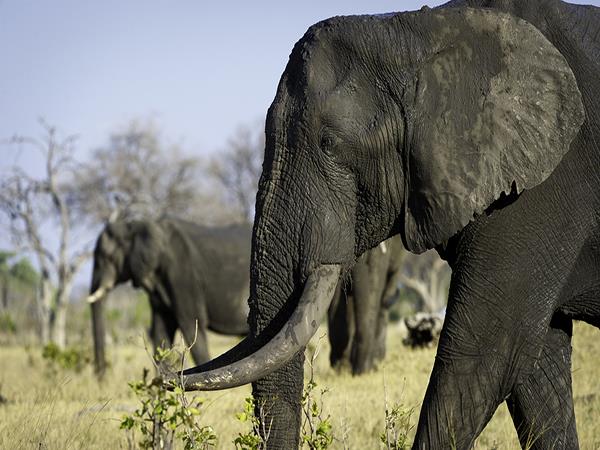
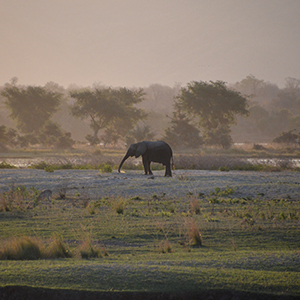
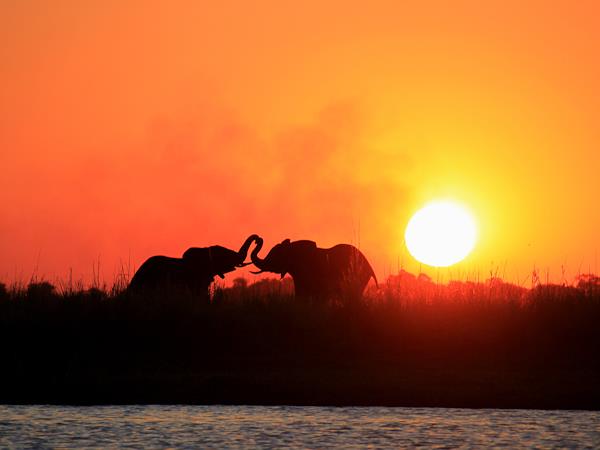
Zimbabwe is a member of two TFCAs, with more in the pipeline. The Kavango-Zambezi Trans Frontier Conservation Area is in the northwest, sometimes referred to as the Ivory Route, as it provides a corridor for elephants to move between Angola, Botswana, Namibia, Zambia and Zimbabwe where the Okavango and Zambezi river basins meet. This is the world’s largest such area covering a region the size of France. The other is the Great Limpopo Trans Frontier Park in the southeast corner of the country, opening up a corridor that links Limpopo National Park in Mozambique, Kruger National Park in South Africa and Gonarezhou National Park, Manjinji Pan Sanctuary and Malipati Safari Area in Zimbabwe. Big and beautiful terrain for big and beautiful wildlife including elephant and buffalo.
What you can do
Read up on the work of the Peace Parks, subscribe to them and follow them on social media. But most importantly, do make a donation. In terms of elephant survival and protection from the ivory trade, for example, an industry that the Peace Parks strive to bring to a stop, do please support the work of Born Free. Read more in our article about their campaign, Bloody Ivory, which we also support, sign their petition and help fund elephant protection.

Responsible tourism tips

Avoid political demonstrations and indeed political discussions. Criticism, derogatory and insulting comments about politicians can get you, and the people you're speaking to, into serious trouble. Don’t eat bushmeat, as it is a reason that wild animals are poached illegally. Rhino poaching in Africa is rampant and Zimbabwe is no exception. There is therefore a general rule not to post images of rhino sightings, or their locations, on social media or public domains due to the threat of poaching.
Debby Oscroft, from our Zimbabwe partner, Sunway Safaris:
“Responsible tourism means just that – being responsible. So dishing out sweets or money to kids that congregate around the vehicles really does nothing for them. Firstly it teaches them to beg as they prefer the instant gratification to the long haul of becoming educated and earning a living. Secondly, they cannot afford the dental care that becomes necessary with all the sugar in the sweets.”
Many Zimbabwe holidays involve some wonderful camping experiences. Please ensure you bring environmentally friendly washing and beauty products with you to protect these precious landscapes, as well as the limited water supplies. And please bring all packaging home with you. Recycling isn’t high up on the priority list right now in Zimbabwe. There are bigger fish to fry. Zimbabwe is one of 76 countries to ban homosexuality and so please do be wary, LGBT travellers, as both police and government officials can be tough in making their thoughts, and laws, known. It saddens us greatly at Responsible Travel to even write about homophobia in this way but we ask you to read 76 Crimes for more information and support their pioneering work in LGBT rights. It’s natural to want to get closer to wildlife – but this will distress them. Never ask your guide to leave the trails or drive after wildlife, and be sure to obey all rules in the reserves. Read more in our responsible safaris guide. Think before you click. It’s easy to get snap-happy when presented with Zimbabwe’s incredible savannahs and people, especially with the current selfie mania. But it’s important to remember that while this may be your trip of a lifetime, it’s local people’s reality, so always introduce yourself and ask permission. It is a nice idea to ask for a postal address and follow up by sending photographs back to local families. Never use flash photography with wildlife. Do tip generously. Times have been very tough here economically, and so what may only be a coin or a small note to you, may be several meal tickets to someone else. It doesn’t have to be over the top. Anything between $1-5 dollars is wonderful and given that the average local is less than $2 a day, anything extra makes a big difference. If you are doing any outdoor activities such as canoeing or rafting, make sure you do so with a responsible operator who has stringent safety procedures. When travelling with a responsible tour operator, they should always be working with the best on the ground. Two nice cultural tips regarding hands: When giving or receiving something, do it with your right hand. If the left hand is proffered it is seen as an insult. And secondly, an easy way to say thank you is by clapping your hands twice.
Written by Catherine Mack
Photo credits: [Page banner: Steven dos Remedios] [Campaigns: mrgarethm] [Cecil the lion: Daughter#3] [Habituating wild animals: Erwin T] [Peace parks: i_pinz ]