Overtourism in Bali

Bali is one of the world’s most high-profile victims of mass tourism. Stories of culturally insensitive foreign tourists are rife, the island’s iconic rice terraces are disappearing beneath hotels, resorts, and villas, and during the peak tourism season (July to August) you can easily spend a big chunk of your holiday stuck in traffic.

The island’s tropical paradise image is artificial, deliberately created by Dutch colonisers in the early 20th century to gloss over their atrocities and avoid international embarrassment. Packaging a vision of paradise that would appeal to Western tourists’ fantasies of exotic island life has proved remarkably effective – promotional images of Bali typically feature white sand beaches, but in fact most beaches here have black sand. Nowadays, as Bali struggles to cope with ever-increasing numbers of tourists, the reality rarely matches the fantasy.

Artificial islands

The Benoa Bay artificial islands project is a prime example of Bali’s self-destructive reliance on tourism. A plan to develop 12 artificial islands that between them will host a golf course, luxury resorts, a theme park, and a Formula 1 racecourse, has been intensely controversial since its conception. Yet despite local protests and concerns over the environmental impact, the project is going ahead.

Creating these islands off the coast of south-east Bali will require an immense land reclamation effort through sand mining operations. It threatens everything from sacred sites for melukat (water purification) ceremonies to coral reefs, mangrove forests, and indigenous villages. This may seem like a bizarre act of self-harm, but sadly it’s no surprise that the project has progressed this far, in a place where some 50 percent of the economy is either directly or indirectly linked to tourism.

A heavy price to pay

It’s no secret that Bali suffers from overtourism, where the number of visitors clearly has a negative impact on the natural environment, and life for local people. Our guide to overtourism and the documentary we produce on the subject look at the causes of overtourism, some of the most high-profile victims, and how responsible travellers can make a difference.

Bali’s overtourism issues affect everyone, but it is the island’s residents who get the worst of the deal. Insensitive behaviour from a handful of idiots generates headlines, yet the real issues here range from overconsumption of water to overdevelopment, plastic pollution, and appalling traffic.

Jammed up

Responsible Travel’s own Simone Flynn has spent a lot of time in Bali: “At times [the traffic] can be much worse than rush hour in the UK.” If you don’t plan well then you can get stuck in a long queue because there are so few alternate routes on the island.

But it’s not just the sheer volume of vehicles on the road – it’s about obstructions to the flow of traffic. A line of cars illegally parked along the verge at a popular beach can very quickly lead to long tailbacks. Conscious of how traffic can cause havoc with daily itineraries, our Bali holidays will often set off early to avoid the worst of it, and ensure you make the most of your time. Even so, if you manage to go a week without getting caught in a jam, you can count yourself lucky.

For the holidaymaker this can be frustrating, but for the Balinese this is their day-to-day reality. It’s a heavy price to pay for tourism.

Overdevelopment of tourism

The tourism industry dominates the Balinese economy. But when the Covid-19 pandemic swept the world, Indonesia closed its borders to international visitors. Many tourism businesses, such as hotels, kept their staff on. Others didn’t, or couldn’t.

Felicia Severns is the Managing Director of our partner Odyssey World: “Guides and drivers had their careers interrupted by the pandemic and were forced back to working on their families’ rice paddy fields for two years, growing just enough to feed themselves and trade with their neighbours. Much of the island is delighted to see tourists coming back after Covid, but with it comes dangerous moped riders, inconsiderate influencers, and disrespectful partygoers. How do they find the right balance when so much of the country’s economy depends on global tourism?”

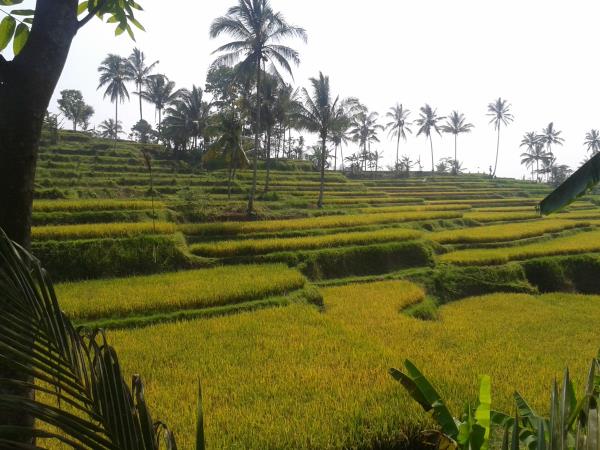
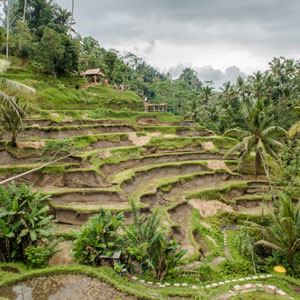
One of the starkest examples of tourism overdevelopment in Bali is how fast its famous rice terraces are disappearing – the classic ‘paving over paradise.’ The terraced rice paddies play a useful role in absorbing water during the rainy season, but they are being built over because zoning laws aren’t applied effectively. Their loss contributes to potentially deadly flooding.

In Seseh, in the south of the island, local people have been campaigning against plans to build one of the largest beach clubs in Bali on the seafront. “It’s such a shame as it’s a beautiful spot and it will completely change the vibe and character of the place,” says Simone. “One of my favourite sunset spots is a place called Warung Pantai Seseh, but in the last year it’s got a lot busier there too as word has spread.”Given the extent to which Bali’s economy has become reliant on tourism, and the number of local people employed in the industry, reducing levels of visitors quickly isn’t feasible. But it does need to be unpicked, because for the Balinese people tourism offers a poor deal. With the package tours and resorts that constitute most tourism on the island, most of the profit leaves leaving the island. Yet local people absorb all the ‘costs’ that come with having so many holidaymakers.

Water worries

Mass tourism puts immense strain on Bali’s natural resources, and water scarcity is a particularly urgent issue. More than half of the island’s groundwater is poured into the tourism industry – for its baths and showers, swimming pools, laundries, and landscaped gardens. Most of Bali doesn’t have mains water, so people are reliant on wells. Hotel guests, per night, use water far in excess of what a resident might use, so there’s a major disparity.

Subak is a traditional water distribution system drawing on Balinese philosophical principles of harmony between the spirit, human, and natural worlds. Networks of irrigation canals direct the island’s freshwater supplies through temples out into the rice fields. Since the 11th century, this cooperative management of water resources has regulated the ecology of rice terraces to provide for the island’s dense population. But overexploitation of water by the tourism industry jeopardises the subak system, not only harming an ingenious piece of ancient engineering, but also potentially threatening Bali’s food security.

Influencers & idiots

From a Russian tourist posing nude in front of a sacred tree, to a German tourist who gatecrashed a dance performance by stripping off in the middle of a temple, there have been many well-publicised incidents of tourists behaving badly in Bali. A sense of entitlement has emerged among some visitors, not helped by a rise in social media influencers creating an image of the island that doesn’t stand up to reality. This points to a perception that Bali is a place where ‘anything goes’, which is entirely at odds with the respect for others that is embedded within traditional culture here.

However, it should be remembered that when it comes to the media, nothing sells like scandal. The truth is that the influencers are a tiny minority, and so are the idiots. The vast majority of people come here and behave perfectly reasonably on their holidays. Bad behaviour gets blown out of proportion.

Trash-talking

Plastic waste is an enormous problem in Bali. The island produces thousands of tonnes of waste every day, and only around 60 percent of it ends up in landfill. The government has banned single-use plastics which reduces the number of straws and shopping bags, but Bali’s beaches, roadsides, and waterways are still strewn with waste. The waste that makes it to rubbish dumps forms ever larger piles, which can cause health problems for local communities.

“There was a really big fire at a rubbish dump in Denpasar recently,” says Simone. “Local families live there and help sort the trash. It was burning for weeks, and the community kitchen where I volunteer was providing extra meals, face masks, and water for people.”

Bad as it is, there’s rarely a day in the Bali calendar that doesn’t have a beach clean pencilled in. And pioneering organisations such as Sungai Watch are making a big difference in getting plastics out of rivers before they reach the sea. Until something can be done to reduce plastic use altogether, though, it’s like fighting against the tide.

However, increasingly negative reactions to plastic pollution from international visitors might actually be the push the Balinese government needs to deal with the issue. Less than 10 percent of plastic waste is currently recycled, so there’s immense scope for improvement.

Contact Us

Responsible Travel, Travel Team

Call us for a chat about our holidays. We are happy to discuss your holiday and help in any way we can. No bots, queues or awful hold music.

Responsible Travel, Travel Team

How can Bali fight overtourism?

In the face of local anger, Balinese officials have begun cracking down on bad behaviour. Tourists have been arrested, fined and even deported for crimes such as public indecency, desecration of sacred monuments, or failing to abide by Hindu values – some influencers manage all three at the same time. There has been talk of a ban on tourists renting motorbikes after a series of incidents in which foreigners have flouted traffic regulations and been caught drink-driving without a license or helmet.

And a tourist tax of $10-15 per person, per stay has been suggested, to curb visitor numbers while raising funds for infrastructure and protecting natural landscapes.

But shaming, banning, and taxing are all controversial approaches to the problem of overtourism, and none of them are likely to have much of an impact. What’s really needed is a complete rethink of Bali’s attitude to an industry that dominates the local economy.

Travelling better in Bali

The Balinese government intends to attract more 'high quality tourists', by which it means, big spenders who stay longer. However, ‘high quality’ and big spending aren’t the same thing; it depends how that money is being spent. Luxury all-inclusive resorts, high-end restaurants, marina berths for mega yachts – these do precious little for local people. 

Travelling responsibly in Bali means making use of locally owned hotels, restaurants, and other businesses, ensuring that the money you spend reaches the pockets of local people rather than the swollen bank accounts of huge multinational firms.

“You can still enjoy a beautiful, spiritual, and responsible holiday by eating at local warungs (restaurants), learning about and respecting cultural traditions, and choosing local wherever possible,” says Felicia Severns.

The Balinese government has been trying to educate tourists with Dos and Don’ts, to improve cultural understanding and reduce instances of offensive behaviour. A surprising number of people do need to be told ‘don’t pose nude on this sacred site then share the image with your followers on Instagram’.

At the heart of travelling responsibly is the belief that our right to see the world does not outweigh the rights of local people to enjoy their own home, or the need to preserve the environment. Our holidays aim to meet this ethos by limiting group numbers, using local businesses, and seeking to avoid tourism hotspots at the busiest times.
Read more over at our overtourism hub
Written by Rob Perkins
Photo credits: [Page banner: Jorge Franganillo] [Intro: Jorge Franganillo] [Jammed up: Fabio Achilli] [Trash-talking: Agung Parameswara]