Golden Triangle, India travel guide

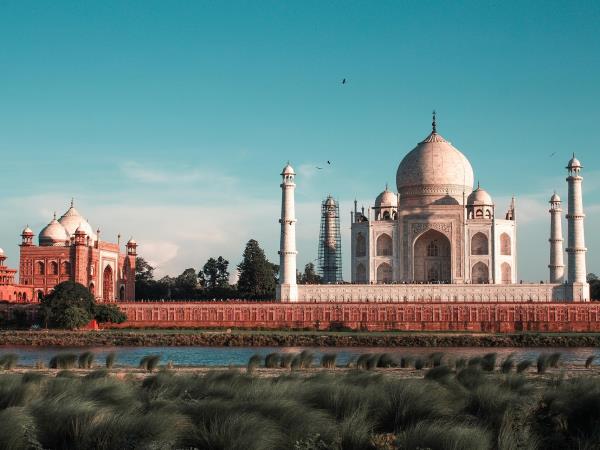
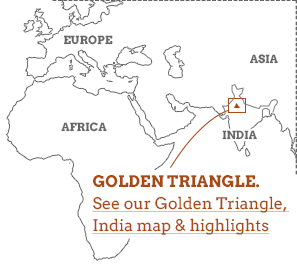
India’s Golden Triangle refers to three prestigious points in Northern India: New Delhi, Agra and Jaipur, which do indeed form a triangle on the map. Flying into New Delhi, the capital, then to Agra in Uttar Pradesh state, and onto Jaipur in Rajasthan. This is a country that certainly is far from ‘grim up North’: the majesty of Mughal architecture, from the Taj Mahal in Agra and the Red Fort in Delhi, to the palatial prettiness of the Rajput in Jaipur is inimitable.
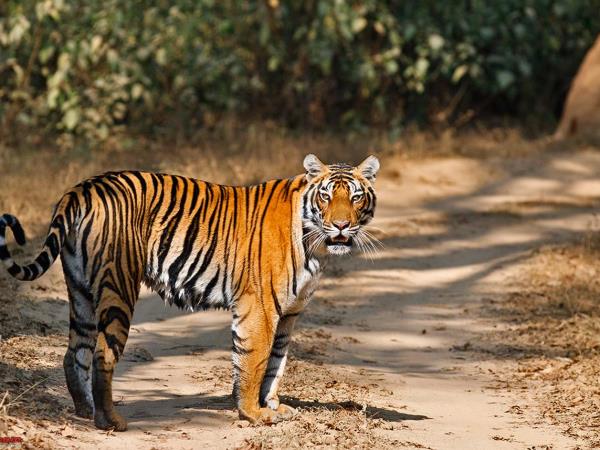
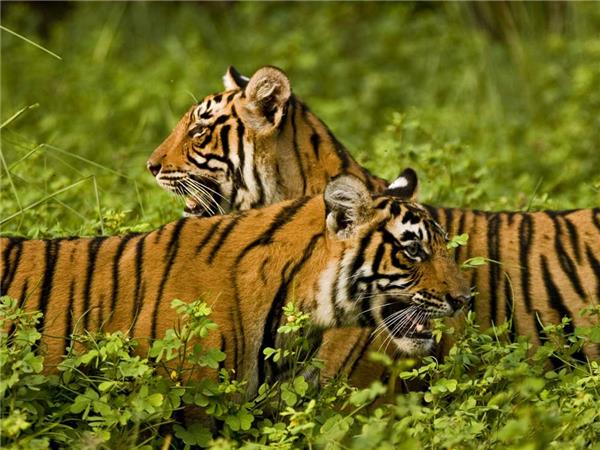
I was so glad that I tagged a tiger safari onto my golden triangle trip. The architecture is extraordinary, but will probably always be there. The tigers might not be
You can hardly move for UNESCO World Heritage Sites although taking trains, rickshaws and even cycling between them is a great way to move through them. The ultimate Grrrrrreat thing to do, of course, is to see tigers in the wild en route. Because this Golden Triangle isn’t short on karats.
The Golden Triangle is...

a way to see Northern India's wonders if you only have a week.

The Golden Triangle isn't...

just a triangle. Think of it in 3D, and you have more of a prestigious, packed-to-the-brim pyramid.

What we rate & what we don't

Underrated

Off the beaten track

Golden Triangle holidays are, by their very nature, very much on the tourist trail, and a gleaming golden one it is too. However, by travelling with a responsible holiday company and local guide you will have moments to step off the trail, stay in a homestay, visit small Rajasthani villages, seek out a restaurant where only local people go or visit a locally revered artist or gallery in Jaipur.

Delhi

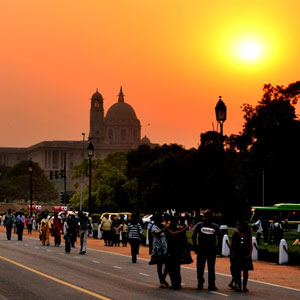
Although a major point on the Triangle, it is often Taj and Raj that get all the attention. Divided into New Delhi – with a quadruple espresso kick in the head feel about it – and Old Delhi – which dates back 5,000 years – the UNESCO World Heritage Sites of Red Fort, Humayun's Tomb, and the extraordinary Qutub complex are what will get your heart racing. Delhi’s food scene will get your mouth drooling, too.

Shekhawati

A region of Rajasthan often included on Golden Triangle tours en route to Jaipur, it’s the faded glamour of former Rajasthani aristocrats and their haveli houses that people want to see. Like oases in the desert, tumbleweed blows through courtyards boasting stunning murals and yet reeking of obsolete opulence. Others have being lovingly restored into hotels. Photographers won’t want to miss including this stop.

Art & artisans

The Golden Triangle is falling down with tourist tat, but there is also so much quality out there if you know where to go. India has a long history of royal patronages for fine art, with beauties such as hand lacquered ceramics, the purest of handmade pashminas and an eclectic range of visual artists. The All India Fine Arts and Crafts Society in New Delhi, for example, dates back to 1928.
Rated

Small group tours

Especially if this is your first time in India, joining a small group tour around these great sites is a superb way to go. Everything is organised for you from Taj tickets to train tickets, homestays to heritage hotels, and they will help you get your head around the dramas of Delhi. Just turn up and let the experts introduce you to the stars of the Golden Triangle, in a responsible, culturally immersive way.

Taj Mahal

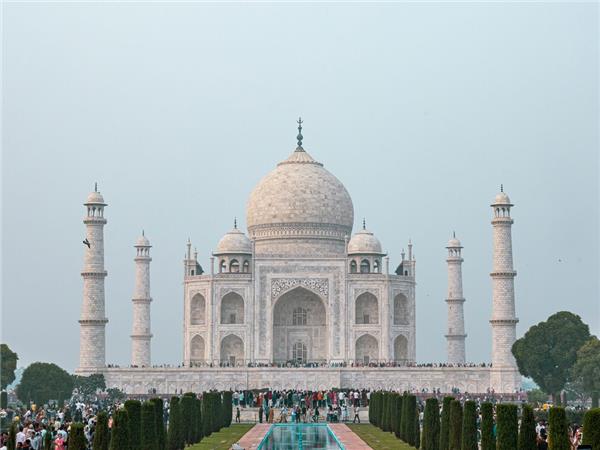
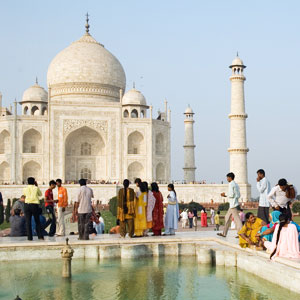
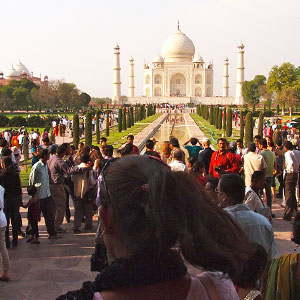
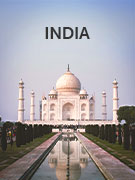
Everyone sighs at the love story behind the Taj Mahal. This white marble mausoleum was built by the grieving Mughal Emperor Shah Jahan in memory of his late wife. It gets millions of visitors, and although no one loves the crowds, you can still somehow find moments of peace here, especially at sunrise. Read more in our guide to the Taj Mahal.

Jaipur

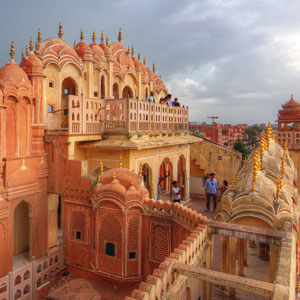
Known as the Pink City, thanks to its magnificent sandstone architecture, with a fair amount of paint thrown into the mix, Rajasthan’s state capital is spectacular. The ancient, walled city has seven gates that lead you into a world of palaces, colourful markets, artisans and animals. The sandstone and marble Amber Fort, overlooking Maota Lake, is a must, as is seeing the city by hot air balloon.

Agra Fort

The city isn’t great, but the red sandstone fort certainly is. Within walking distance of the Taj Mahal, this UNESCO World Heritage Site was the heart of the Mughal Empire dating back to 1156. There are hundreds of buildings and monuments influenced by Persian architecture within the walls of the fort, too, such as the Pearl Mosque and the Golden Pavilions.
Overrated

Elephant riding

It is a tempting way to get around Agra or Amber Forts, and it may seem harmless. However, in many cases the elephants are severely mistreated in order to perform or conform, with ‘mahouts’ or elephant trainers shackling them or using a bull hook to tame them. They are also likely to have been captured from the wild, further depleting wild populations. Read our 'Elephants in tourism’ guide to find out more.

Getting hung up on poverty

It is a tired old cliché and a misconception that India is full of beggars and thieves. Yes, there is poverty, but many lifestyles have changed drastically for the better, and tourism can contribute towards breaking the poverty cycle. Do buy local as it keeps money in the local tourism chain, and helps deter people from pursuing illegal ways of earning a living. Which, as with anywhere, does still happen sadly.

Tiger frenzy

From the Taj to tigers, many include Ranthambore National Park, famous for its Bengal tigers, on their Golden Triangle trip. They are extraordinary creatures, but they are also elusive so you need to go for the whole safari experience, not just with tigers on your mind. Also, watching them irresponsibly, crowding them or being too loud is just not the way to do it. See our tiger guide for more details.

Exploitation of children

The sexual exploitation of children is a reality in India and although a shock to many, this is, horrifically, a growth area in tourism. Children are trafficked into India for this purpose from Bangladesh and Nepal. Always report any suspect activities to local authorities and, in particular, the tourism locations which are allowing it to happen. See The Code for more details.

Contact Us

Responsible Travel, Travel Team

Call us for a chat about our holidays. We are happy to discuss your holiday and help in any way we can. No bots, queues or awful hold music.

Responsible Travel, Travel Team

Food, shopping & people

Delhi is the place to eat fantastic street food, otherwise known as chaat. One of Delhi’s signature dishes is nihari, a spicy meat broth served with tandoori rotis or khameeri rotis.
Get to know your thali, which are a bit like Indian tapas. All small bowls of deliciousness
In Rajasthan, the main staple is dal baati chura, lentil dal served with bread, or baati.
The famous butter chicken recipe originated in Delhi restaurant by accident, when the chef tossed in the wrong sauce. It’s everywhere now at restaurants or roadside dhabas.

People & language

Hindi is the main language in Northern India and the Golden Triangle region, although English is taught in most schools, and is widely spoken or understood. But people travel to work in the north from all over India, a country with 21 other official languages. Rajasthani is spoken by older people in Rajasthan.
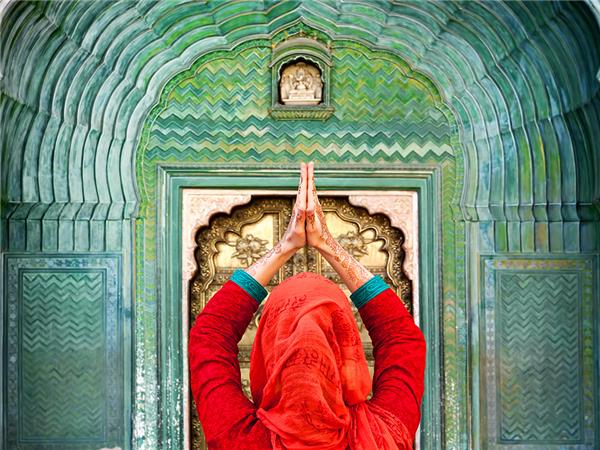
‘Namaste’ is the common Hindi greeting for hello; however ‘Ram, ram’ is often used in Rajasthan instead.
Dhanyavad (Hindi) = thank you, although it is not used commonly, because kindness is seen as a given. And indeed it is given, over and over.
In Delhi, the lassis are mostly Punjabi, because half of the population is from Punjab. A bit like a frappe, it is made with whey and curd mixed into cow butter, and lots of ice.

Gifts & shopping

In Rajasthan, check out splendid textiles designed by hand using wooden blocks.
For high quality handicrafts, state emporium Baba Kharak Singh Marg, Delhi is a must.
Hand lacquered products from bowls to bangles originate in India. The lac insects that secrete the main ingredient are indigenous to India.
Check out Rajasthan’s famous blue pottery, with Persian origins.
Seek out mojri leather slippers in Jaipur. For something a bit different, kites are big in Jaipur.
Shop ‘til you drop in India. But remember, if you want to donate things like medications and toiletries on your travels, you can also buy them locally. Win win.

What does it cost?

Tourist pass to cultural sites of Jaipur: £5
Autorickshaw around Jaipur for a day: £4-£5
Tourist day pass on Delhi Metro: £2.20
Train Delhi-Agra: £10 or £20 1st class
Bottle of beer: £1-£2
Written by Catherine Mack
Photo credits: [Page banner: Rawpixel.com] [Is/isn't: Joseph Bautista] [Underrated: Amit Gaur] [Rated: Getty Images / Unsplash+] [Overrated: Prashant bamnawat] [Eating & drinking: shankar s.] [People & language: Nhi Dang] [Gifts & shopping: Bsfs ] [Gifts & shopping: Eric2753 ] [How much does it cost: Felix Dance] [How much does it cost - thandai drink: Kshitij Garg]