The Silk Road in China
Vaster, sparser, and more awe inspiring than any other section of the famous silk routes.
The Taklamakan Desert is the second-largest shifting-sand desert in the world. This enormous yellow eye stares blankly of out western China’s Xinjiang region – a part of the country where less than 10 percent of the land is fit for human habitation. The highway that crosses the desert is lined with trees – not for beauty, but out of necessity – their roots help fix the sand in place and stop the road from being submerged by the so-called ‘Sea of Death’.
The desert, one of the most feared places on the continent, was once an infamous roadblock on China’s trade routes west. The Silk Roads, which carried caravans of goods between China and Europe, split at the desert’s threshold near the city of Dunhuang, going south and north around it.
Today, you can drive along the edge of the desert, and experiencing the size of this astonishing landscape is a major highlight of our Silk Road in China holiday.
The Taklamakan Desert is the second-largest shifting-sand desert in the world. This enormous yellow eye stares blankly of out western China’s Xinjiang region – a part of the country where less than 10 percent of the land is fit for human habitation. The highway that crosses the desert is lined with trees – not for beauty, but out of necessity – their roots help fix the sand in place and stop the road from being submerged by the so-called ‘Sea of Death’.
The desert, one of the most feared places on the continent, was once an infamous roadblock on China’s trade routes west. The Silk Roads, which carried caravans of goods between China and Europe, split at the desert’s threshold near the city of Dunhuang, going south and north around it.
Today, you can drive along the edge of the desert, and experiencing the size of this astonishing landscape is a major highlight of our Silk Road in China holiday.

Why explore the Silk Road in China?
The vastness of deserts pretty much captures the experience of China’s Silk Road. The 6,400km route starts in China and ends in Rome, Italy. Yet from Luoyang, the route’s most easterly point, to the city of Kashgar, a Chinese city further west than Almaty in Kazakhstan, it’s around 3,200km as the crow flies. That’s over 3,000km of travelling without crossing a single international border. In most people’s minds, country-hopping seems like an integral part of the Silk Road experience, yet if you do our full tour of the entire Silk Road, for the first two weeks, you are just in China.
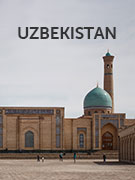
Despite this, most international travellers look to Central Asia first when it comes to Silk Road experiences – and to the increasingly busy Uzbekistan. Why not China?
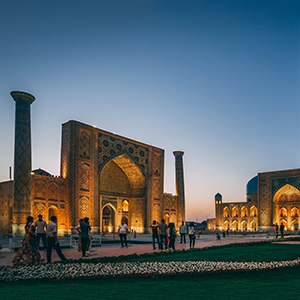
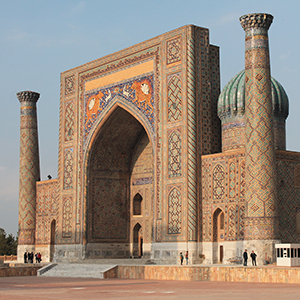
“Though China marks the eastern origin of the Silk Road, Uzbekistan often takes centre stage as the 'heart' of Silk Road travel,” says our partner for overland adventures on the Silk Road, Wild Frontiers. “This is typically due to the architectural treasures of Samarkand’s Registan and Bukhara’s historic mosques, which are both more concentrated and visually striking than China’s dispersed sites. China’s Silk Road, while historically vital, is viewed as less accessible and often overshadowed by its modern cities and attractions.”
China is dominated by big, modern cities – and development has changed places like Kashgar beyond recognition in just a few short decades. But there’s a whole lot of country in between.
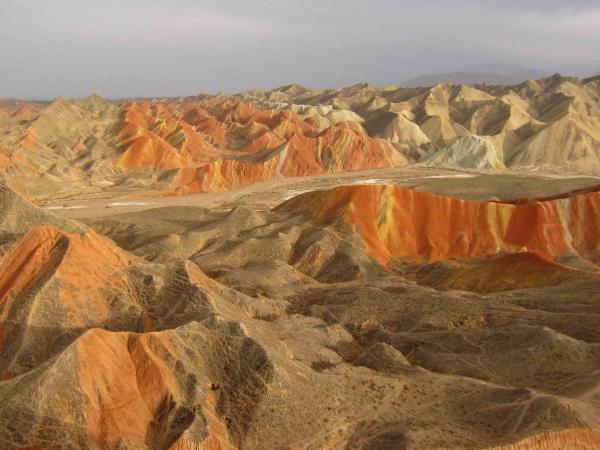
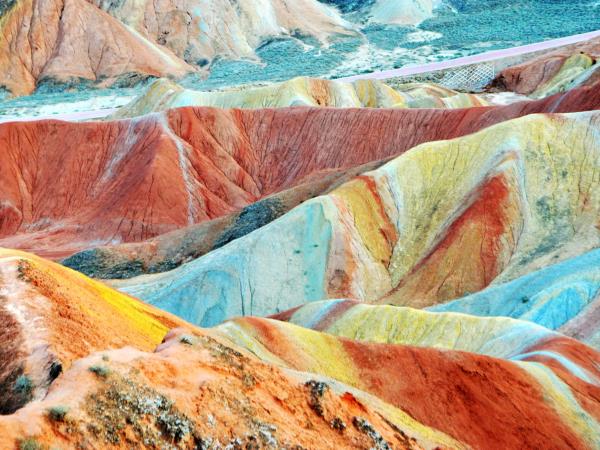
China’s Silk Road weaves together an incredible diversity of natural landscapes. There’s Yadan National Geologic Park near Dunhuang, with its uniquely shaped rocks, and Zhangye National Geopark near the city of Zhangye, where the hills, striped in different colours by sandstone and other minerals, arch like rainbows. Further west, en route to Kazakhstan, there’s Shipton’s Arch, a record-breaking natural arch the height of the Empire State Building, and the high-altitude Lake Karakul, surrounded by permanently snow-covered peaks. Then there’s Turpan, one of the lowest cities in the world, its lake at 155m below sea level.
“A journey through China's Silk Road provides a broader, deeper and more varied experience, from imperial cities and sacred monasteries to desert adventures and ancient cave art”, says Wild Frontiers. “The vast and awe-inspiring landscapes… cannot be beat by Uzbekistan.”
For some of its route, the Silk Road follows the so-called Hexi Corridor in Gansu, a miraculous strip of flat, fertile land between the twin hostilities of the freezing Tibetan Plateau to the south and the forbidding Gobi Desert to the north.
Some landscapes retain their intimidating nature despite China’s rapid infrastructure developments, and it's telling that many Silk Road tours fly over the Taklamakan Desert rather than crossing it. At Dunhuang, you’ll find caves filled with precious statues and mural paintings – paid for as thanks by those who made it past 337,000sq km of deserted hostility. The Thousand Buddha Caves, also known as the Mogao Grottoes, comprise 492 caves, including a cave library with 40,000 scrolls, and holds one of the most important collections of Buddhist art in the world.
Despite this, most international travellers look to Central Asia first when it comes to Silk Road experiences – and to the increasingly busy Uzbekistan. Why not China?
“Though China marks the eastern origin of the Silk Road, Uzbekistan often takes centre stage as the 'heart' of Silk Road travel,” says our partner for overland adventures on the Silk Road, Wild Frontiers. “This is typically due to the architectural treasures of Samarkand’s Registan and Bukhara’s historic mosques, which are both more concentrated and visually striking than China’s dispersed sites. China’s Silk Road, while historically vital, is viewed as less accessible and often overshadowed by its modern cities and attractions.”
China is dominated by big, modern cities – and development has changed places like Kashgar beyond recognition in just a few short decades. But there’s a whole lot of country in between.
China’s Silk Road weaves together an incredible diversity of natural landscapes. There’s Yadan National Geologic Park near Dunhuang, with its uniquely shaped rocks, and Zhangye National Geopark near the city of Zhangye, where the hills, striped in different colours by sandstone and other minerals, arch like rainbows. Further west, en route to Kazakhstan, there’s Shipton’s Arch, a record-breaking natural arch the height of the Empire State Building, and the high-altitude Lake Karakul, surrounded by permanently snow-covered peaks. Then there’s Turpan, one of the lowest cities in the world, its lake at 155m below sea level.
“A journey through China's Silk Road provides a broader, deeper and more varied experience, from imperial cities and sacred monasteries to desert adventures and ancient cave art”, says Wild Frontiers. “The vast and awe-inspiring landscapes… cannot be beat by Uzbekistan.”
For some of its route, the Silk Road follows the so-called Hexi Corridor in Gansu, a miraculous strip of flat, fertile land between the twin hostilities of the freezing Tibetan Plateau to the south and the forbidding Gobi Desert to the north.
Some landscapes retain their intimidating nature despite China’s rapid infrastructure developments, and it's telling that many Silk Road tours fly over the Taklamakan Desert rather than crossing it. At Dunhuang, you’ll find caves filled with precious statues and mural paintings – paid for as thanks by those who made it past 337,000sq km of deserted hostility. The Thousand Buddha Caves, also known as the Mogao Grottoes, comprise 492 caves, including a cave library with 40,000 scrolls, and holds one of the most important collections of Buddhist art in the world.
As smooth as silk
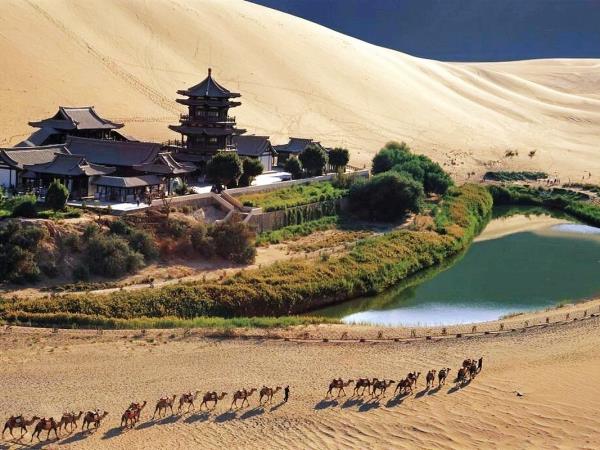
What was once dangerous and exhausting is now a journey that runs as smooth as, well, silk. China is a very safe country for tourists, and one that’s incredibly easy to get around thanks to an amazing high-speed rail network. Sights are very accessible now – quite literally so – and we even have a wheelchair accessible Silk Road tour to prove it.This does mean more tourists. There are plenty of domestic tourists at the epic sights on this route – as you’d expect from a country with nearly 1.5 billion people. Crescent Lake, an oasis near Dunhuang that was once a vital rest stop on the Silk Road, is now a busy tourist spot where you can sand-sled, ride a camel, or fly in a helicopter or powered glider.
“Be prepared for big crowds at famous places,” said our traveller Phillipa Cawthorne on her trip on the Silk Road in China. “You often queue to take a coach to stop at various viewpoints, but the guides helped to move us along quickly and the transport system worked efficiently.”
It’s easier than ever, but the distances are still jaw-droppingly epic, as are the scenery and history.
China Silk Road tour
Cities and beautiful landscapes of China’s western expanse
From
US $3615 to US $3896
15 days
ex flights
Silk Road hiking tour
Lanzhou, Jiayu Guan, Zhangye, Qilian, Xining
From
US $947 to US $1271
6 days
ex flights
Silk Road 9 day desert and culture tour, China
Ancient Kashgar, Taklamakan Desert and Uyghur Muqam heritage
From
US $4999
9 days
ex flights
Accessible Silk Road tour
Explore the Pearl Cities along the Silk Road
From
£3286 to £4391
16 days
ex flights
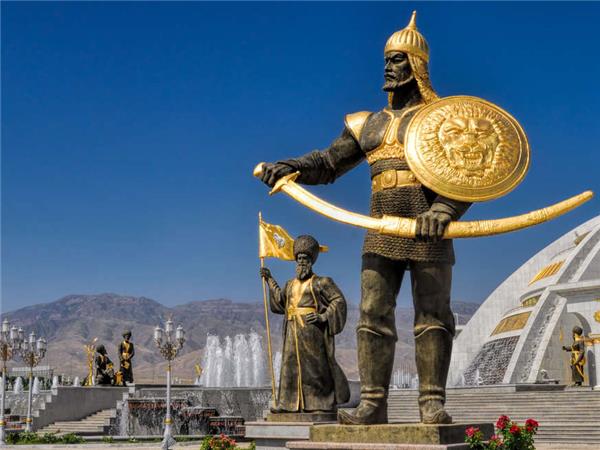
Silk Road holiday, Turkmenistan and Uzbekistan
Discover the rich culture of Turkmenistan and Uzbekistan
From
£2375 to £2455
13 days
ex flights
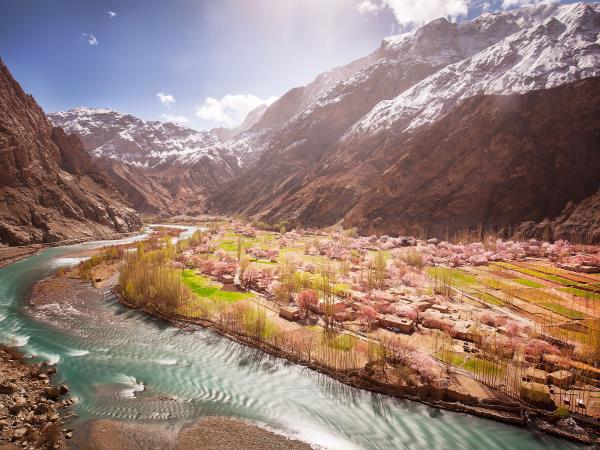
North to South Silk Road expedition holiday, China
Alpine forests to desert oases, ultimate Silk Road.
From
US $10699
16 days
ex flights


Contact Us

Call us for a chat about our holidays. We are happy to discuss your holiday and help in any way we can. No bots, queues or awful hold music.

01273 823 700
Call us after 10am
Calling from outside the UK


What route does the Silk Road take through China?
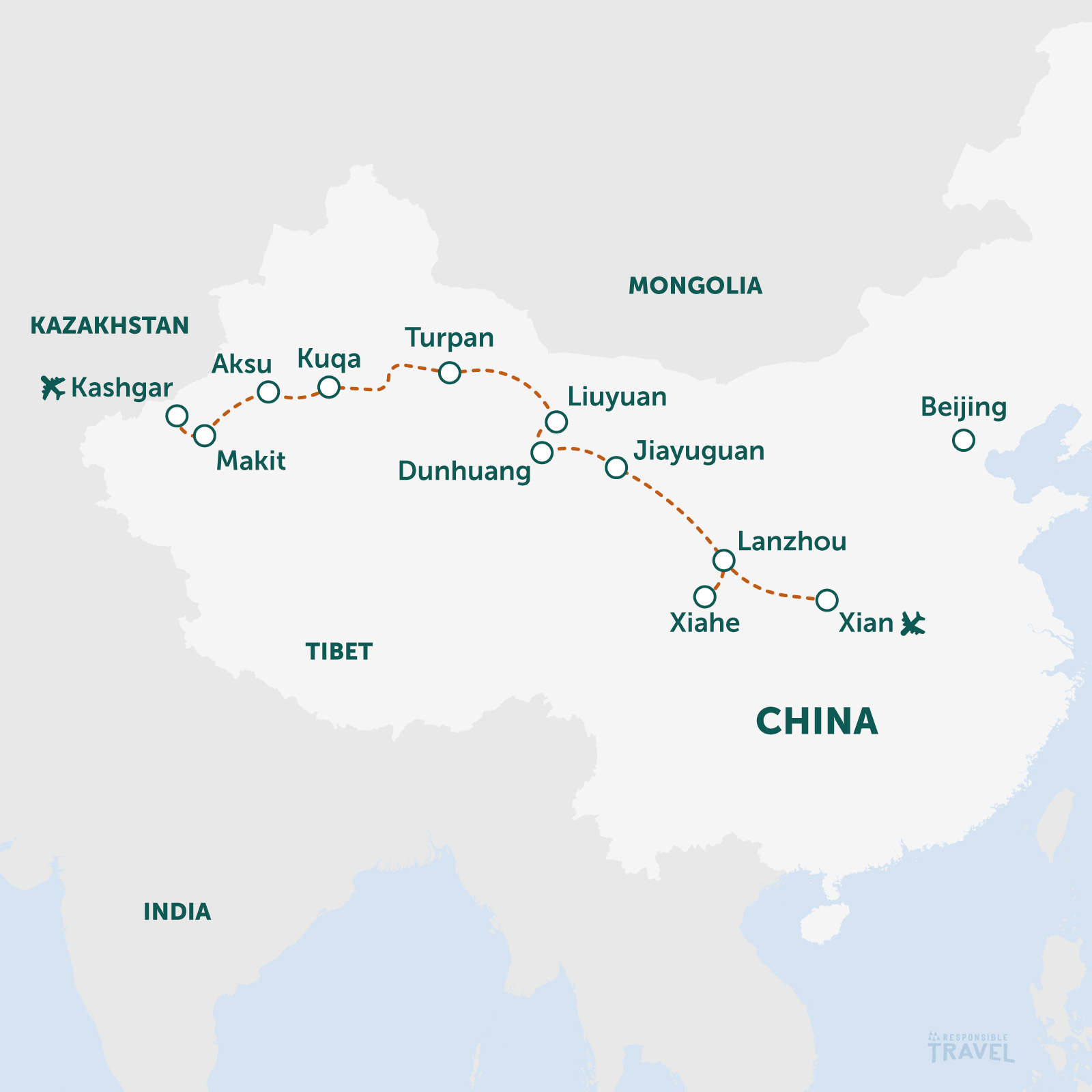
Whilst the most easterly point of the route is Luoyang, most tours start at Xi’an, home of China’s Terracotta Warriors. From here you can take an overnight train to Lanzhou and go on to see Bingling Temple and the Buddhist caves there. Make a detour to Xiahe, a holy town that is home to many Tibetan Buddhist monks, where you can visit the famous Labrang Monastery. An overnight train from Lanzhou takes you to Jiayuguan, where you can see the final fort at the westerly end of the Great Wall of China. Drive from Jiayuguan to Dunhuang, where you can see Crescent Moon Lake, the Singing Sands and one of the highlights of the road: the amazingly preserved statues and paintings of the Mogao Caves. An overnight train will take you to Turpan, one of the lowest places on Earth, where you can visit the ruins of the ancient city of Jiaohe. You can drive from here to Urumqi – home to the Silk Road Museum – and then on to Kashgar. Alternatively, take in a taste of the Taklamakan Desert by taking an overnight train to Kuqa, before driving along the desert’s edge to Aksu and Makit, and on to Kashgar.
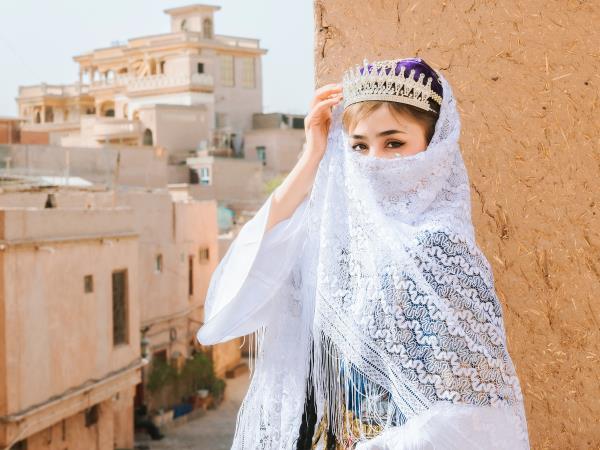
The end of the road on most Silk Road tours in China is Kashgar’s massive Sunday market, a convergence of 100,000 people peddling everything from pigeons to pottery. Uyghur, Kyrgyz and Kazakh traders meet and mingle – a fitting multicultural end to a route that tells one of the great stories of world trade.
What do holidays on China’s Silk Road entail?
More Silk Road articles
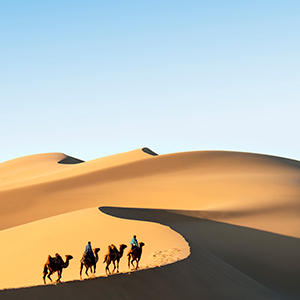
The Silk Road stretches all the way from Asia to Europe, so the weather varies.
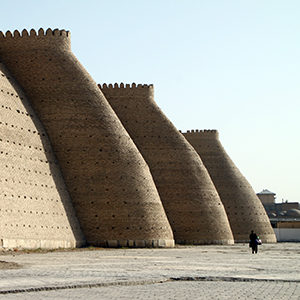
Discover the ancient paths that used to bring riches across the world, and are still just as treasure-filled.
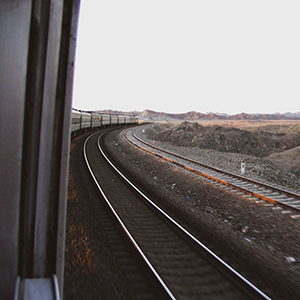
Discover all the best places to go, following the route's thread to Urumqi, Kashgar, Tashkent, Bukhara and Mary.
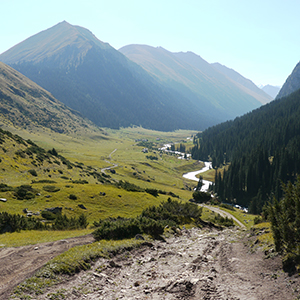
Central Asia’s cities and mountain foothills were pivotal to the Silk Road.
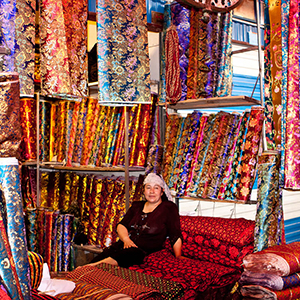
Read on for enlightenment and learn about the Silk Road in detail before, during or after you set off on your travels.
This ancient trail is synonymous with adventurers and epic journeys - but when did it start?
Understand the people, the legends and the landscapes of this iconic trade route.
Get a few tips from our friends along the Silk Road, including shopping, road travel, food and packing advice.
Understanding human rights and land degradation issues is vital when travelling the Silk Road.



.jpg)