Costa Rica coffee tours: follow the quetzals
There’s a quetzal in the coffee tree.
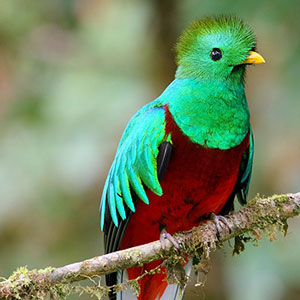
Iridescent turquoise and gold feathers, scarlet breast and long tail feathers – it’s unmistakable. It’s also not something you’d expect to see on a coffee tour in Costa Rica.
“The best quetzal sightings are on the coffee farms – proof of how well these coffee farms are run,” says Simon Forster, from our partners Beyond Tourism Co, who run our Costa Rica wildlife tour. “Often your guide will be a farmer because, especially in the breeding season, quetzal families will be in the trees. It’s amazing.”
Whatever route you take across Costa Rica, you’ll come across a coffee tour. However, not all coffee farms are created equal… or come with quetzals. Some of our best holidays lean towards the small growers and cooperatives that welcome visitors and wildlife onto their farms, offering tours, tastings, walks and chats with the families who show you the process from bean to cup.
Where you go depends on your preference – perhaps a quick classic tour and tasting in Monteverde Cloud Forest or a trip to a cooperative in the Sarapiqui Valley that serves a tilapia fish dinner alongside your peek behind the coffee-making curtain. You could also sign up to a coffee tasting with a barista in San Jose, learning about Costa Rica’s famously complex coffee flavours and how there are still pockets of coffee trees amongst the sprawling suburbs.
Iridescent turquoise and gold feathers, scarlet breast and long tail feathers – it’s unmistakable. It’s also not something you’d expect to see on a coffee tour in Costa Rica.
“The best quetzal sightings are on the coffee farms – proof of how well these coffee farms are run,” says Simon Forster, from our partners Beyond Tourism Co, who run our Costa Rica wildlife tour. “Often your guide will be a farmer because, especially in the breeding season, quetzal families will be in the trees. It’s amazing.”
Whatever route you take across Costa Rica, you’ll come across a coffee tour. However, not all coffee farms are created equal… or come with quetzals. Some of our best holidays lean towards the small growers and cooperatives that welcome visitors and wildlife onto their farms, offering tours, tastings, walks and chats with the families who show you the process from bean to cup.
Where you go depends on your preference – perhaps a quick classic tour and tasting in Monteverde Cloud Forest or a trip to a cooperative in the Sarapiqui Valley that serves a tilapia fish dinner alongside your peek behind the coffee-making curtain. You could also sign up to a coffee tasting with a barista in San Jose, learning about Costa Rica’s famously complex coffee flavours and how there are still pockets of coffee trees amongst the sprawling suburbs.

Welcome to quetzal & coffee cooperative country
Fancy more than a brief peek into Costa Rica’s coffee industry? Head south of San Jose.This is quetzal country – and coffee cooperative country. It includes San Gerardo de Dota, which borders the promisingly named Los Quetzales National Park. Here, families with small farms and coffee-producing communities have joined forces to grow and sell organic coffee together. Instead of competing, they’ve teamed up to give the big estates further north a run for their money.
“You’re not on the main tourist route and you’re not going on a traditional coffee tour,” says Simon. And therein lies the charm: “You’re getting to experience a real sense of this community working together to grow this product in a way that can bring in financial benefits to them and their founders, and also real environmental benefit.”
“It is an exceptional one because of the origins,” adds Simon. “The rural tourism side of their business is set up to the benefit of everybody.”
That ‘everybody’ includes you – tourists who would like to slow down a little and spend more than a half-day in Costa Rica’s coffee hills.
Sometimes that slowness is deliberate. Our local specialists can eke out the itinerary so that a quick coffee tour transforms into something even more meaningful, like a few nights in a forest lodge surrounded by glossy coffee trees – and the rustle of sloths or flash of a toucan. For wildlife, coffee cherries are as delicious as they sound.
At other times, that slowness is a simple fact of geography – rural roads winding into the hills, with tourists dropping off the further south they go, as hotels get fewer and farther between. Action-packed tours are for the north; in the south, you get to breathe, staying several nights in one lodge and embarking on wildlife, cycling and walking trips from there. Sometimes, you might not feel the need for anything but the luxury of a book on the terrace.
“It’s the hills,” says Simon. “There is something about the hills, the fence lines, the weather, the villages, the cloud forest... It’s an area that you don’t get large-scale farms on, because it wouldn’t be allowed now. It’s all farms that haven’t been bought out… a wonderfully peaceful part of the world.”
Sometimes that slowness is deliberate. Our local specialists can eke out the itinerary so that a quick coffee tour transforms into something even more meaningful, like a few nights in a forest lodge surrounded by glossy coffee trees – and the rustle of sloths or flash of a toucan. For wildlife, coffee cherries are as delicious as they sound.
At other times, that slowness is a simple fact of geography – rural roads winding into the hills, with tourists dropping off the further south they go, as hotels get fewer and farther between. Action-packed tours are for the north; in the south, you get to breathe, staying several nights in one lodge and embarking on wildlife, cycling and walking trips from there. Sometimes, you might not feel the need for anything but the luxury of a book on the terrace.
“It’s the hills,” says Simon. “There is something about the hills, the fence lines, the weather, the villages, the cloud forest... It’s an area that you don’t get large-scale farms on, because it wouldn’t be allowed now. It’s all farms that haven’t been bought out… a wonderfully peaceful part of the world.”

There’s a nationwide sense of needing to preserve something that was lost and that local people have worked hard to regain.![]()

Costa Rica wildlife holiday
An amazing variety of Costa Rican wildlife
From
£3674 to £4777
15 days
ex flights
Costa Rica family tour, 11 days
A family nature adventure exploring Costa Rica's highlights
From
£1420
11 days
ex flights
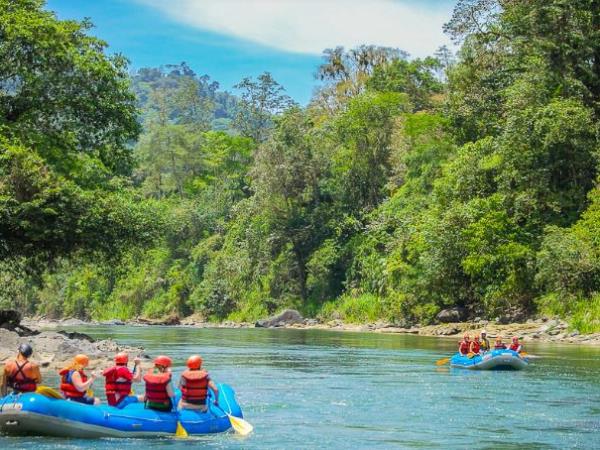
Activity and nature holiday in Costa Rica
A Costa Rica itinerary packed full of adventure excursions
From
£2735 to £4985
15 days
ex flights
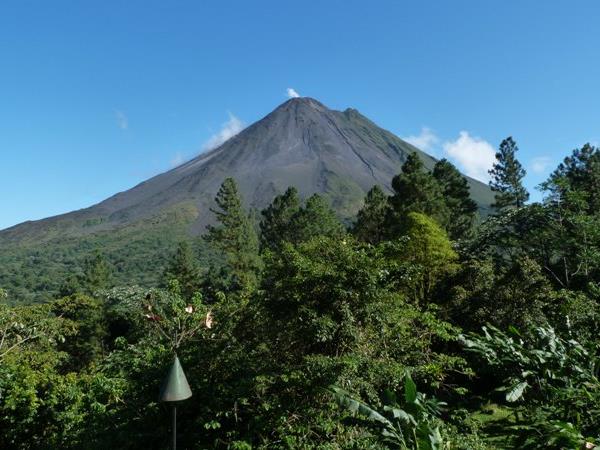
Costa Rica highlights holiday & beach
Experience the jungles, volcanoes and beaches of Costa Rica
From
£2050
13 days
ex flights
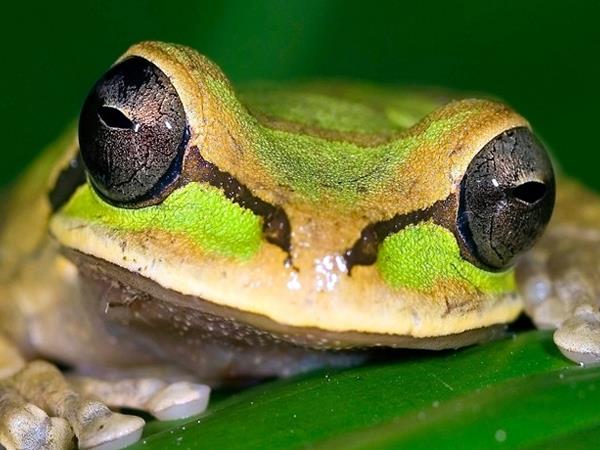
Costa Rica tailor made tour, in depth
An in-depth tour showcasing the very best of Costa Rica!
From
US $4610 to US $5172
16 days
ex flights
Costa Rica family holiday for all ages
Activity-packed: Jungle hikes, ziplines, turtles & wildlife
From
£2750
15 days
ex flights


Contact Us
Call us for a chat about our holidays. We are happy to discuss your holiday and help in any way we can. No bots, queues or awful hold music.

01273 823 700
Call us until 4pm
Calling from outside the UK

Coffee production in Costa Rica: from pure profit to protection
It’s a change of pace from the early days of coffee growing in Costa Rica.
In the 19th century, the government kicked off a free-for-all, handing out plots of land to anyone who fancied harvesting coffee, without much care for Indigenous people who already lived there. Ballooning agriculture and timber industries gutted over 80% of the rainforest until, in the 1990s, a forward-thinking government minister called Alvaro Umaña introduced incentives for looking after the environment – namely, cash for every hectare of intact or restored forest. Slotting national parks in place, it took less than 20 years for Costa Rica to stop and reverse deforestation.
There are still times when profits override peace in the coffee industry, with reports of poor working conditions on some farms and illegal deforestation on others. However, our Costa Rica specialists work with responsible coffee farms, where employee and environmental protections are built into the foundation. You’ll experience whatever is happening on the farm at that time – whether it’s picking, drying, pulping, milling or packing. Amongst the peace of shady rainforests and waterfalls – and the occasional deep, melodious quetzal call – it’s striking how far removed it is from vast multinational plantations.
“When you go on our tour, you can sense the coffee,” says Simon. “The fact that coffee is one of the few products in the world that can grow hand in hand with nature is really important.”
In the 19th century, the government kicked off a free-for-all, handing out plots of land to anyone who fancied harvesting coffee, without much care for Indigenous people who already lived there. Ballooning agriculture and timber industries gutted over 80% of the rainforest until, in the 1990s, a forward-thinking government minister called Alvaro Umaña introduced incentives for looking after the environment – namely, cash for every hectare of intact or restored forest. Slotting national parks in place, it took less than 20 years for Costa Rica to stop and reverse deforestation.
There are still times when profits override peace in the coffee industry, with reports of poor working conditions on some farms and illegal deforestation on others. However, our Costa Rica specialists work with responsible coffee farms, where employee and environmental protections are built into the foundation. You’ll experience whatever is happening on the farm at that time – whether it’s picking, drying, pulping, milling or packing. Amongst the peace of shady rainforests and waterfalls – and the occasional deep, melodious quetzal call – it’s striking how far removed it is from vast multinational plantations.
“When you go on our tour, you can sense the coffee,” says Simon. “The fact that coffee is one of the few products in the world that can grow hand in hand with nature is really important.”
Coffee & culture in Costa Rica
Be warned, though: Costa Rica isn’t like Nicaragua, where coffee is grown and woven into the social fabric of the country.
“I went to a really low-key coffee farm and stayed there – a lovely place in the mountains,” says Simon. “When I went to breakfast they had Nescafé at the table. You were surrounded by their fresh coffee and they were buying Nescafé.”
To many in Costa Rica, including farmers, coffee is a product – one that the economy relies on. There’s a keen business sense involved; farmers make much more exporting to Europe than keeping it in their own country. It’s big business – and so is tourism.
“Costa Rica is so dependent on tourism and it’s all based on wildlife,” says Simon. “There isn’t so much integration of local culture within tourism, often because many communities are so remote. There isn’t that much opportunity for it.”
Most people holidaying in Costa Rica end up with a great overview of the rainforests and the creatures within, but don’t consider spending quality time in the communities they whizz past.
Our coffee tours are that rare opportunity to meet people who live in rural areas and keep Costa Rica’s coffee industry alive – and as responsible as possible. “Coffee is almost a byproduct of the social experience,” says Simon.
Plus, for the wildlife lovers, there’s always the chance of a quetzal alighting on a branch above your head.
“If you do the right things, you’ll still have an incredible wildlife experience,” says Simon.
Just look for the quetzals.
“I went to a really low-key coffee farm and stayed there – a lovely place in the mountains,” says Simon. “When I went to breakfast they had Nescafé at the table. You were surrounded by their fresh coffee and they were buying Nescafé.”
To many in Costa Rica, including farmers, coffee is a product – one that the economy relies on. There’s a keen business sense involved; farmers make much more exporting to Europe than keeping it in their own country. It’s big business – and so is tourism.
“Costa Rica is so dependent on tourism and it’s all based on wildlife,” says Simon. “There isn’t so much integration of local culture within tourism, often because many communities are so remote. There isn’t that much opportunity for it.”
Most people holidaying in Costa Rica end up with a great overview of the rainforests and the creatures within, but don’t consider spending quality time in the communities they whizz past.
Our coffee tours are that rare opportunity to meet people who live in rural areas and keep Costa Rica’s coffee industry alive – and as responsible as possible. “Coffee is almost a byproduct of the social experience,” says Simon.
Plus, for the wildlife lovers, there’s always the chance of a quetzal alighting on a branch above your head.
“If you do the right things, you’ll still have an incredible wildlife experience,” says Simon.
Just look for the quetzals.
More Costa Rica articles
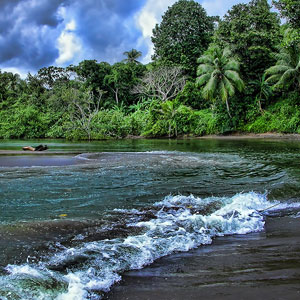
You can travel at pretty much any time, but the best time to visit is revealed in our guide.
This tiny Central American country is big on biodiversity – and adventure. Find out more in our guide.
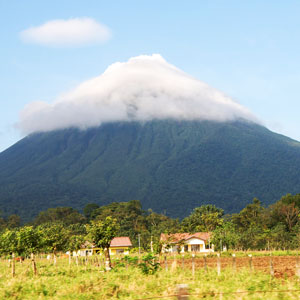
We make choosing between the national parks, coasts and hiking areas easier with our map and highlights guide.
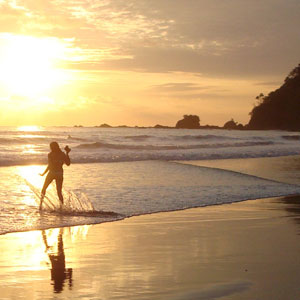
With Pacific and Caribbean coastlines, Costa Rica is not short of beaches.
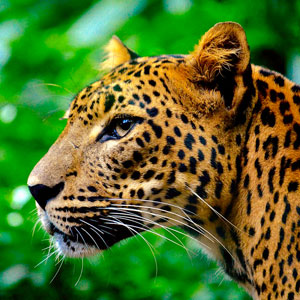
Check out the animals to watch out for on holiday, from sloths to sea turtles.
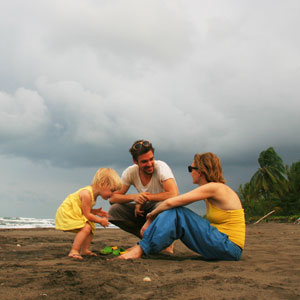
Costa Rica family holidays are easy. We reveal why we think it's the best place in Central America for active kids.
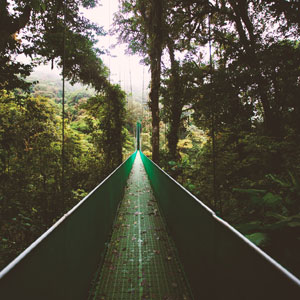
Read our guide to discover the best – and most environmentally sound – adventures.
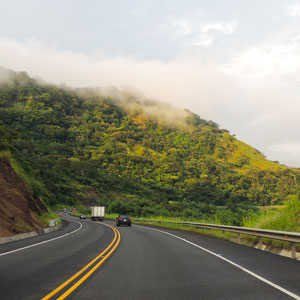
Most travellers on tailor made trips end up driving. That’s because it’s near irresistible.
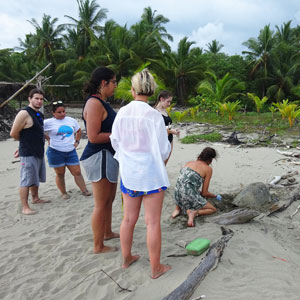
Costa Rica is an environmental hero, but that doesn’t mean it doesn’t need a helping hand.
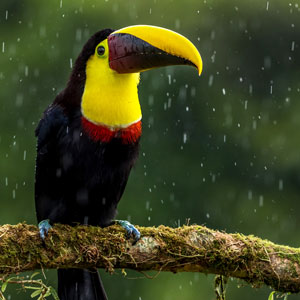
Read the best travel advice for travelling in this Central American country, as shared by our experts.
Responsible tourism is a genuine success story in Costa Rica. Find out why in our guide.
Volcanoes, rainforests, wildlife reserves, lodges... you won't run out of things to do here.

LGBTQ+ holidays are one of the fastest growing sectors of the country’s travel industry.