Food & drink in Morocco
The food and drink that you’ll enjoy in Morocco reflects the country’s richly diverse cultural heritage, a consequence of its position at the far tip of one continent, within touching distance of another.
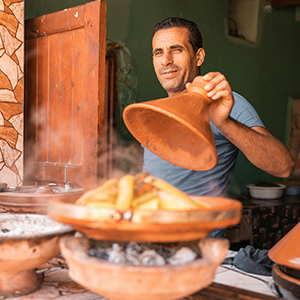
Berber people, indigenous to North Africa, devised the now-ubiquitous Maghrebi dish known as tagine, utilising simple, freely available ingredients like chickpeas. Arab traders making their way along the Silk Road, Morocco being the last stop before Europe, brought spices from the East such as cinnamon, paprika, cumin and turmeric; dried fruits; and the skill of bread making. Quite possibly, they also brought with them Chinese green tea.
The Ottomans never managed to conquer Morocco, but their brief incursions did leave a legacy of barbecued food. The Moors, forced into North Africa from the Iberian Peninsula in the 17th century, brought with them olive and citrus trees. And, along with exploitation and repression, during the early 20th century, French colonists also introduced cafe culture and patisserie to their protectorate. All of this has resulted in a kaleidoscopically flavoursome cuisine, where many popular dishes have a fascinating back story to them and some rituals, such as the pouring of mint tea, have been passed down over centuries.
Our tailor made holidays are a perfect way to explore traditional food in Morocco, giving you the opportunity to slow things down for meaningful connections with local chefs, families who invite you into their homes, and producers of everything from olive oil to Moroccan wine.
Berber people, indigenous to North Africa, devised the now-ubiquitous Maghrebi dish known as tagine, utilising simple, freely available ingredients like chickpeas. Arab traders making their way along the Silk Road, Morocco being the last stop before Europe, brought spices from the East such as cinnamon, paprika, cumin and turmeric; dried fruits; and the skill of bread making. Quite possibly, they also brought with them Chinese green tea.
The Ottomans never managed to conquer Morocco, but their brief incursions did leave a legacy of barbecued food. The Moors, forced into North Africa from the Iberian Peninsula in the 17th century, brought with them olive and citrus trees. And, along with exploitation and repression, during the early 20th century, French colonists also introduced cafe culture and patisserie to their protectorate. All of this has resulted in a kaleidoscopically flavoursome cuisine, where many popular dishes have a fascinating back story to them and some rituals, such as the pouring of mint tea, have been passed down over centuries.
Our tailor made holidays are a perfect way to explore traditional food in Morocco, giving you the opportunity to slow things down for meaningful connections with local chefs, families who invite you into their homes, and producers of everything from olive oil to Moroccan wine.

But first… why do Moroccans drink so much mint tea?
As with so many rituals around food and drink, the Moroccan mint tea ceremony is bound up in hospitality. Whenever you are invited into someone’s home, it will be a matter of moments before your host thrusts a glass of tea into your hand, and don’t be surprised if, by the end of your holiday, you’re haggling away in the souk for a tea set of your own.

(Berbers) love to exchange ideas with people, even if they don’t speak the same language![]()

Mint tea is central to life in Morocco, and especially to social occasions. It is traditionally made using Chinese gunpowder green tea infused with mint leaves and heavily sweetened with either sugar or honey, and, in restaurants it will often be served from a beautiful silver teapot, poured from on high to oxygenate the tea and give it a froth.
A proper tea ceremony will usually involve three servings, with the leaves allowed to steep in the pot so that each serving has a stronger flavour. There is an old Maghrebi proverb about mint tea: ‘the first glass is as gentle as life, the second is as strong as love, the third is as bitter as death’.
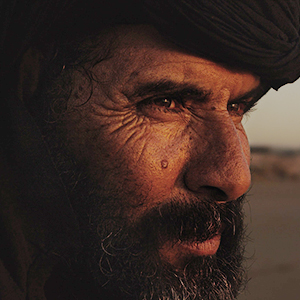
“Depending on the season and where they are (as these communities are nomadic) we sometimes take our guests to visit local Berber people and are welcomed in for tea,” says Mohamed El Maliky, founder of our partner Tilila Travel. “They tell us about their lives, perhaps show us how to make bread or tagine, or how their homes are built, and sometimes visitors will bring gifts for the children. They love to exchange ideas with people, even if they don’t speak the same language, which is why a guide is useful.”
A proper tea ceremony will usually involve three servings, with the leaves allowed to steep in the pot so that each serving has a stronger flavour. There is an old Maghrebi proverb about mint tea: ‘the first glass is as gentle as life, the second is as strong as love, the third is as bitter as death’.
“Depending on the season and where they are (as these communities are nomadic) we sometimes take our guests to visit local Berber people and are welcomed in for tea,” says Mohamed El Maliky, founder of our partner Tilila Travel. “They tell us about their lives, perhaps show us how to make bread or tagine, or how their homes are built, and sometimes visitors will bring gifts for the children. They love to exchange ideas with people, even if they don’t speak the same language, which is why a guide is useful.”
Visiting a spice shop in the souks of Essaouira was the best decision of our trip![]()
Spice up your life
Ras el hanout is a spice blend, meaning ‘head of the shop’ – the top shelf products, the very best. Every good chef, from restaurants to the home kitchen, will have their own tried-and-trusted mix, that might include up to 50 ingredients, from cardamom and cumin to cinnamon, nutmeg, coriander seed and paprika. You can buy a ready-mixed pouch, or you can create your own with the help of an expert, as Responsible Travel’s Sarah Faith found when she visited Morocco.
“Visiting a spice shop in the souks of Essaouira was the best decision of our trip. We’d just bought a tagine from an elderly man who had a tiny shop at the back of the fish market – it was stacked floor to ceiling with terracotta cooking pots, and he carefully tapped the bottom of each, trying to find us one that he deemed unblemished enough to sell. At the doorway, another merchant – apparently his son – beckoned us into his spice shop next door, which contained shelves upon shelves of jars of every spice under the sun. We were plied with all kinds of mint tea, sniffed dozens of proffered spice jars, learnt about natural Berber lipsticks, and left with bag upon bag of spice mixes that we couldn’t wait to cook with at home.”
“Visiting a spice shop in the souks of Essaouira was the best decision of our trip. We’d just bought a tagine from an elderly man who had a tiny shop at the back of the fish market – it was stacked floor to ceiling with terracotta cooking pots, and he carefully tapped the bottom of each, trying to find us one that he deemed unblemished enough to sell. At the doorway, another merchant – apparently his son – beckoned us into his spice shop next door, which contained shelves upon shelves of jars of every spice under the sun. We were plied with all kinds of mint tea, sniffed dozens of proffered spice jars, learnt about natural Berber lipsticks, and left with bag upon bag of spice mixes that we couldn’t wait to cook with at home.”
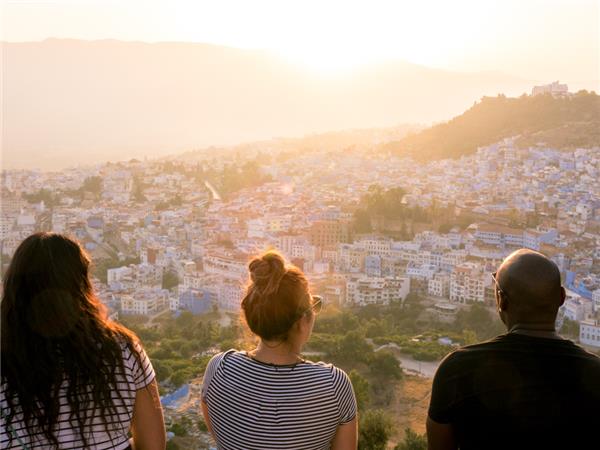
Morocco cultural tour
Come and see Morocco's kaleidoscope of colours
From
£829 to £1315
15 days
ex flights
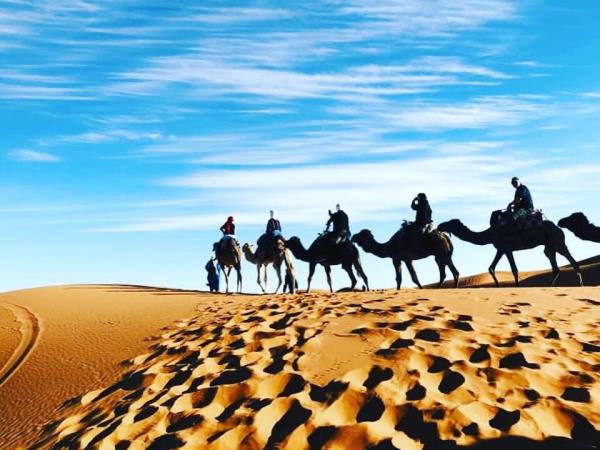
Morocco family holiday with teenagers
Exciting Moroccan adventure for teenagers and parents
From
£849 to £899
8 days
ex flights
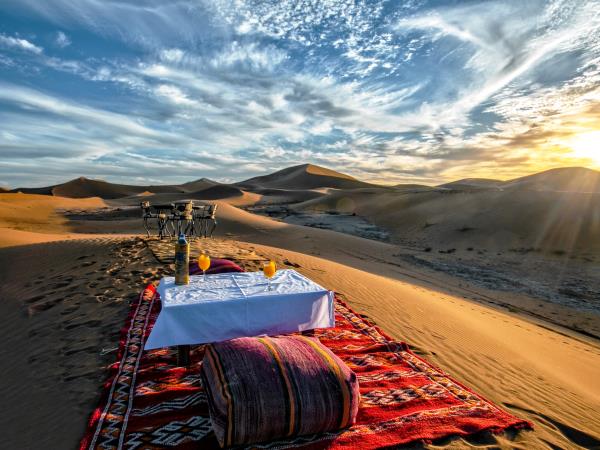
Morocco holiday, Marrakech to the Sahara
Marrakech and Sahara - stay in a Riad, sleep under the stars
From
£1195 to £1275
7 days
ex flights
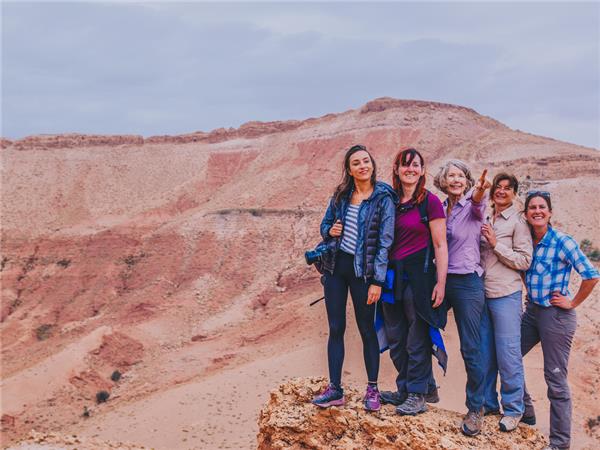
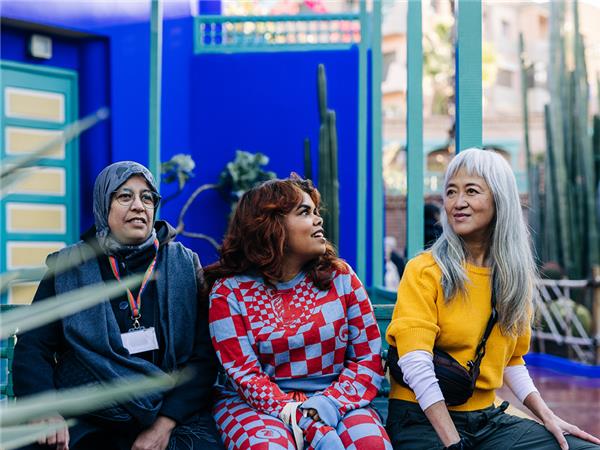
Women only tour in Morocco
Stray from the beaten path in Morocco on an all-female trip
From
£724 to £1050
8 days
ex flights
North Morocco adventure holiday
Explore extravagant sights and hidden delights of Morocco.
From
£596 to £925
8 days
ex flights
Morocco 9 day cultural tour
Experience the wonder, heritage, and culture of Morocco.
From
£2378
9 days
ex flights


Contact Us
Call us for a chat about our holidays. We are happy to discuss your holiday and help in any way we can. No bots, queues or awful hold music.

01273 823 700
Call us after 10am
Calling from outside the UK

What food & drink to try in Morocco
“If it’s your first time in Morocco, I would suggest trying tagine or couscous,” says Mohamed. “Another dish would be bissara, which is a kind of soup we have for breakfast that keeps you active for the whole morning.”
Let’s take a food tour of Morocco, starting in Tangier, in the far north, in waving distance of Spain. Here, you can sip mint tea at the famous Café Hafa, where in days gone by such luminaries as The Beatles, the Rolling Stones and William S. Burroughs enjoyed the same view of the Strait of Gibraltar. Afterwards, you can take a stroll by the port, and perhaps tuck into a platter of calamari or shrimp with the sunset. Pour on some chermoula sauce for a gentle kick.
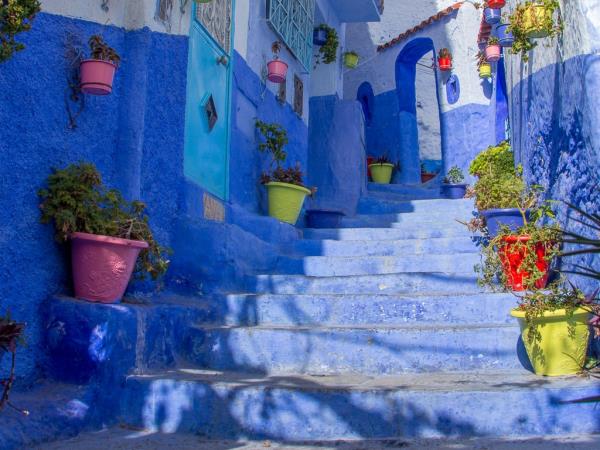
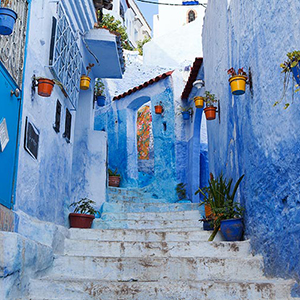
Just south of Tangier, the city of Chefchaouen in the Rif Mountains is known not only for its strikingly blue-washed houses, but also for the quality of its soft, creamy goats’ cheese. Further down the Atlantic coast, past the capital, Rabat, and Casablanca, the seaside city of Essaouira is a favourite of surfers. Watch the early morning fish auction here, at one of the oldest ports in the world, or meet a local fisherman who can talk about their traditional techniques, what type of fish they catch, and how the change of the seasons affects their work.
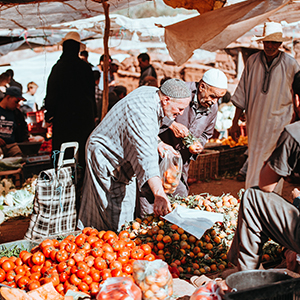
Then, inland, the souks of Marrakech are utterly thrilling to wander for a morning, smelling spices, snacking on fried donuts, bocadillos (baguettes) and stuffed pancakes, and perhaps picking up ingredients for later. “We offer cooking classes in Marrakech where you visit a traditional house or riad, and you go to the market first of all, to find what you need to make a tagine or couscous,” says Mohamed.
Let’s take a food tour of Morocco, starting in Tangier, in the far north, in waving distance of Spain. Here, you can sip mint tea at the famous Café Hafa, where in days gone by such luminaries as The Beatles, the Rolling Stones and William S. Burroughs enjoyed the same view of the Strait of Gibraltar. Afterwards, you can take a stroll by the port, and perhaps tuck into a platter of calamari or shrimp with the sunset. Pour on some chermoula sauce for a gentle kick.
Just south of Tangier, the city of Chefchaouen in the Rif Mountains is known not only for its strikingly blue-washed houses, but also for the quality of its soft, creamy goats’ cheese. Further down the Atlantic coast, past the capital, Rabat, and Casablanca, the seaside city of Essaouira is a favourite of surfers. Watch the early morning fish auction here, at one of the oldest ports in the world, or meet a local fisherman who can talk about their traditional techniques, what type of fish they catch, and how the change of the seasons affects their work.
Then, inland, the souks of Marrakech are utterly thrilling to wander for a morning, smelling spices, snacking on fried donuts, bocadillos (baguettes) and stuffed pancakes, and perhaps picking up ingredients for later. “We offer cooking classes in Marrakech where you visit a traditional house or riad, and you go to the market first of all, to find what you need to make a tagine or couscous,” says Mohamed.
Our luxury ecolodge in the Atlas Mountains has even produced its own cookbook![]()
Marrakech is often the embarkation point for walking among the peaks of the Atlas Mountains or even summiting Mount Toubkal. Here, our holidays serve up hearty fare to fuel your exertions. In fact, our luxury ecolodge in the Atlas Mountains has even produced its own cookbook. In this region you can also visit a Berber family in their home, and learn how they make their own bread in a wood-fired stove.
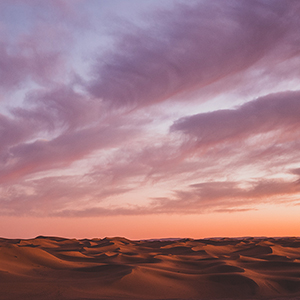
From Marrakech it’s a 200km drive southeast to Ouarzazate, a ‘Gateway to the Sahara’. A night in a Bedouin desert camp, sleeping under the stars, is a memorable highlight of many holidays in Morocco. As these are usually tourist-oriented camps, they have professional chefs who can cater to most dietary preferences. The menu typically ranges from barbecue to tagines and stews. It’s less about the meal, however, than the overall experience, as you learn about Bedouin culture through song, dance and campfire conversation, before curling up in a billowy tent.
In a predominantly Muslim country, much of it desert, it may be difficult to conceive of Morocco as a wine producer. Nevertheless, there are a number of producing regions here, and one of the finest is around the city of Meknes, which lies between the Atlantic coast and the Atlas Mountains. On our food and wine tours, you can visit a winery here that was one of the first in Morocco to plant Chardonnay and Sauvignon grapes, and introduce oak barrels to age the wine.
Heading north towards the lively city of Fes, where you might join another cookery class learning how to make a dish such as pastilla, a savoury pie, you could stop at an argan oil farm. Often these are cooperatives, employing mostly local women, that can help rural communities generate an income from their land. As well as being ideal to drizzle over your couscous, argan oil is used in a variety of skin and hair products, so this is a great souvenir to bring home from Morocco.
From Marrakech it’s a 200km drive southeast to Ouarzazate, a ‘Gateway to the Sahara’. A night in a Bedouin desert camp, sleeping under the stars, is a memorable highlight of many holidays in Morocco. As these are usually tourist-oriented camps, they have professional chefs who can cater to most dietary preferences. The menu typically ranges from barbecue to tagines and stews. It’s less about the meal, however, than the overall experience, as you learn about Bedouin culture through song, dance and campfire conversation, before curling up in a billowy tent.
In a predominantly Muslim country, much of it desert, it may be difficult to conceive of Morocco as a wine producer. Nevertheless, there are a number of producing regions here, and one of the finest is around the city of Meknes, which lies between the Atlantic coast and the Atlas Mountains. On our food and wine tours, you can visit a winery here that was one of the first in Morocco to plant Chardonnay and Sauvignon grapes, and introduce oak barrels to age the wine.
Heading north towards the lively city of Fes, where you might join another cookery class learning how to make a dish such as pastilla, a savoury pie, you could stop at an argan oil farm. Often these are cooperatives, employing mostly local women, that can help rural communities generate an income from their land. As well as being ideal to drizzle over your couscous, argan oil is used in a variety of skin and hair products, so this is a great souvenir to bring home from Morocco.
More Morocco articles
Our Morocco travel guide whisks you into a rainbow of raucous colours and enlightening Islamic culture.
It's a big country, so you want to take your time deciding where you want to go.
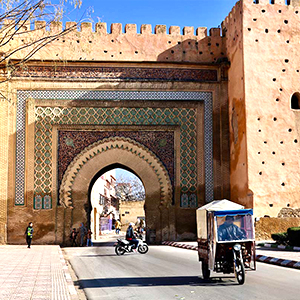
From the souks of Marrakech to the port of Tangier, discover Moroccan cities that are eclectic and exquisite.
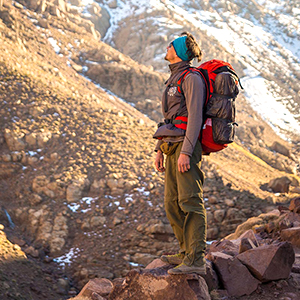
Discover the highest peak in North Africa, hiking in the Atlas Mountains.
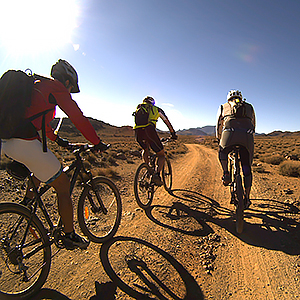
Inclines and idyllic spots to gorges and gorging on Moroccan food, find out where cycling will take you across Morocco.
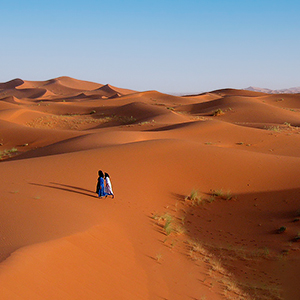
Unveil epic dune landscapes and camel rides, as well as camping beneath vast starlit skies.
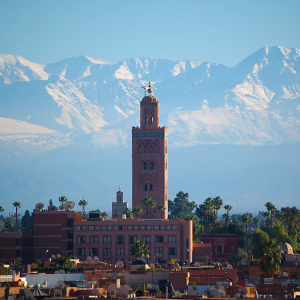
Our guide to how to enjoy both the popular city and the High Atlas in one break.
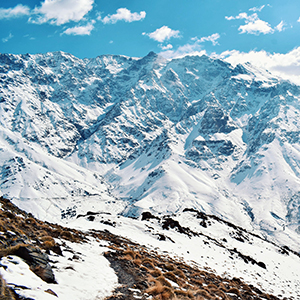
People don’t often think of snow when they think of Morocco, but winter holidays here have plenty of it in the High Atlas.
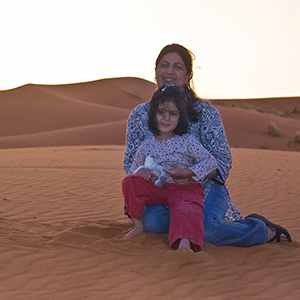
The desert is your sandpit. Find out why travelling with kids is simply brilliant, with loads of adventure.
We help you understand local attitudes and laws, whether you want culture or landscapes.
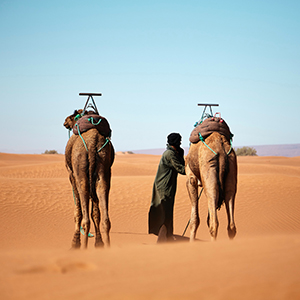
Which cities to visit, which mountain regions to hike, how to handle the Sahara, and where to surf safely...