Overtourism in Venice
Though still proudly known as La Serenissima, ‘the most serene’, Venice on a typical day is anything but. Around 30 million tourists visit the city every year; most of them are day trippers coming in from the wider Veneto region, or pouring off cruise ships. Many will stay for just a few hours and see little beyond famous landmarks – Rialto Bridge, the Doge’s Palace and Saint Mark’s Square. They will buy a few trinkets and leave. Such visitors bring little economic benefit to the city, but their numbers damage Venice’s fragile buildings, strain its infrastructure, inhibit local people from going about their business and make for a woeful visitor experience, too. Nobody benefits, not even the tourists.
The reasons behind overtourism in Venice are complex and manifold, and many of the same issues crop up in cities including Barcelona, Reykjavik and Dubrovnik – the rapid growth of low-cost aviation, cruise ships, and peer-to-peer home sharing platforms are all guilty parties. But the solutions presented so far in Venice, from banning cruise ships to introducing tourist taxes, have done little to solve the problem.
It is a problem that becomes more urgent every year. Overtourism in Venice is leading to depopulation, as life becomes harder and harder for residents. Fewer than 50,000 people still live in the city. Far from serene, Venice is more accurately labelled a ‘theme park’ today, and an ‘economic monoculture’. This is a city sinking under the weight of its own popularity.
The reasons behind overtourism in Venice are complex and manifold, and many of the same issues crop up in cities including Barcelona, Reykjavik and Dubrovnik – the rapid growth of low-cost aviation, cruise ships, and peer-to-peer home sharing platforms are all guilty parties. But the solutions presented so far in Venice, from banning cruise ships to introducing tourist taxes, have done little to solve the problem.
It is a problem that becomes more urgent every year. Overtourism in Venice is leading to depopulation, as life becomes harder and harder for residents. Fewer than 50,000 people still live in the city. Far from serene, Venice is more accurately labelled a ‘theme park’ today, and an ‘economic monoculture’. This is a city sinking under the weight of its own popularity.

How does overtourism affect Venice?
There are few job opportunities beyond the tourism sector in Venice. Meanwhile the cost of living continues to rise making daily life ever more impractical for residents. The result is depopulation, and an increasingly inauthentic experience for visitors.
Fewer homes and businesses
Fundamental to the depopulation of Venice is how hard tourism has made it to live there. With time, overtourism changes the face and the character of a city. The food in the restaurants, the produce in shops, even the music being played in bars, all cater to tourist tastes, not the needs of local people. Job opportunities dwindle as employers gradually move to the mainland because of skyrocketing rents, leading to an economic monoculture where one industry dominates, in this case tourism.
“There is virtually no economic activity in Venice outside of tourism,” says Giovanna Consonni of our partner Stile Italiano Tours. “Small businesses that once served the community have disappeared. One beloved toy shop was forced to close when the rent became unaffordable. The property sat empty for five years before being turned into yet another real estate agency.”
Groceries close as tourists prefer to eat out, and small, family-owned restaurants struggle unless they adapt to fast turnovers. Tourists, especially day trippers with little time to spare, typically want to quickly eat, pay and return to their sightseeing, as opposed to locals who may prefer a more leisurely meal. Those restaurants that don’t adapt are replaced by low-cost chain eateries that typically serve poor quality food yet still charge high prices.
Venetians don’t just struggle with finding things like fresh fruit or school supplies. Just finding a suitable, reasonably priced home is a challenge, as so many properties have been converted to short term holiday rentals. Platforms like Airbnb are a significant contributory factor to overtourism, though cruise ships and cheap flights are the principal causes.
“There is virtually no economic activity in Venice outside of tourism,” says Giovanna Consonni of our partner Stile Italiano Tours. “Small businesses that once served the community have disappeared. One beloved toy shop was forced to close when the rent became unaffordable. The property sat empty for five years before being turned into yet another real estate agency.”
Groceries close as tourists prefer to eat out, and small, family-owned restaurants struggle unless they adapt to fast turnovers. Tourists, especially day trippers with little time to spare, typically want to quickly eat, pay and return to their sightseeing, as opposed to locals who may prefer a more leisurely meal. Those restaurants that don’t adapt are replaced by low-cost chain eateries that typically serve poor quality food yet still charge high prices.
Venetians don’t just struggle with finding things like fresh fruit or school supplies. Just finding a suitable, reasonably priced home is a challenge, as so many properties have been converted to short term holiday rentals. Platforms like Airbnb are a significant contributory factor to overtourism, though cruise ships and cheap flights are the principal causes.
Crowding
Crowding is the most visible effect of overtourism in Venice, but it is really only the San Marco neighbourhood, where many of the city’s most iconic sites are located, that is completely overwhelmed. Get beyond the main tourist area and things do get significantly quieter.
But there’s no escaping the crowding on Venice’s public transport. Residents often find themselves having to wait for the next vaporetto (waterbus) because the current one is full of tourists with luggage. There are no designated boarding areas for locals and workers, which would help to alleviate the pressure.
But there’s no escaping the crowding on Venice’s public transport. Residents often find themselves having to wait for the next vaporetto (waterbus) because the current one is full of tourists with luggage. There are no designated boarding areas for locals and workers, which would help to alleviate the pressure.
Noise & disturbance
Life for those who continue to live in Venice is impaired by the constant presence of tourists. On any given day, residents are forced to put up with noisy wheelie suitcases; groups of people singing, shouting and talking loudly; selfie sticks brandished in all directions; and often disrespectful behaviour like swimming in canals or picnicking on bridges. They see the city they love and call home being littered, its artisan spirit being eroded in favour of chain restaurants and gift shops.
While egregious cases of bad behaviour do sometimes make the headlines, this kind of low-level annoyance happens day-in, day-out, with little evidence of fines or bans having any effect. Residents can be forgiven for thinking that Venice is run entirely for the benefit of tourists, rather than the people that actually live there.
Of course, not everyone agrees that overtourism is as much of a threat to Venice. Many Venetians make a good living from the constant churn of visitors through the city and the worst of the crowding affects a relatively small area. Concern about rising sea levels, which are leading to flooding and pollution, is another reason some people are choosing to leave the city.
While egregious cases of bad behaviour do sometimes make the headlines, this kind of low-level annoyance happens day-in, day-out, with little evidence of fines or bans having any effect. Residents can be forgiven for thinking that Venice is run entirely for the benefit of tourists, rather than the people that actually live there.
Of course, not everyone agrees that overtourism is as much of a threat to Venice. Many Venetians make a good living from the constant churn of visitors through the city and the worst of the crowding affects a relatively small area. Concern about rising sea levels, which are leading to flooding and pollution, is another reason some people are choosing to leave the city.
Proposed solutions to overtourism in Venice
Visitor fees
Venice’s paid entry system, which applies to day visitors arriving during the peak season of April to July, has been heavily criticised as flawed, ineffective, and little more than a sop to UNESCO to avoid being blacklisted. It costs less than a glass of wine in Saint Mark’s Square, and has more complications than a gondolier’s jersey has stripes, leading to widespread dissatisfaction.
“Stewards cannot request ID or verify the type of ticket purchased, and there are numerous exceptions such as for residents, workers, locals, and tourists staying overnight, making enforcement chaotic,” says Giovanna. “Worse still, the system has created bottlenecks at entry points like train stations, where workers and tourists alike get stuck. Data privacy concerns have also emerged. Residents are required to submit personal data of friends or family they host, a detail overlooked in the planning stages.”
And as if that weren’t enough, the money generated is used predominantly to fund the system itself, rather than any improvements to Venice. In short, says Giovanna, “the programme fails to limit crowds, fails to help the city, and is riddled with enforcement loopholes.”
“Stewards cannot request ID or verify the type of ticket purchased, and there are numerous exceptions such as for residents, workers, locals, and tourists staying overnight, making enforcement chaotic,” says Giovanna. “Worse still, the system has created bottlenecks at entry points like train stations, where workers and tourists alike get stuck. Data privacy concerns have also emerged. Residents are required to submit personal data of friends or family they host, a detail overlooked in the planning stages.”
And as if that weren’t enough, the money generated is used predominantly to fund the system itself, rather than any improvements to Venice. In short, says Giovanna, “the programme fails to limit crowds, fails to help the city, and is riddled with enforcement loopholes.”
Clamping down on cruises
Cruises make up only a small part of the global tourism industry but some coastal destinations like Venice see a high concentration of ships. Venice is a small city, and when several ships arrive in a day it leads to overwhelming numbers of day trippers.
Large cruise ships are banned from the Venetian Lagoon and the city’s historic centre, and must now dock either in Marghera on the mainland, or further afield in Ravenna or Trieste, from where passengers can be bussed into Venice. The move was prompted by overtourism, but also to improve the environment – air pollutants from engine emissions fell 80 percent in Venice following the ban.
“This is the only significant measure that has had some impact,” says Giovanna, “and moving them also brings economic benefits to these other areas. It’s a major relief that ships no longer pass through Saint Mark’s Basin, but the risk of their return remains.”
Large cruise ships are banned from the Venetian Lagoon and the city’s historic centre, and must now dock either in Marghera on the mainland, or further afield in Ravenna or Trieste, from where passengers can be bussed into Venice. The move was prompted by overtourism, but also to improve the environment – air pollutants from engine emissions fell 80 percent in Venice following the ban.
“This is the only significant measure that has had some impact,” says Giovanna, “and moving them also brings economic benefits to these other areas. It’s a major relief that ships no longer pass through Saint Mark’s Basin, but the risk of their return remains.”
Regulating tour groups
Tourist groups in Venice are limited to 25 people and guides must be officially licensed, with the threat of on-the-spot fines for infringements. The restrictions are not flawless. They do nothing to reduce visitor numbers, since larger groups are just split up. Illegal ‘free tours’ continue without meaningful enforcement, undercutting professional guides and avoiding all taxes and rules.
But while these rules were initially met with resistance, they have resulted in a better experience for both guides and tourists. Mandatory headsets have also dramatically reduced noise pollution for residents. “Previously tour guides would have to shout over crowds in narrow alleys making life unbearable for residents,” says Giovanna.
But while these rules were initially met with resistance, they have resulted in a better experience for both guides and tourists. Mandatory headsets have also dramatically reduced noise pollution for residents. “Previously tour guides would have to shout over crowds in narrow alleys making life unbearable for residents,” says Giovanna.
Monitoring numbers
If it feels like you’re being watched when you’re in Venice, that’s because you are. In a project joint-financed with the European Union, Venetian authorities use a ‘Smart Control Room’ to monitor and understand the flow of people through the city. The aim is to learn which streets and neighbourhoods suffer most from crowding, and when.
Using sensors in high-traffic areas, the system can detect mobile devices and identify from which country someone originates, which direction they are travelling in, and how fast they are moving. Operators also monitor crowding and delays on public transport, which influence the flow of tourists through the city.
Using sensors in high-traffic areas, the system can detect mobile devices and identify from which country someone originates, which direction they are travelling in, and how fast they are moving. Operators also monitor crowding and delays on public transport, which influence the flow of tourists through the city.
Can Venice be saved?
Despite years of well publicised initiatives and strong announcements, the issue of overtourism in Venice remains largely unresolved, while depopulation is a vicious circle – the more people leave, the harder daily life becomes for those left behind. If Venice is to be saved, then time is fast running out.
This failure to act exasperates many, including Responsible Travel’s Founder and CEO, Justin Francis. “How has this beautiful city ended up in this position?” says Justin. “Tourism has been threatening Venice for decades. They’ve found it impossible to confront the growth of tourists visiting from cruise ships or as Airbnb guests. Now we end up with segregation of tourists and local people. It seems it’s now official that Venice has been reduced to a theme park. Tourism is about bringing people together, residents and visitors, and when done properly, both parties should reap the benefits. It should never be about segregation.”
This failure to act exasperates many, including Responsible Travel’s Founder and CEO, Justin Francis. “How has this beautiful city ended up in this position?” says Justin. “Tourism has been threatening Venice for decades. They’ve found it impossible to confront the growth of tourists visiting from cruise ships or as Airbnb guests. Now we end up with segregation of tourists and local people. It seems it’s now official that Venice has been reduced to a theme park. Tourism is about bringing people together, residents and visitors, and when done properly, both parties should reap the benefits. It should never be about segregation.”
What can you do?
At Responsible Travel, we believe that travel should be treated as a privilege and not a right, and it’s a privilege we should use with care. This means travelling in ways which maximise positive impacts and minimise the negative ones.
Visit off peak – Venice in the winter is eerily beautiful, and often cheaper. Choose to stay several nights, too. Shop and eat locally, and explore beyond Saint Mark’s Square, to avoid the popular hotspots and spread your Euros a little further – there’s magic in the hidden corners of Venice. As always, travel respectfully. Talk to local people, learn a few words of Italian, dress and behave appropriately. Travelling thoughtfully means having respect for those who live in a place, and respect is what those clinging onto a life in this beautiful but troubled city deserve.
Fairbnb is an ethical alternative to Airbnb that was founded in Venice. All of its rentals are genuinely owned by local people, and owners are capped on the number of properties they can advertise. Plus, 50 percent of the platform fees are channelled into social projects that aim to counter the negative effects of tourism. In Venice, they include an NGO that organises clean-ups of defaced public buildings and monuments.
“Venice is not just a backdrop for postcards, it is a living city,” says Giovanna, “and if we continue down this path, we risk losing not just its soul, but its very ability to survive. Ultimately the problem is that everyone wants to see the same places at the same time. Until that mindset changes, little will improve.”
Visit off peak – Venice in the winter is eerily beautiful, and often cheaper. Choose to stay several nights, too. Shop and eat locally, and explore beyond Saint Mark’s Square, to avoid the popular hotspots and spread your Euros a little further – there’s magic in the hidden corners of Venice. As always, travel respectfully. Talk to local people, learn a few words of Italian, dress and behave appropriately. Travelling thoughtfully means having respect for those who live in a place, and respect is what those clinging onto a life in this beautiful but troubled city deserve.
Fairbnb is an ethical alternative to Airbnb that was founded in Venice. All of its rentals are genuinely owned by local people, and owners are capped on the number of properties they can advertise. Plus, 50 percent of the platform fees are channelled into social projects that aim to counter the negative effects of tourism. In Venice, they include an NGO that organises clean-ups of defaced public buildings and monuments.
“Venice is not just a backdrop for postcards, it is a living city,” says Giovanna, “and if we continue down this path, we risk losing not just its soul, but its very ability to survive. Ultimately the problem is that everyone wants to see the same places at the same time. Until that mindset changes, little will improve.”
More Italy articles
The best time to visit Italy is either the early summer months of June and July or September and October in the autumn.
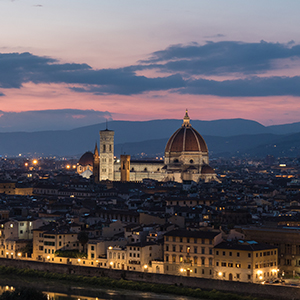
Find out what we rate and what we don’t as well as discovering how to travel like a local when you visit Italy.
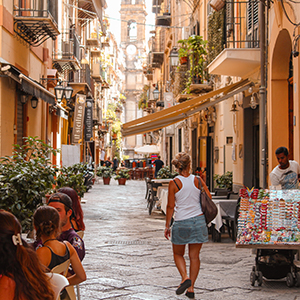
from the Dolomites and the Italian Alps in the north down to the islands of Sardinia and Sicily, here's where to go.
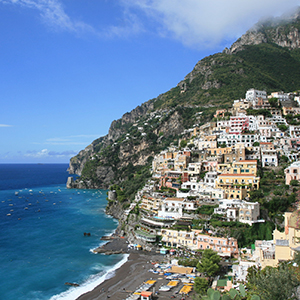
Cliffside villages and tiny pebble beaches are among the Amalfi Coast's treasures.
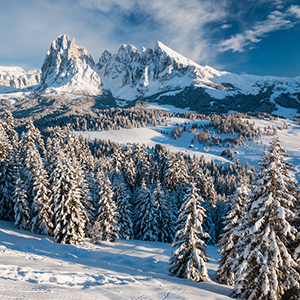
The sheer mountains of the Dolomites aren’t just for winter; summer brings fantastic hiking.
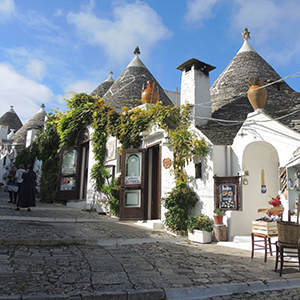
Travel down to Puglia to dive into Italy’s deep south and stay in a trulli.
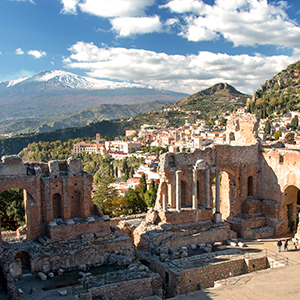
The closer you look at the cities and coast, the more intriguing Sicily gets.
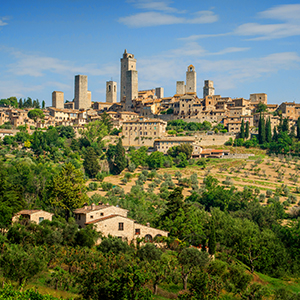
Most feel that they know Tuscany before they’ve seen it, but that's a misstep.
From active volcanoes to pizzas every day of the week: why kids love Italy.
Here’s what you need to know, from the culture that you might not expect to how long you need for your adventure.
Our Italy travel advice page is for those who love to learn from local experts who have imparted their pearls of wisdom.
If you’re planning to visit Italy for the first time, you’ll be following in famous footsteps.
From slow food and sea life to preserving rural communities and ancient traditions...
Find all our Italy guides in one place: Italy holidays in places such as Tuscany or Sicily, and different types of Italy holidays.