Responsible tourism in Dubrovnik

It might seem like Dubrovnik has only popped up on the tourist radar since Game of Thrones, but this city has in fact been a gathering place for mass tourism since WWII, until the Croatian War of Independence in 1991 stopped it in its tracks. The difference is, those tourists came in manageable numbers, spending cash in local hotels and cafés. These days, the cosmic rise of the cruise industry and arrival of cheap flights and all-inclusive packages have inspired many visitors to do the exact opposite.

Refusing to visit Dubrovnik isn’t the best answer. It has about as much affect as boycotts, punishing people reliant on tourism. But we have a responsibility to handle Dubrovnik with kid gloves. It’s as fragile as Venice and Alaska’s Glacier Bay. Read on to find out about the cause and effect of mass tourism in Dubrovnik – and how your holiday can ease the city’s growing pains.

Overtourism & cruise ships

There’s no doubt about it: overtourism is Dubrovnik’s public enemy number one. Around 1.5 million people visit every year, mostly during the summer months, while the city’s population stands at just 40,000 or so.
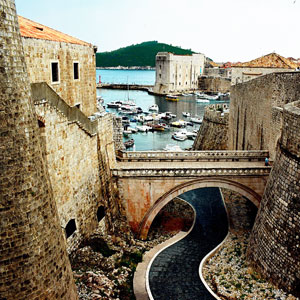
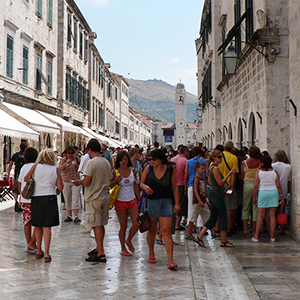
The effects are manifold. Pile Gate, the Old Town entrance nearest to Gruz cruise port, has a theme park-style queueing system to control the flow of crowds. The 300m limestone main street, Stradun, has been smoothed by so many feet a day that it’s turned into an ice rink. City workers roughen the streets to create resistance for your flip flops. Souvenir shops have replaced food markets and Dalmatian restaurants have been swapped for fast food outlets.
What’s to blame? Big cruise ships are the main culprit, unloading thousands of people a day within a short window. The city is just over 20km² and most people cram into the walled city. It’s simple maths: too many people in too small an area in too narrow a space of time. The Old Town’s time as King’s Landing in Game of Thrones has given rise to hordes of set-jetters after the vistas that starred in the TV show.
The truth is, Dubrovnik isn’t built for this many people. But it’s not the numbers that are the sole problem – it’s the fact that visitors batter their way into cities by the cruise-load between May and September, and don’t spend more than a night. After all, Dubrovnik has been a tourist destination for almost 200 years, but its popularity has never caused the problems it does now. It simply isn’t can’t cope with this level of tourism.
But little by little, change is coming. The number of cruise ships allowed to dock each day has been slashed to just two, and passengers now spend eight hours ashore rather than five. Tourist buses, which pile up outside Pile Gaye in their dozens, must now pre-book their slots. And across the city there are now schemes to improve the flow, of vehicles and tourists, that are creating a more positive experience for visitors and residents alike.

The little coastal nations (and wildly popular cruise stops) of Venice, Crete, Corfu, Rhodes, Cyprus and Dubrovnik have formed a little scrum in the shape of the Civil Society Network of Historical Cities of the Eastern Mediterranean to raise awareness of harmful overtourism. And the tourist board is moving its gaze to lesser-visited islands along the Dalmatian Coast.

What you can do

Instead of striking Dubrovnik off the list, there are questions you should ask yourself. Can I use a local tour operator? How do I support small, low-impact businesses? Is my cruise environmentally and socially sound? Have I learned about the storied history of Dubrovnik – the real history? Should I travel in the high (blood pressure) season?

When you travel with a responsible tour operator, many of these angles will be covered for you. You don’t have to worry about whether your holiday is helping or hurting Dubrovnik, because it’ll be run by local people who deeply care about their city and surroundings.

The perks are many – for you and Dubrovnik’s citizens. You’ll sail out on Croatian-crewed cruises caulked with care for their country’s coastline. Stay in locally run guesthouses that lay out homemade bread and recommendations for the cliffside bar unknown to the tourists. You’ll have dinners fresh with Adriatic shrimp and plavac mali wine, served by Croatians who are keen to share their underrated cuisine. Real-deal city tours replace stories about a fictional set of families with a timeline that covers everything from Dubrovnik’s stint as an independent republic to the still-standing effects of the Croatian War of Independence.

Timing is everything. Avoid Dubrovnik between May and September. And if you can’t, only visit the Old Town in the early mornings and evenings, when the cruise crowds have slipped back to their bunks.

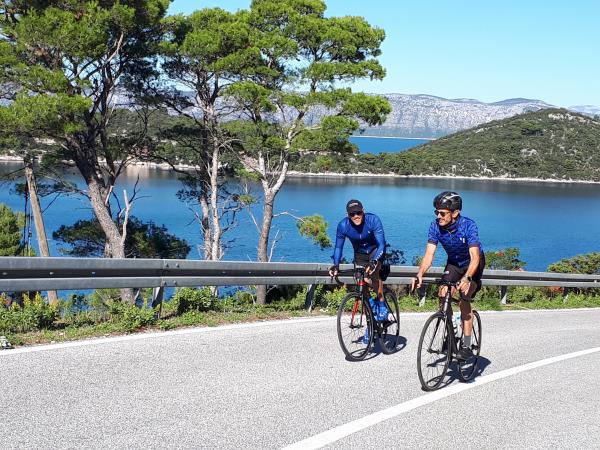
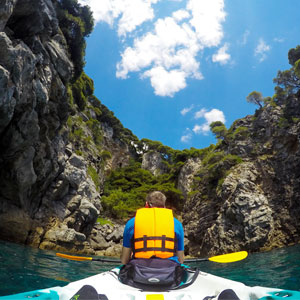
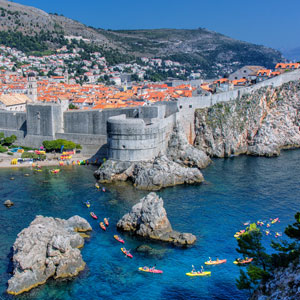
Don’t spend your whole time in Dubrovnik, either – share your wealth with under-visited, equally beautiful places up the coast that really need your investment. Kayak around the Elalphiti Islands, go cycling to the backdrop of constant sea views along the Dalmatian Coast, or hike silent Lokrum.
Tomi Coric, founder and guide at our activity holiday specialists Epic Croatia, agrees:
“I think the best time is the second part of September until the end of October and maybe, after that, May. It’s quieter and warm. It’s not as busy with cruise ships…and there’s less traffic. For cycling, it’s much nicer because the temperature is not so hot. When we design our cycling trips, we take travellers to Dubrovnik for a day or two and then out to limit that impact in town.”
Of course, above all, don’t travel into Dubrovnik on a big cruise liner. Not when there are plenty of far more pleasant small ship cruises that hire Croatian crew and invest in Croatian businesses. You’ll also travel from the harbour to town using public transport or on foot, taking the weight off the congested roads around the Old Town. Read more about why choosing a small ship cruise to Dubrovnik makes a real difference.
Uros Kumer, founder and skipper at our tailor made sailing holiday specialists Frontier Adriatic, says that you shouldn’t think that Dubrovnik is the be all and end all of your holiday: “The thing with Croatia is that all the global media and travel guides are covering the same hotspots over and over again: Dubrovnik, Split, Hvar, Vis with Blue Cave and Stiniva beach, Krka waterfalls and maybe few more, but that is it... Nobody talks about North Croatia. Sailing islands like Cres, Lošinj, Silba, Rab, Krk are as amazing as any of those mentioned in most foreign media. That is where we like to sail and spend free time and that is where we like to take our guests without fixed ideas of Dubrovnik and Hvar.”

Environment

The environmental effects of tourism on Dubrovnik are many-headed. The Transport and Environment Association partnered up with the European Commission for an extensive research project on air pollution in Croatian cruise ports. It turned out that 20 percent of Croatia’s air pollution comes from cruise ships – sulphur and climate-changing nitrous oxide, mainly.
Tomi Coric, founder and guide at our activity holiday specialists Epic Croatia, says it’s not just the ships themselves: “Cruise ships have a lot of pollution. But the second effect is the transportation services, taxis, Ubers and minibuses that take those people from the cruise ships to the Old Town area. There’s too many of them.”
High pollution levels also come from the coaches that idle outside the Old Town Walls while dropping off coach loads of cruise ship passengers newly arrived in Gruz port. The good news is that Dubrovnik’s innovative traffic management schemes have slashed the number of vehicles using and polluting the Old Town. It’s worth noting that traffic doesn’t just affect landlubbers; you’re much more likely to see Dalmatian Coast dolphins in spring, when the sea traffic thins out.
What you can do

Plan your visit and spend your money in ways that show the Croatian government that the environment is better left preserved. That, in fact, looking after the islands and coastlines is of economic value to travellers who want to experience the Croatia that locals love.

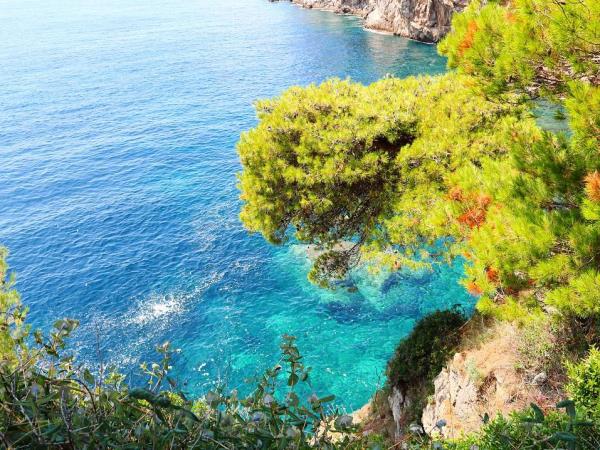
Water pollution around Dubrovnik is largely plastic waste and fishing gear. Bring a bag with you on your hikes or kayaking trips – especially in the islands – and pick up any litter you see. See it as your way of giving back to the country that’s giving you much.

Check the provenance of your small ship cruise. It’s always a good sign if they’re flying the Green Sail, and transparent about their environmental credentials and limits. Don’t be afraid to quiz your tour operator, but also remember that sometimes it’s not possible to avoid using plastic bottles. The tap water in Dubrovnik and the islands isn’t always good for the bowels. Ask your guide where it’s okay to drink tap water and pack a two-litre refillable water bottle for those occasions.
Uros Kumer, from our tailor made sailing holiday specialists Frontier Adriatic, suggests ways to avoid adding to Dubrovnik’s environmental problems: “If possible, avoid July and August, as Croatia has been a hotspot in the last few years. Of course, with overtourism we face higher pollution as well. We love sailing in Croatia in late April, May, June and September. In these periods it is less crowded and once you reduce crowds everything is nicer, calmer and cleaner. The weather is also good in this period and it is more affordable.”

People & culture

Some call Dubrovnik a living museum, like that’s a good thing. But, as Mayor Mato Frankovic pointed out to cruise companies in one interview, “Dubrovnik is first and foremost our home.” However, it often doesn’t feel like it to the people that live there. Souvenir shops have replaced grocery stores and household goods stores. Gaudy money exchange ATMs have been fitted in ornate shop windows in the Old Town. Most tellingly, they don’t accept Croatian bank cards, so they give zero value to locals. Dubrovnik quickly became the first place in Croatia to regulate cash machines.
Apartments have been turned into the Airbnbs. Not the homestay kind, where you get to know a resident – the kind that removes whole properties from the housing market, cracks up communities, and inflates the price of property. Around 1,157 people call Dubrovnik Old Town home; it was 5,000 in 1991.
Before the Yugoslav Wars, tourism represented half the economy, along with soap, olive oil and paint production, plus shipping. These days, Dubrovnik is totally reliant on tourism. There’s no doubt that it’s vital for economic growth – especially after the war – but it must be managed responsibly. It must be designed for longevity, so that Croatians can live alongside tourists instead of being replaced by them.
Tomi Coric from our adventure holiday specialist Epic Croatia feels that tourism growth shouldn’t be at the expense of locals: “I think that Dubrovnik is a small town and you can’t get all those people in multiple times during the day. At ten o’clock, two o’clock and four o’clock there are about 10,000-50,000 people entering Dubrovnik and lots of buses outside the Old Town. That’s crazy. Residents can’t go from one part of the town to another part of the town during those days. At the moment tourism is not good for Dubrovnik, for the citizens, or for the tourists who are coming. It changes the character of what we offer. It even changes the people. You can’t control it anymore. People don’t have any more privacy. It brings a lot of taxis like Uber, and other services that are coming to Dubrovnik just for the jobs. There are too many cars, too many people, it’s too noisy, and people have had enough.”
The 1991-2 Siege of Dubrovnik was a surprise in the break-up of Yugoslavia; few expected this strategically insignificant tourist spot to be targeted by the Yugoslav People’s Army. Fortresses turned into shelters, and ancient walls and wells helped civilians and refugees from the surrounding villages survive the siege. Intermittent shelling continued until 1995.

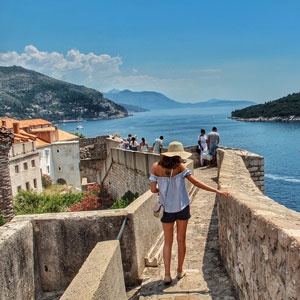
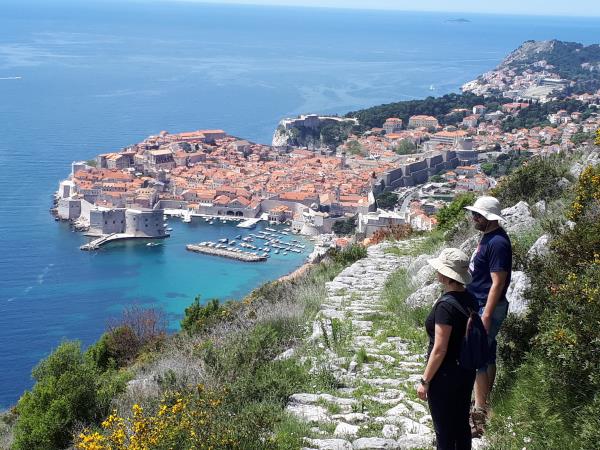
When you walk the walls of Dubrovnik Old Town you’ll see the frames of ghost houses grown over with scrubby wallflowers and rambling roses, and roofs that are a patchwork of ancient and not-so-ancient tiles. There are still a few yawning holes where buildings used to exist. The passing years haven’t waved a magic wand, but the city has had a near-miraculous recovery thanks to £6 million of UNESCO emergency funds, the return of tourism, and the locals’ determination to move on from what they call “the Last War”.

It isn’t just the economy that’s improved, though. The Croatian War of Independence had been hanging over residents for five years. Tourism enabled city dwellers to emerge from the walls and rebuild their old lives, after years of violent limbo. More than that, tourists could lift the spirit of the region. While updating Lonely Planet’s Eastern Europe guidebook in the mid-nineties, travel writer Jeanne Oliver suggested to the tourist director that the loss of visitors was quite an economic hit. He replied that he didn’t care how much money tourists spent – Croatians just wanted to see tourists again and “bring some life into town”.

What you can do

Choose a responsible tour operator that uses locally run hotels and guesthouses. Forget that identikit Game of Thrones mug and pick up truly local souvenirs by Dubrovnik craftspeople: spiderweb lace, plavac mali wine, lavender wreaths, olive oil and golden Konavle earrings. Avoid coral souvenirs completely, as it’s rarely sourced responsibly. Croatia’s reefs are best kept underwater.

Go on a guided history tour with a Croatian who can tell you about the recent history of Dubrovnik – not just its fictionalised history as King’s Landing – and doesn’t shy away from the war. You’ll understand, and love, the city all the more for it. Also make sure you go to the War Photo Limited gallery to understand how life went on under the war of independence. The Homeland War Museum in the Imperial Fort on Srd Mountain offers more insight into the complex series of conflicts that made up the Yugoslav Wars.
Dubrovnik responsible holiday tips

Natasha Black, from our small group travel partners Exodus, offered some food for thought on responsible tourism in Dubrovnik, including why avoiding the city could be more damaging than visiting it:

Cruise chaos

“The crowds are definitely a big problem in Dubrovnik, putting stress on local resources. Cruise ships really affect the local economy, as many of the passengers do not buy things in the town as food and drinks are readily available on board the ship.”

No to boycotting

“Avoiding a destination altogether, whilst sometimes necessary, often will actually lead to more issues than solutions. If we were to abandon visiting Dubrovnik, then in all likelihood tourists who continued to visit the city will do so in a more damaging way, focusing pressure on very few places, not contributing as much to the local economy (such as cruise ships) or learning as much.”

Alternative solutions

“Using local guides or leaders means we are able to educate visitors on cultural sensitivities, and go to locally owned restaurants, gift shops and activities which are less visited and off the beaten track. Dubrovnik is also a highlight which can attract people to Croatia who will then go and explore other parts of the country. On our tours we only spend one or two days in Dubrovnik before visiting lesser known parts Croatia, thereby spreading the benefits of tourism to other communities.”

Stay in Lapad

“Staying outside the city centre in Lapad, where our groups stay, only a short bus ride from the old town, can be a great benefit. Here it is slightly quieter and our visitors can escape the hustle and bustle. We also encourage our guests to use public transport to reach the Old Town. If you purchase a Dubrovnik Card, you can travel on all public transport and receive discounts to a number of tourist attractions.”
Photo credits: [Page banner: Jennifer Boyer] [Overtourism: Dalibor Tomic] [Environment: Laszlo Szalai] [People and culture: Jett Brooks]